
Stöbern
genialokal zum Startbildschirm hinzufügen
Installieren Sie die genialokal App auf Ihrem Startbildschirm für einen schnellen Zugriff und eine komfortable Nutzung.
Installieren Sie die genialokal App auf Ihrem Startbildschirm für einen schnellen Zugriff und eine komfortable Nutzung.
Tippen Sie einfach auf Teilen:
 Und dann auf "Zum Home-Bildschirm [+]".
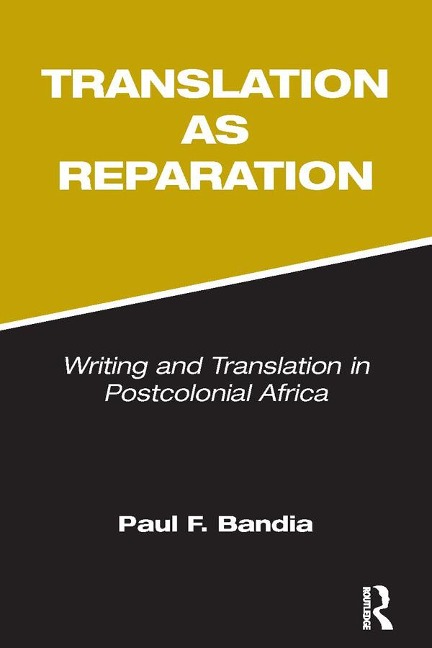
Translation as Reparation showcases postcolonial Africa by offering African European-language literature as a case study for postcolonial translation theory, and proposes a new perspective for postcolonial literary criticism informed by theories of translation. The book focuses on translingualism and interculturality in African Europhone literature, highlighting the role of oral culture and artistry in the writing of fiction. The fictionalizing of African orature in postcolonial literature is viewed in terms of translation and an intercultural writing practice which challenge the canons of colonial linguistic propriety through the subversion of social and linguistic conventions. The study opens up pathways for developing new insights into the ethics of translation, as it raises issues related to the politics of language, ideology, identity, accented writing and translation. It confirms the place of translation theory in literary criticism and affirms the importance of translation in the circulation of texts, particularly those from minority cultures, in the global marketplace. Grounded in a multidisciplinary approach, the book will be of interest to students and scholars in a variety of fields, including translation studies, African literature and culture, sociolinguistics and multilingualism, postcolonial and intercultural studies.
Paul Bandia
Introduction Chapter 1: African Europhone literature and the politics of language 1. Introduction 2. The polemics of language 3. Colonial language policies 4. Criticism and responses 5. Critical view of orality and its influences 6. The complex union of writing and orality Chapter 2: Intercultural writing as translation 1. Introduction 2. The pragmatics of African oral discourse in European-language writing 2.1. Crosscultural pragmatics and intercultural writing 2.2. Theoretical relevance for transcultural analysis 3. Writing culture and identity 4. Sociopragmatics and culture-specific discourse 5. What's in a name? Writing traditional onomastic practices 5.1. Pragmatic functions of naming Chapter 3: Cultural representation and postcolonial aesthetics 1. Introduction 2. Interculturality and discoursal indirectness 3. The art of oratory 4. Proverbs, aphorisms and intercultural narratives 4.1 Proverb patterns and style 4.2 Proverb content and meaning 5. Intercultural narratives and 'African time' concepts 6. The aesthetics of vulgarity Chapter 4: Linguistic experimentation and intercultural writing 1. Introduction 2. Lexical innovation and formation 3. Semantic shifts 4. Interpolations of the vernacular 5. Hybrid formations and some lexical innovation strategies 6. Recreating ornamental discourse Chapter 5: Literary heteroglossia, sociolects, translation 1. Pidgins and creoles in creative writing 2. Linguistic hybridity in Francophone literature 3. Polylingualism and intercultural writing 4. Code-switching and literary stylistics 5. Code-switching, translation and resistance Chapter 6: Intercultural writing and inter-European language translation 1. Interculturality, heteroglossia and inter-European language translation 2. Towards a postcolonial translation theory for African literature 3. From orature to writing: accented translation between colonial languages 4. Tripartite or three-tier approach 4.1. Initial translation or the orality/writing interface 4.2. Postcolonial translation as conversion 5. Between Francophone and Anglophone literatures: translation as conversion Chapter 7: African Europhone literature and the ethics of translations 1. Creative writing and translating in non-indigenous or second languages 1.1. The impact of orality 1.2. Language contact and cultural encounter 2. Postcoloniality and translation 3. Writing, translation and an ethics of difference 3.1. Translation equivalence or sameness in difference
Dieses eBook wird im PDF-Format geliefert und ist mit einem Adobe Kopierschutz (DRM) versehen. Sie können dieses eBook mit allen Geräten lesen, die das PDF-Format und den Adobe Kopierschutz (DRM) unterstützen.
Zum Beispiel mit den folgenden Geräten:
• tolino Reader
Laden Sie das eBook direkt über den Reader-Shop auf dem tolino herunter oder übertragen Sie das eBook auf Ihren tolino mit einer kostenlosen Software wie beispielsweise Adobe Digital Editions.
• Sony Reader & andere eBook Reader
Laden Sie das eBook direkt über den Reader-Shop herunter oder übertragen Sie das eBook mit der kostenlosen Software Sony READER FOR PC/Mac oder Adobe Digital Editions auf ein Standard-Lesegeräte mit epub- und Adobe DRM-Unterstützung.
• Tablets & Smartphones
Möchten Sie dieses eBook auf Ihrem Smartphone oder Tablet lesen, finden Sie hier unsere kostenlose Lese-App für iPhone/iPad und Android Smartphone/Tablets.
• PC & Mac
Lesen Sie das eBook direkt nach dem Herunterladen mit einer kostenlosen Lesesoftware, beispielsweise Adobe Digital Editions, Sony READER FOR PC/Mac oder direkt über Ihre eBook-Bibliothek in Ihrem Konto unter „Meine eBooks“ - „online lesen“.
Schalten Sie das eBook mit Ihrer persönlichen Adobe ID auf bis zu sechs Geräten gleichzeitig frei.
Bitte beachten Sie, dass die Kindle-Geräte das Format nicht unterstützen und dieses eBook somit nicht auf Kindle-Geräten lesbar ist.