Und dann auf "Zum Home-Bildschirm [+]".

Stöbern
genialokal zum Startbildschirm hinzufügen
Installieren Sie die genialokal App auf Ihrem Startbildschirm für einen schnellen Zugriff und eine komfortable Nutzung.
Installieren Sie die genialokal App auf Ihrem Startbildschirm für einen schnellen Zugriff und eine komfortable Nutzung.
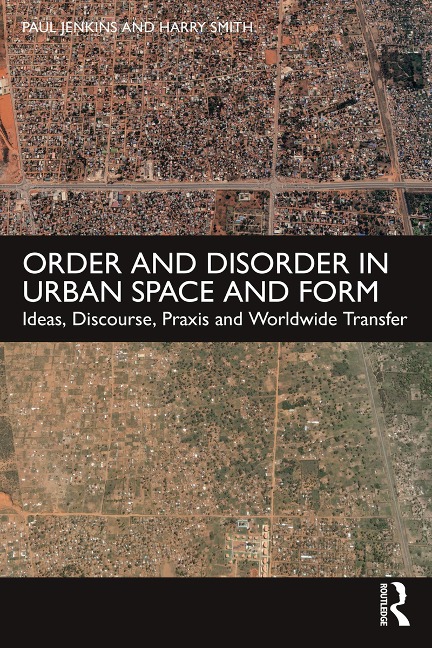
The global application of Enlightenment-derived concepts to create social order through urban form suggests that we believe we know how to create a (future) ordered environment. But these notions of order and disorder need interrogation, especially as the world rapidly urbanises. Not only have such approaches failed to produce more social order, but it has become clear that the imposition of these ideas in cities of the South cuts across alternative systems of social and cultural order and creates new disorder. Thus, if we are serious about forms of urban order, then it is time to rethink what we mean by order in the fi rst place. As this provocative and timely book shows, what we think of as urban order is partial and restricted, and what we perceive as disorder usually masks underlying orders of social nature. The book is intended for architects, urban designers, planners and urban scholars, as well as urban policymakers, managers and residents, to consider a different approach to emerging urban space and form, starting from an understanding of the cultural imaginaries and social constructs that underpin the production of most urban fabric and engaging with these concepts and organisational forms to improve urban life for the majority.
Paul Jenkins is Emeritus Professor of Architecture Research at the University of Edinburgh, Scotland, and Visiting Professor at the University of the Witwatersrand, Johannesburg, South Africa. He has also been a visiting professor in São Paulo, Brazil, and Maputo, Mozambique. For five decades he has engaged with a wide range of aspects of the built environment: architecture, construction, housing, planning, urban design and wider social studies. Much of his work has focused on sub-Saharan Africa, where he has been based for more than half of his working life, and he focuses on social engagement and cultural change in the 'urban', including the role of different forms of knowledge. He has published extensively, including three prior books with Routledge. Now retired, he lives primarily in Maputo, Mozambique. Harry Smith is Professor of Global Urbanism at The Urban Institute, Heriot-Watt University, Edinburgh, Scotland. He has over 30 years of experience working with urban design and development issues, having worked as an architect and planner in the Global North and then having become an academic engaged in urban research in Europe, Latin America and sub-Saharan Africa. Much of his research has focused on issues in so-called 'informal' settlements - ranging from housing, through access to land, to community-based disaster risk management - and has often taken an action-research approach linked to achieving changes in policy and practice. He has published previously with Routledge on planning and housing in the rapidly urbanising world, waterfront regeneration, and place-keeping.
1. The beginnings of ordering urban space and form in the modern era 2. Aspiring to polite society: the transfer of Enlightenment urban design to Rio de Janeiro 3. Garden city planning is translated into São Paulo 4. The Functional city and Brasília 5. Functionalism translated into Brazil and then re-exported: Curitiba 6. Parallel innovations in urban space and form: Alphaville in Brazil and New Urbanism in the United States 7. Innovations in engaging with urban disorder in Brazil: slum upgrading 8. A change of focus from physical to social urban order in Brazil: the right to the city and participatory planning 9. New forms of urbanism re-exported: gated communities, waterfronts and consumerism-oriented order in Angola 10. Understanding order and disorder in urban space and form: discourse and praxis
Dieses eBook wird im PDF-Format geliefert und ist mit einem Adobe Kopierschutz (DRM) versehen. Sie können dieses eBook mit allen Geräten lesen, die das PDF-Format und den Adobe Kopierschutz (DRM) unterstützen.
Zum Beispiel mit den folgenden Geräten:
• tolino Reader
Laden Sie das eBook direkt über den Reader-Shop auf dem tolino herunter oder übertragen Sie das eBook auf Ihren tolino mit einer kostenlosen Software wie beispielsweise Adobe Digital Editions.
• Sony Reader & andere eBook Reader
Laden Sie das eBook direkt über den Reader-Shop herunter oder übertragen Sie das eBook mit der kostenlosen Software Sony READER FOR PC/Mac oder Adobe Digital Editions auf ein Standard-Lesegeräte mit epub- und Adobe DRM-Unterstützung.
• Tablets & Smartphones
Möchten Sie dieses eBook auf Ihrem Smartphone oder Tablet lesen, finden Sie hier unsere kostenlose Lese-App für iPhone/iPad und Android Smartphone/Tablets.
• PC & Mac
Lesen Sie das eBook direkt nach dem Herunterladen mit einer kostenlosen Lesesoftware, beispielsweise Adobe Digital Editions, Sony READER FOR PC/Mac oder direkt über Ihre eBook-Bibliothek in Ihrem Konto unter „Meine eBooks“ - „online lesen“.
Schalten Sie das eBook mit Ihrer persönlichen Adobe ID auf bis zu sechs Geräten gleichzeitig frei.
Bitte beachten Sie, dass die Kindle-Geräte das Format nicht unterstützen und dieses eBook somit nicht auf Kindle-Geräten lesbar ist.