
Stöbern
genialokal zum Startbildschirm hinzufügen
Installieren Sie die genialokal App auf Ihrem Startbildschirm für einen schnellen Zugriff und eine komfortable Nutzung.
Installieren Sie die genialokal App auf Ihrem Startbildschirm für einen schnellen Zugriff und eine komfortable Nutzung.
Tippen Sie einfach auf Teilen:
 Und dann auf "Zum Home-Bildschirm [+]".
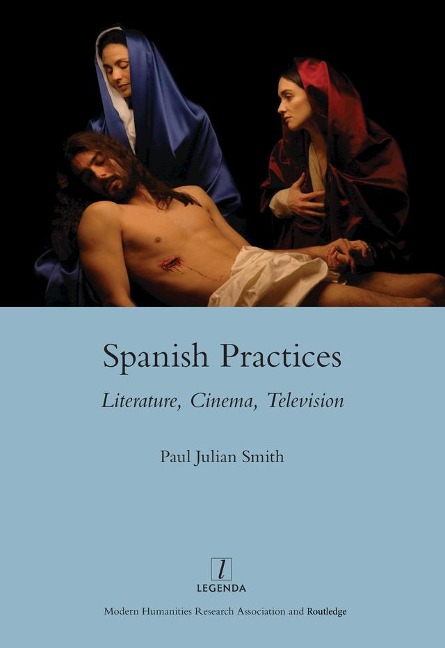
"This book is the first to explore the interaction of three media in contemporary Spain. Focusing on some of the best known and most important books, feature films, and television series in the country (including novelist Antonio Munoz Molina, director Pedro Almodovar, and the Spanish version of telenovela Ugly Betty), it addresses three pairs of linked issues central to Hispanic studies and beyond: history and memory, authority and society, and genre and transitivity. Much of the material is very recent and thus as yet unstudied. The book also focuses on the representation of gender, sexuality, and transnationalism in these texts. Drawing on approaches from both the humanities and social sciences it combines close readings of key texts with the analysis of production processes, media institutions, audiences, and reception."
Paul Julian Smith
1. Introduction: Spanish Practices Part I: Literature: History and Memory 2. Winners and Losers in Cinema and Memoirs: Emilio Martínez Lázaro's Las 13 rosas ('The 13 Roses', 2007) and Esther Tusquets' Habíamos ganado la guerra ('We Had Won the War', 2007) 3. Resuscitating Franco in Popular Narrative and Television: Vizcaíno Casas's ... Y al tercer año resucitó ('And in the Third Year He Rose Again', 1978) and Cuéntame cómo pasó ('Tell Me How It Happened', TVE 2001-) 4. The Audiovisual Transition: Cinema, Television, and Muñoz Molina's El jinete polaco ('The Polish Horseman', 1991) Part II: Cinema: Authority and Society 5. A Question of Queer Authorship: Almodóvar's Unpublished Short Stories (1973) 6. Spanish Cinema's Missing Children: Juan Antonio Bayona's El orfanato ('The Orphanage', 2007) and Jaime Rosales' La soledad ('Solitary Fragments', 2007) 7. Re-presenting the Others: Cinema and Television on Ethnicity and Immigration Part III: Television: Genre and Transitivity 8. Re-visions of Teresa: Josefina Molina's Teresa de Jesús (TVE, 1984) and Ray Loriga's Teresa: el cuerpo de Cristo ('Teresa, the Body of Christ', 2007) 9. Hybrid Fictions: Television Comedy between Soap Opera and Pseudo-documentary: Los Serrano (Tele 5, 2003-08] and Camera café ['Coffee Cam', Tele 5, 2005-09] 10. Travelling Narratives and Transitional Life Strategies: Yo soy Bea ('I Am Bea', Tele 5, 2006-08) and Ugly Betty (ABC, 2006-10) 11. Conclusion: Literature, Cinema, Television
Dieses eBook wird im PDF-Format geliefert und ist mit einem Adobe Kopierschutz (DRM) versehen. Sie können dieses eBook mit allen Geräten lesen, die das PDF-Format und den Adobe Kopierschutz (DRM) unterstützen.
Zum Beispiel mit den folgenden Geräten:
• tolino Reader
Laden Sie das eBook direkt über den Reader-Shop auf dem tolino herunter oder übertragen Sie das eBook auf Ihren tolino mit einer kostenlosen Software wie beispielsweise Adobe Digital Editions.
• Sony Reader & andere eBook Reader
Laden Sie das eBook direkt über den Reader-Shop herunter oder übertragen Sie das eBook mit der kostenlosen Software Sony READER FOR PC/Mac oder Adobe Digital Editions auf ein Standard-Lesegeräte mit epub- und Adobe DRM-Unterstützung.
• Tablets & Smartphones
Möchten Sie dieses eBook auf Ihrem Smartphone oder Tablet lesen, finden Sie hier unsere kostenlose Lese-App für iPhone/iPad und Android Smartphone/Tablets.
• PC & Mac
Lesen Sie das eBook direkt nach dem Herunterladen mit einer kostenlosen Lesesoftware, beispielsweise Adobe Digital Editions, Sony READER FOR PC/Mac oder direkt über Ihre eBook-Bibliothek in Ihrem Konto unter „Meine eBooks“ - „online lesen“.
Schalten Sie das eBook mit Ihrer persönlichen Adobe ID auf bis zu sechs Geräten gleichzeitig frei.
Bitte beachten Sie, dass die Kindle-Geräte das Format nicht unterstützen und dieses eBook somit nicht auf Kindle-Geräten lesbar ist.