
Stöbern
genialokal zum Startbildschirm hinzufügen
Installieren Sie die genialokal App auf Ihrem Startbildschirm für einen schnellen Zugriff und eine komfortable Nutzung.
Installieren Sie die genialokal App auf Ihrem Startbildschirm für einen schnellen Zugriff und eine komfortable Nutzung.
Tippen Sie einfach auf Teilen:
 Und dann auf "Zum Home-Bildschirm [+]".
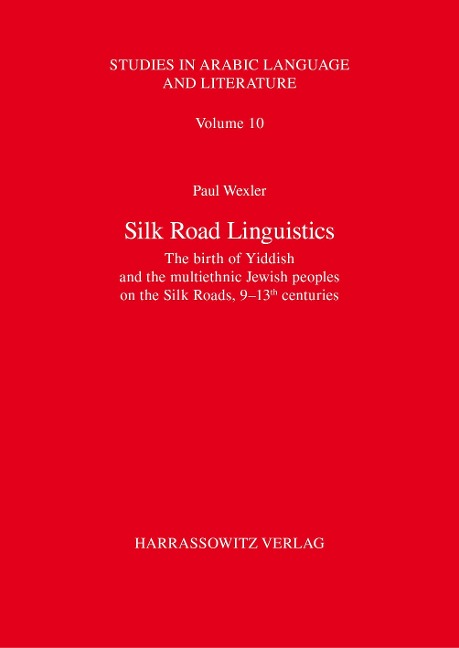

In this comprehensive study Paul Wexler demonstrates that Yiddish is a Slavic language largely relexified to genuine and artificial German and Hebrew, as a cryptic language of trade in the Khazar Empire in the 9-10th centuries for the use of multilingual Jewish merchants, who enjoyed special privileges on the Afro-Eurasian Silk Roads until the 13th century. Other Judaized trade languages (Turkic, Chinese, Arabic) were also coined at this time in the Khazar and Iranian Empires. In both empires, Yiddish absorbed over 5,000 overt influ-ences mainly from Judaized Persian, and secondarily from Judaized Turkic and Chinese. Yiddish mainly has Hebraisms wherever Persian employs Arabisms (but has almost no overt Arabisms) and preserves Asianisms with greater accuracy and volume than most Iranianized non-Jewish target languages. Until c. 1000, almost all Jews in the world resided in the Iranian Empire and were mainly of Iranian and only partly of Palestinian Judaean descent. Conversion to Judaism was common among Iranians, Turks, Slavs and Berbers (because of a desire to participate in the lucrative Silk Road trade dominated by Jews, and to escape the status of slavery often imposed on them); conversion led to the rise of new diverse Jewish "ethnicities" and forms of Judaism. The book also examines the Iranianization of other cryptic Jewish trade languages, of Slavic and German, and the common Hebrew-like lexicon used by all Jewish merchants to overcome varied language backgrounds. Yiddish can help to reconstruct the Iranian speech of mixed Irano-Slavic confederations (such as the Galician White Croats).