
Stöbern
genialokal zum Startbildschirm hinzufügen
Installieren Sie die genialokal App auf Ihrem Startbildschirm für einen schnellen Zugriff und eine komfortable Nutzung.
Installieren Sie die genialokal App auf Ihrem Startbildschirm für einen schnellen Zugriff und eine komfortable Nutzung.
Tippen Sie einfach auf Teilen:
 Und dann auf "Zum Home-Bildschirm [+]".
Ihr gewünschter Artikel ist in 0 Buchhandlungen vorrätig - wählen Sie hier eine Buchhandlung in Ihrer Nähe aus:

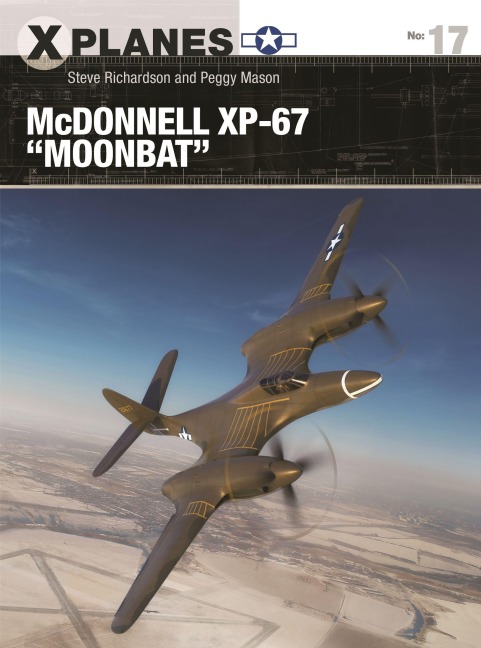
Packed with never-before-seen photos, plans and meticulous new digital artwork, this is the first history of the USAAF's futuristic World War II prototype interceptor, the XP-67 "Moonbat". The series of X-planes that sprang from the US Army's Request for Data R40C, focused on high-altitude, high-speed, long-range bomber interceptors. Among these aircraft was the McDonnell Aircraft Company's first ever clean sheet design, the XP67. Its futuristic lines promised performance that it was ultimately unable to deliver, but development was still underway when disaster struck. Just before Army performance demonstration flights were scheduled to begin, an engine fire destroyed the only XP-67 prototype, leaving a host of unanswered questions about what might have been, and leading to decades of continuing fascination with the XP-67 among aviation buffs and aircraft modelers. The authors of this book have uncovered new sources of information and a wealth of photographs and line drawings that document not just the XP-67 but also its immediate precursors within the McDonnell Aircraft design community, as well as alternative configurations for unbuilt variants aimed at different missions. Packed with unpublished photos of all stages of construction including key airframe changes made after initial flight tests, showing in detail how the final configuration was evolved, this volume finally provides clear focus on a story that has long been shrouded in mystery.
Steve Richardson graduated with BS Aerospace Engineering, 1974, and initially worked as Engineer at two Naval Air Rework Facilities, analyzing damage and developing repairs for a wide variety of aircraft and rotorcraft for the US Navy and Marine Corps. Then became Systems Engineer and technical writer for Stencel Aero Engineering (now absorbed into Universal Propulsion Company) which designed and manufactured state-of-the-art ejection seats. Subsequently moved to St Louis MO to work in Operations Analysis for McDonnell Douglas, which merged with Boeing in 1996. Focused primarily on two areas: Combat aircraft survivability against conventional ballistic, chemical/biological, nuclear, and directed energy weapons; and worldwide military capabilities and operational scenarios. Also worked on a variety of next-generation aircraft concepts. Wrote all kinds of technical materials for proposals, white papers, professional papers, and other internal and external audiences. He retired in 2016 as a Technical Fellow, and holds six United States patents.
Introduction Origins Prototype Design Test and Development Influence on Frontline Types Conclusion Bibliography Index