Und dann auf "Zum Home-Bildschirm [+]".

Stöbern
genialokal zum Startbildschirm hinzufügen
Installieren Sie die genialokal App auf Ihrem Startbildschirm für einen schnellen Zugriff und eine komfortable Nutzung.
Installieren Sie die genialokal App auf Ihrem Startbildschirm für einen schnellen Zugriff und eine komfortable Nutzung.
Ihr gewünschter Artikel ist in 0 Buchhandlungen vorrätig - wählen Sie hier eine Buchhandlung in Ihrer Nähe aus:

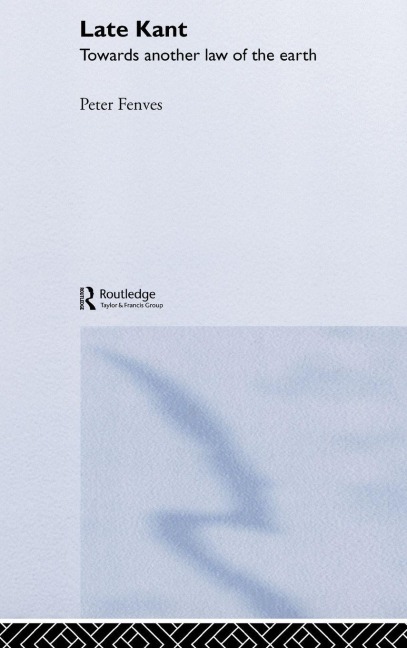

Fenves becomes one of the first to thoroughly explore Kant's later writings and give them the detailed scholarly attention they deserve. In his opening chapters, Fenves examines in detail the various essays in which Kant invents, formulates and complicates the thesis of "radical evil"--a thesis which serves as the point of departure for all his later writings. "Late Kant" then turns towards the counter-thesis of "radical mean-ness," which states that human beings exist on earth for the sake of another species or race of human beings. The consequences of this startling thesis are that human beings cannot claim possession of the earth, but must rather prepare the earth for its rightful owners.
Peter Fenves is Professor of German, Comparative Literature, and Jewish Studies at Northwestern University. He is the author of A Peculiar Fate: Kant and World History (1991), "Chatter": Language and History in Kierkegaard (1993), Arresting Language: From Leibniz to Benjamin (2001), and the editor of Raising the Tone of Philosophy: Late Essays by Kant, Transformative Critique by Derrida (1993).
Introduction; Chapter 1 The Pleasures of Failure; Chapter 2 The Sovereign Sentence; Chapter 3 The Other Sovereign Sentence; Chapter 4 Out of the Blue; Chapter 5 Under The Sign of Failure; Chapter 6 In The Name of Friendship; or the Case for Inconsistency; Chapter 7 Revolution in The Air; or the End of the Human Regime on Earth; Chapter 8 Conclusion;