Und dann auf "Zum Home-Bildschirm [+]".

Stöbern
genialokal zum Startbildschirm hinzufügen
Installieren Sie die genialokal App auf Ihrem Startbildschirm für einen schnellen Zugriff und eine komfortable Nutzung.
Installieren Sie die genialokal App auf Ihrem Startbildschirm für einen schnellen Zugriff und eine komfortable Nutzung.
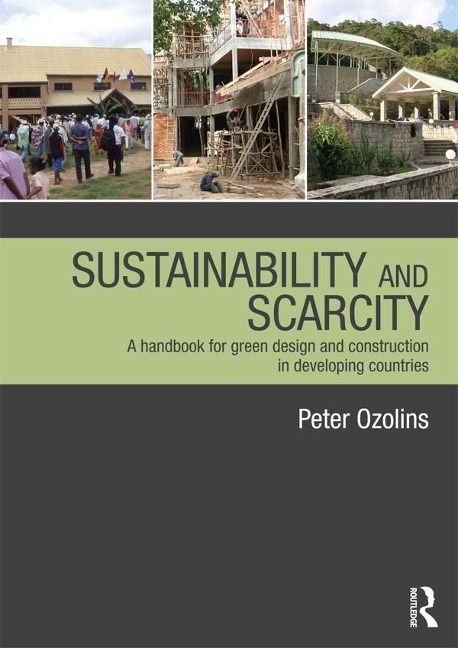
Sustainability & Scarcity addresses a gap in the literature on green building recognized by many in the fields of international development, architecture, construction, housing and sustainability. Rather than being based on the experiences of more economically-developed countries, this book describes the nature of green building in the developing world, elaborating the main issues that define sustainability in those particular contexts. Through more than 30 years of development work in design and construction in Africa and the Middle East, the author has seen well-intentioned development projects, both in theory and in practice, that ultimately do not contribute to sustainable development. Starting from the basis of green building rating tools used in the more economically-developed countries, the author draws from his own experiences to make available to other practitioners green building strategies relevant to the developing country context that promise effective solutions to their need for sustainable green design. The book looks in detail at examples of buildings in Tanzania, Madagascar, Nepal, Haiti, and Vietnam, illustrating the application of the green building strategies described. Fully illustrated with drawings and full colour photos, the book is a practical guide for practitioners and policy-makers working in the poorest regions of the world. Sustainability & Scarcity is quite simply an essential handbook for anyone concerned with sustainable design and building in the developing world.
Peter Ozolins, PhD established his architectural practice (www.peterozolinsarchitect.com) in 1998 after more than 20 years' experience as an architect in Africa, the Middle East and the U.S. During a 9 year residence in Madagascar and Tanzania he designed education and health-related projects for a variety of non-governmental organizations. He has also done consulting work for USAID, UNESCO and NGO's in various African countries, Iraq and Nepal. His U.S.-based work includes university, commercial and residential projects as well as continued overseas work. Peter Ozolins earned his PhD from Virginia Tech in Environmental Design and Planning, is a member of the American Institute of Architects and is a LEED accredited professional with the US Green Building Council.
Preface P.1 Why this book? P.2 What best way to help in the Least Developed Regions (LDR's) P.3 For whom this book is intended and how might it be used Introduction 0.1 What is this book? 0.2 Green building rating systems and their role 0.3 Organization of this book 1. Sustainability, Green Building and the Least Developed Regions (LDR's) 1.1 Sustainability and green building 1.2 Sustainable development in the LDR's 1.3 Building construction in the LDR's 1.4 Applicability of first world green building concepts in LDR's 2. Principal Green Building Issues in the LDR's 2.1 Green Building in the LDR's 2.2 Appropriate design 2.3 Building techniques and materials 2.4 Poverty, labour and employment 2.5 Security 2.6 Infrastructure 2.7 Food production 3. Components of Green Building in the LDR's 3.1 Design considerations 3.2 Site / environment 3.3 Building materials and technique 3.4 Infrastructure 3.5 Administration 4. Case Studies 4.1 Case studies: purpose & utility 4.2 Tanzania - DCMC Guest House 4.3 Madagascar - Centre ValBio 4.4 Haiti - Helping Hands Workshop 4.5 Nepal - Summit Hotel 4.6 Vietnam - Private House Epilogue Promulgation of green building concepts in the LDR's
Dieses eBook wird im PDF-Format geliefert und ist mit einem Adobe Kopierschutz (DRM) versehen. Sie können dieses eBook mit allen Geräten lesen, die das PDF-Format und den Adobe Kopierschutz (DRM) unterstützen.
Zum Beispiel mit den folgenden Geräten:
• tolino Reader
Laden Sie das eBook direkt über den Reader-Shop auf dem tolino herunter oder übertragen Sie das eBook auf Ihren tolino mit einer kostenlosen Software wie beispielsweise Adobe Digital Editions.
• Sony Reader & andere eBook Reader
Laden Sie das eBook direkt über den Reader-Shop herunter oder übertragen Sie das eBook mit der kostenlosen Software Sony READER FOR PC/Mac oder Adobe Digital Editions auf ein Standard-Lesegeräte mit epub- und Adobe DRM-Unterstützung.
• Tablets & Smartphones
Möchten Sie dieses eBook auf Ihrem Smartphone oder Tablet lesen, finden Sie hier unsere kostenlose Lese-App für iPhone/iPad und Android Smartphone/Tablets.
• PC & Mac
Lesen Sie das eBook direkt nach dem Herunterladen mit einer kostenlosen Lesesoftware, beispielsweise Adobe Digital Editions, Sony READER FOR PC/Mac oder direkt über Ihre eBook-Bibliothek in Ihrem Konto unter „Meine eBooks“ - „online lesen“.
Schalten Sie das eBook mit Ihrer persönlichen Adobe ID auf bis zu sechs Geräten gleichzeitig frei.
Bitte beachten Sie, dass die Kindle-Geräte das Format nicht unterstützen und dieses eBook somit nicht auf Kindle-Geräten lesbar ist.