Und dann auf "Zum Home-Bildschirm [+]".

Stöbern
genialokal zum Startbildschirm hinzufügen
Installieren Sie die genialokal App auf Ihrem Startbildschirm für einen schnellen Zugriff und eine komfortable Nutzung.
Installieren Sie die genialokal App auf Ihrem Startbildschirm für einen schnellen Zugriff und eine komfortable Nutzung.
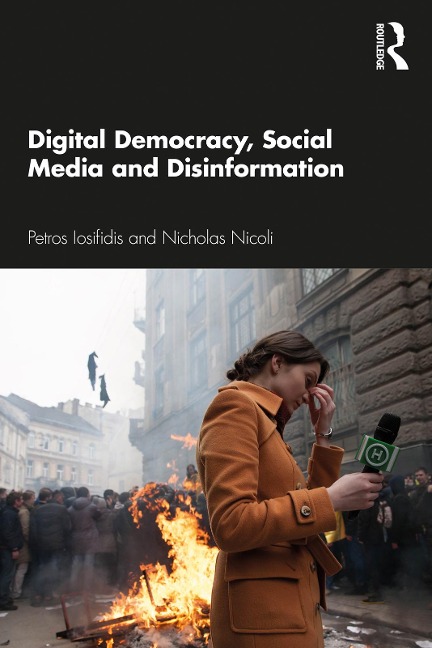
Digital Democracy, Social Media and Disinformation discusses some of the political, regulatory and technological issues which arise from the increased power of internet intermediaries (such as Facebook, Twitter and YouTube) and the impact of the spread of digital disinformation, especially in the midst of a health pandemic. The volume provides a detailed account of the main areas surrounding digital democracy, disinformation and fake news, freedom of expression and post-truth politics. It addresses the major theoretical and regulatory concepts of digital democracy and the 'network society' before offering potential socio-political and technological solutions to the fight against disinformation and fake news. These solutions include self-regulation, rebuttals and myth-busting, news literacy, policy recommendations, awareness and communication strategies and the potential of recent technologies such as the blockchain and public interest algorithms to counter disinformation. After addressing what has currently been done to combat disinformation and fake news, the volume argues that digital disinformation needs to be identified as a multifaceted problem, one that requires multiple approaches to resolve. Governments, regulators, think tanks, the academy and technology providers need to take more steps to better shape the next internet with as little digital disinformation as possible by means of a regional analysis. In this context, two cases concerning Russia and Ukraine are presented regarding disinformation and the ways it was handled. Written in a clear and direct style, this volume will appeal to students and researchers within the social sciences, computer science, law and business studies, as well as policy makers engaged in combating what constitutes one of the most pressing issues of the digital age.
Petros Iosifidis is professor in Sociology and Media Policy at City, University of London, UK. He has acknowledged expertise in the realms of communications policy, public service media, regulation of social media and media coverage of sport. He is author of 8 books including Reinventing Public Service Communication (2010), Public Television in the Digital Era (2012), Global Media and Communication Policy (2013), Public Sphere and Mediated Social Networks (2016, with M. Wheeler) and Global Media & National Policies (2016, with T. Flew and J. Steemers). He has contributed numerous book chapters and has published extensively in peer-review journals. He has served as an ESRC Peer Review College reviewer, as Principal Editor of the Journal of Digital Media & Policy and Co-Editor of the Palgrave Global Media Policy and Business. He is Vice-Chair of IAMCR Global Media Policy group and has acted as national expert on European projects. Nicholas Nicoli is associate professor of Communication at the University of Nicosia, Cyprus. His research focuses on communications policy and creative industry institutions. His initial research sought to deconstruct creativity management policies within public service broadcasters such as the BBC. Thereafter he focused his attention on the impact of communications policy upon strategic communication. His current research explores the intersection of communications policy, digital disinformation and the public interest. He has contributed in book chapters and has published extensively in peer-review journals. He is on the editorial boards of The Institute for Mass Media Journal of Digital Media & Policy and Journal of Media Business Studies and has acted as a national expert and science communications manager on European projects.
1. Introduction SECTION I: MARKET TRENDS, INTERNET INTERMEDIARIES AND THEORIES 2. Democracy, Public Sphere and Citizenship in a Network Society 3. Social Media, Populism and Regulatory Action SECTION II: THE CURRENT STATE OF ART OF DIGITAL DISINFORMATION 4. Digital Disinformation and Ways of Addressing It 5. European Policy Strategies in Combating Digital Disinformation SECTION III: COUNTRY CASES AND DIGITAL DISINFORMATION 6. Russia and Digital Disinformation 7. Ukraine and Digital Democracy 8. Conclusion
Dieses eBook wird im PDF-Format geliefert und ist mit einem Adobe Kopierschutz (DRM) versehen. Sie können dieses eBook mit allen Geräten lesen, die das PDF-Format und den Adobe Kopierschutz (DRM) unterstützen.
Zum Beispiel mit den folgenden Geräten:
• tolino Reader
Laden Sie das eBook direkt über den Reader-Shop auf dem tolino herunter oder übertragen Sie das eBook auf Ihren tolino mit einer kostenlosen Software wie beispielsweise Adobe Digital Editions.
• Sony Reader & andere eBook Reader
Laden Sie das eBook direkt über den Reader-Shop herunter oder übertragen Sie das eBook mit der kostenlosen Software Sony READER FOR PC/Mac oder Adobe Digital Editions auf ein Standard-Lesegeräte mit epub- und Adobe DRM-Unterstützung.
• Tablets & Smartphones
Möchten Sie dieses eBook auf Ihrem Smartphone oder Tablet lesen, finden Sie hier unsere kostenlose Lese-App für iPhone/iPad und Android Smartphone/Tablets.
• PC & Mac
Lesen Sie das eBook direkt nach dem Herunterladen mit einer kostenlosen Lesesoftware, beispielsweise Adobe Digital Editions, Sony READER FOR PC/Mac oder direkt über Ihre eBook-Bibliothek in Ihrem Konto unter „Meine eBooks“ - „online lesen“.
Schalten Sie das eBook mit Ihrer persönlichen Adobe ID auf bis zu sechs Geräten gleichzeitig frei.
Bitte beachten Sie, dass die Kindle-Geräte das Format nicht unterstützen und dieses eBook somit nicht auf Kindle-Geräten lesbar ist.