
Stöbern
genialokal zum Startbildschirm hinzufügen
Installieren Sie die genialokal App auf Ihrem Startbildschirm für einen schnellen Zugriff und eine komfortable Nutzung.
Installieren Sie die genialokal App auf Ihrem Startbildschirm für einen schnellen Zugriff und eine komfortable Nutzung.
Tippen Sie einfach auf Teilen:
 Und dann auf "Zum Home-Bildschirm [+]".
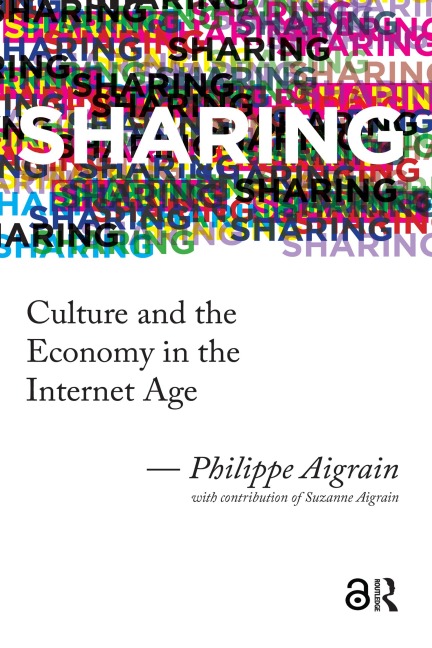
In the past fifteen years, file sharing of digital cultural works between individuals has been at the center of a number of debates on the future of culture itself. To some, sharing constitutes piracy, to be fought against and eradicated. Others see it as unavoidable, and table proposals to compensate for its harmful effects. Meanwhile, little progress has been made towards addressing the real challenges facing culture in a digital world.Sharing is LegitimateAn in-depth exploration of digital culture and its dissemination,Sharing: Culture and the Economy in the Internet Age offers a counterpoint to the dominant view that file sharing is piracy, analyzing it rather as the modern form of long recognized rights to share in culture. Sharing starts from a radically different viewpoint, namely that the non-market sharing of digital works is both legitimate and useful. Philippe Aigrain looks at the benefits of file sharing, which allows unknown writers and artists to be appreciated more easily. It supports this premise with empirical research, demonstrating that non-market sharing leads to more diversity in the attention given to various works. New Business ModelsConcentrating not only on the cultural enrichment caused by widely shared digital media, Sharing also discusses new financing models that would allow works to be shared freely by individuals without aim at profit. Aigrain carefully balances the needs to support and reward creative activity with a suitable respect for the cultural common good and proposes a new interpretation of the digital landscape.
Philippe Aigrain is the CEO of Sopinspace - Society for Public Information Spaces and one of the founders of La Quadrature du Net.
Acknowledgments, List of Figures, List of Tables, 1 Introduction, Setting the scene, 2 The Internet and creativity debate, 3 The value of non-market sharing, 4 Sustainable resources for creative activities, The Creative Contribution, 5 Which rights for whom? A choice of models, 6 Defining rights and obligations, 7 How much? 8 Sustainable financing for the commons, Implementation, 9 Organization and complementary policy measures, 10 Usage measurement for equitable rewards, 11 Clarification and counter-arguments, 12 From proposal to reality, Appendixes, A Diversity of attention for beginners, B The total cost of rewards and their distribution, C Modeling usage measurement, Notes, Bibliography, Index.
Dieses eBook wird im PDF-Format geliefert und ist mit einem Adobe Kopierschutz (DRM) versehen. Sie können dieses eBook mit allen Geräten lesen, die das PDF-Format und den Adobe Kopierschutz (DRM) unterstützen.
Zum Beispiel mit den folgenden Geräten:
• tolino Reader
Laden Sie das eBook direkt über den Reader-Shop auf dem tolino herunter oder übertragen Sie das eBook auf Ihren tolino mit einer kostenlosen Software wie beispielsweise Adobe Digital Editions.
• Sony Reader & andere eBook Reader
Laden Sie das eBook direkt über den Reader-Shop herunter oder übertragen Sie das eBook mit der kostenlosen Software Sony READER FOR PC/Mac oder Adobe Digital Editions auf ein Standard-Lesegeräte mit epub- und Adobe DRM-Unterstützung.
• Tablets & Smartphones
Möchten Sie dieses eBook auf Ihrem Smartphone oder Tablet lesen, finden Sie hier unsere kostenlose Lese-App für iPhone/iPad und Android Smartphone/Tablets.
• PC & Mac
Lesen Sie das eBook direkt nach dem Herunterladen mit einer kostenlosen Lesesoftware, beispielsweise Adobe Digital Editions, Sony READER FOR PC/Mac oder direkt über Ihre eBook-Bibliothek in Ihrem Konto unter „Meine eBooks“ - „online lesen“.
Schalten Sie das eBook mit Ihrer persönlichen Adobe ID auf bis zu sechs Geräten gleichzeitig frei.
Bitte beachten Sie, dass die Kindle-Geräte das Format nicht unterstützen und dieses eBook somit nicht auf Kindle-Geräten lesbar ist.