
Stöbern
genialokal zum Startbildschirm hinzufügen
Installieren Sie die genialokal App auf Ihrem Startbildschirm für einen schnellen Zugriff und eine komfortable Nutzung.
Installieren Sie die genialokal App auf Ihrem Startbildschirm für einen schnellen Zugriff und eine komfortable Nutzung.
Tippen Sie einfach auf Teilen:
 Und dann auf "Zum Home-Bildschirm [+]".
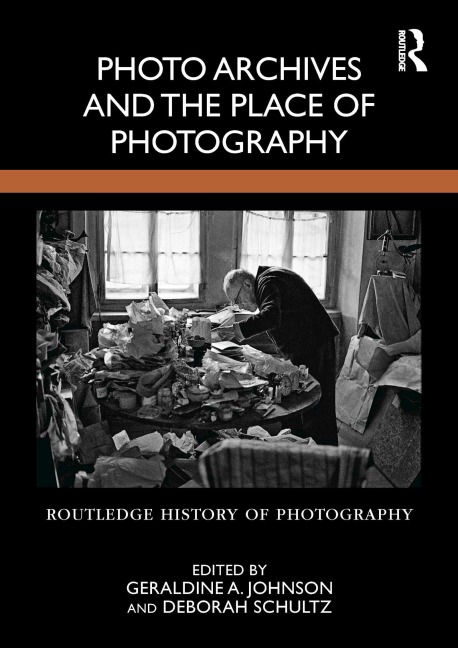
This collection of chapters investigates the effects of mobility and place on a range of photographic archives and explores their potential for cross-disciplinary dialogue. The book explores photographic images used in the study of art, as well as the implications of placing European images of non-European cultures in an archive, album, library, or museum. It also addresses questions of digital space, which renders images more visually accessible, but further complicates issues relating to location. The contributors consider these issues through case studies based on a variety of archives, institutions, and disciplines. Just as photographs are conceived as unstable objects, so conventional borders between disciplines and locations are challenged and opened up with chapters drawing on a range of disciplinary theories and practices. The focus of the individual chapters is global, as seen in contributions not only on Euro-American topics, but also on Orientalizing approaches to photographing the Ancient Near East, photographic archives of Bedouin subjects, and digital photographic archives in an Iranian context. This book will be of interest to scholars of art history, visual and cultural studies, anthropology, and archaeology, as well as those working on the history and theory of photography, and histories and theories of the archive.
Geraldine A. Johnson is Head of the Department of History of Art at the University of Oxford and a College Fellow of Christ Church, Oxford. Deborah Schultz is Senior Lecturer in Art History at Regent's University, London.
Part 1 Archival Processes and Places 1. Photographs in Place in Archives and the Writing of Photography's History 2. The Place of Photographs in an Archive and the Place of German Wissenschaft in Italy 3. Transports of Vision: Geopiety and Frederic Edwin Church's Photographic Collection of the Mediterranean and Middle East 4. Translating the Work of Art: Photo Archives and Institutional Memory in Oxford Part 2 Positioning the Photographic Object 5. Archiving Royal Heirlooms in the Age of Mass Reproduction: The Publication of the Crown Treasures of the Galerie d'Apollon at the Louvre and Early Color Photography 6. "The Days Before Railways and Photographs": Berenson's Photographic Archive and the Displacements of Art History 7. The Archive in Transition: Reframing Josef Sudek's Photographic Reproductions of Art 8. The Family of Man as Archive and Place 9. Reciprocating Place: Photo Archives and Bedouin in the Naqab Desert Part 3 Dislocating and Dematerializing Photographic Archives 10. Displacing the Photograph: The Photographic Image 11. Out of Place in Cyberspace: Living Digital Archives in Contemporary Iranian Pasts 12. Places of Photography and Phases of Digitization
Dieses eBook wird im PDF-Format geliefert und ist mit einem Adobe Kopierschutz (DRM) versehen. Sie können dieses eBook mit allen Geräten lesen, die das PDF-Format und den Adobe Kopierschutz (DRM) unterstützen.
Zum Beispiel mit den folgenden Geräten:
• tolino Reader
Laden Sie das eBook direkt über den Reader-Shop auf dem tolino herunter oder übertragen Sie das eBook auf Ihren tolino mit einer kostenlosen Software wie beispielsweise Adobe Digital Editions.
• Sony Reader & andere eBook Reader
Laden Sie das eBook direkt über den Reader-Shop herunter oder übertragen Sie das eBook mit der kostenlosen Software Sony READER FOR PC/Mac oder Adobe Digital Editions auf ein Standard-Lesegeräte mit epub- und Adobe DRM-Unterstützung.
• Tablets & Smartphones
Möchten Sie dieses eBook auf Ihrem Smartphone oder Tablet lesen, finden Sie hier unsere kostenlose Lese-App für iPhone/iPad und Android Smartphone/Tablets.
• PC & Mac
Lesen Sie das eBook direkt nach dem Herunterladen mit einer kostenlosen Lesesoftware, beispielsweise Adobe Digital Editions, Sony READER FOR PC/Mac oder direkt über Ihre eBook-Bibliothek in Ihrem Konto unter „Meine eBooks“ - „online lesen“.
Schalten Sie das eBook mit Ihrer persönlichen Adobe ID auf bis zu sechs Geräten gleichzeitig frei.
Bitte beachten Sie, dass die Kindle-Geräte das Format nicht unterstützen und dieses eBook somit nicht auf Kindle-Geräten lesbar ist.