Und dann auf "Zum Home-Bildschirm [+]".

Stöbern
genialokal zum Startbildschirm hinzufügen
Installieren Sie die genialokal App auf Ihrem Startbildschirm für einen schnellen Zugriff und eine komfortable Nutzung.
Installieren Sie die genialokal App auf Ihrem Startbildschirm für einen schnellen Zugriff und eine komfortable Nutzung.
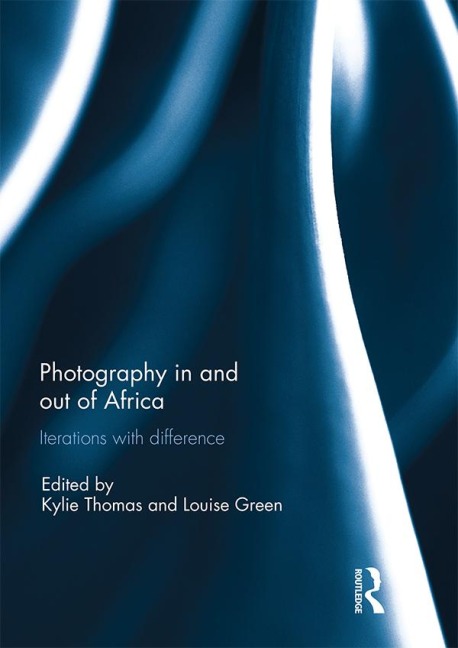
This book offers a range of perspectives on photography in Africa, bringing research on South African photography into conversation with work from several other places on the continent, including Angola, the DRC, Kenya, Mali, Morocco, Nigeria, Ethiopia, and Eritrea. The collection engages with the history of photography and its role in colonial regulatory regimes; with social documentary photography and practices of self-representation; and with the place of portraits in the production of subjectivities, as well as contemporary and experimental photographic practices. Through detailed analyses of particular photographs and photographic archives, the chapters in this book trace how photographs have been used both to affirm colonial worldviews and to disrupt and critique such forms of power. This book was originally published as a special issue of Social Dynamics.
Kylie Thomas is a Research Fellow at the Institute for Reconciliation and Social Justice, University of the Free State, South Africa. She writes about photography, violence, and South Africa during and after apartheid. She has held research fellowships at Stellenbosch University, the University of Cape Town, and the University of the Western Cape, and has taught in the Department of Fine Art at Rhodes University in Grahamstown, South Africa. She is the author of Impossible Mourning: HIV/AIDS and Visuality After Apartheid (2013). Louise Green is a senior lecturer in the Department of English at Stellenbosch University, Cape Town, South Africa. Her research draws on the critical insights of Theodor Adorno to investigate the place of nature in contemporary global culture. She works in the area of critical theory and visual studies, tracing the elusive, mobile and diverse formations of value in late capitalist society.
Part I 1. Introduction - Stereoscopic visions: reading colonial and contemporary African photography 2. Photographs from the Grahamstown Lunatic Asylum, South Africa, 1890-1907 3. Of bodies captured: the visual representation of the Paarl march and Poqo in apartheid South Africa 4. Post-abolition Angola in a post-colonial mission archive: a preliminary contextualisation of a photograph from the Spiritans' mission in Malange, northern Angola, 1904 5. Forward, Ever Forward: a reading of Robert Harris, Photographic Album of South African Scenery, Port Elizabeth, c.1880-1886 6. From salons to the native reserve: reformulating the ''native question'' through pictorial photography in 1950s South Africa 7. Mining photographs: David Goldblatt's On the Mines 8. One hundred years of suffering? ''Humanitarian crisis photography'' and self-representation in the Democratic Republic of the Congo 9. Social documentary and personal investigations in contemporary South African photography: Tracey Derrick's ''One in Nine'' series 10. Re-covered: Wangechi Mutu, Kenyatta A.C. Hinkle, and the postcolonial potentiality of black women in colonial(ist) photographs 11. An interview with George Hallett 12. ''I never didn't take a picture'': on photojournalism and conflict - an interview with Greg Marinovich Part II 13. Introduction - A density of texture: reading photography from South, North and West Africa 14. Fractured compounds: photographing post-apartheid compounds and hostels 15. Photographic portraits of migrants in South Africa: framed between identity photographs and (self-)presentation 16. Remembrance: the Essop brothers, formative realism and contemporary African photography 17. The politics of portrait photographs in southern Nigerian newspapers, 1945-1954 18. A lightness of vision: the poetics of Relation in Malian art photography 19. In search of African history: the re-appropriation of photographic archives by contemporary visual artists 20. From myth to history: Ethiopia and Eritrea's transformations in four photographic works 21. The aesthetic and practical fields of excrementality of L'boulevard festival 22. The aftermath of oppression: in search of resolution through family photographs of the forcibly removed of District Six, Cape Town
Dieses eBook wird im PDF-Format geliefert und ist mit einem Adobe Kopierschutz (DRM) versehen. Sie können dieses eBook mit allen Geräten lesen, die das PDF-Format und den Adobe Kopierschutz (DRM) unterstützen.
Zum Beispiel mit den folgenden Geräten:
• tolino Reader
Laden Sie das eBook direkt über den Reader-Shop auf dem tolino herunter oder übertragen Sie das eBook auf Ihren tolino mit einer kostenlosen Software wie beispielsweise Adobe Digital Editions.
• Sony Reader & andere eBook Reader
Laden Sie das eBook direkt über den Reader-Shop herunter oder übertragen Sie das eBook mit der kostenlosen Software Sony READER FOR PC/Mac oder Adobe Digital Editions auf ein Standard-Lesegeräte mit epub- und Adobe DRM-Unterstützung.
• Tablets & Smartphones
Möchten Sie dieses eBook auf Ihrem Smartphone oder Tablet lesen, finden Sie hier unsere kostenlose Lese-App für iPhone/iPad und Android Smartphone/Tablets.
• PC & Mac
Lesen Sie das eBook direkt nach dem Herunterladen mit einer kostenlosen Lesesoftware, beispielsweise Adobe Digital Editions, Sony READER FOR PC/Mac oder direkt über Ihre eBook-Bibliothek in Ihrem Konto unter „Meine eBooks“ - „online lesen“.
Schalten Sie das eBook mit Ihrer persönlichen Adobe ID auf bis zu sechs Geräten gleichzeitig frei.
Bitte beachten Sie, dass die Kindle-Geräte das Format nicht unterstützen und dieses eBook somit nicht auf Kindle-Geräten lesbar ist.