
Stöbern
genialokal zum Startbildschirm hinzufügen
Installieren Sie die genialokal App auf Ihrem Startbildschirm für einen schnellen Zugriff und eine komfortable Nutzung.
Installieren Sie die genialokal App auf Ihrem Startbildschirm für einen schnellen Zugriff und eine komfortable Nutzung.
Tippen Sie einfach auf Teilen:
 Und dann auf "Zum Home-Bildschirm [+]".
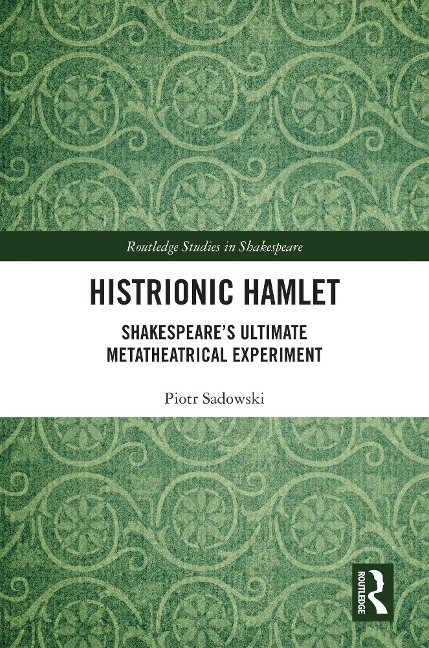
According to psychological research on acting, the histrionic personality consists of a compulsive tendency to play-act, exaggerate emotions, succumb to illusions, to seek attention through speech, body language, and costume, to be seductive and impulsive. An original intervention in the critical history of Shakespeare's most famous play, Histrionic Hamlet argues that the Danish Prince is a stage representation of just such a personality-a born actor and a drama queen rather than a politician-incongruously thrown in the middle of ruthless high-stakes power struggle requiring pragmatic rather than theatrical skills. Uniquely among other English revenge tragedies, in Hamlet a histrionic protagonist striking a series of gratuitous, baffling, self-indulgent, and counterproductive poses is called upon to carry out a challenging and brutal political task, which he spectacularly and tragically mismanages. Unable to perform on a theatrical stage as a professional actor, the Clown Prince bitterly play-acts anyway, turning all situations into opportunities of pretend play rather than effective political action. In consequence, he wastes tactical advantages over his enemies, endangers himself, and jeopardizes his revenge plan, if ever there was one. Histrionic Hamlet should be of interest to students of Shakespeare, theater practitioners, and anyone interested in human dysfunctional and maladaptive behavior.
Piotr Sadowski is a lecturer in Humanities in the Department of Film and Creative Media at Dublin Business School, Ireland. He is also a Visiting Research Fellow in the School of English, Trinity College, Dublin. Sadowski is the author of several books on medieval and Renaissance literature, film history, and cognitive semiotics.
Introduction: Between drama and life 1. "And all men and women merely players": Social role playing and theatrical acting 2. "Report me and my cause aright to the unsatisfied": Audiences and critics 3. "Revenge his foul and most unnatural murder!": Hamlet versus pragmatic avengers 4. "How is it that the clouds still hang on you?": Hamlet's teen angst 5. "This fellow in the cellarage": Hamlet and the Ghost 6. "Doubt truth to be a liar": The melancholy lover 7. "Will you see the players well bestowed": Hamlet in his element 8. "The play's the thing": Hamlet's unfortunate theatrical experiment 9. "There's letters sealed": Hamlet's nemesis 10. "The rest is silence": The dénouement
Dieses eBook wird im PDF-Format geliefert und ist mit einem Adobe Kopierschutz (DRM) versehen. Sie können dieses eBook mit allen Geräten lesen, die das PDF-Format und den Adobe Kopierschutz (DRM) unterstützen.
Zum Beispiel mit den folgenden Geräten:
• tolino Reader
Laden Sie das eBook direkt über den Reader-Shop auf dem tolino herunter oder übertragen Sie das eBook auf Ihren tolino mit einer kostenlosen Software wie beispielsweise Adobe Digital Editions.
• Sony Reader & andere eBook Reader
Laden Sie das eBook direkt über den Reader-Shop herunter oder übertragen Sie das eBook mit der kostenlosen Software Sony READER FOR PC/Mac oder Adobe Digital Editions auf ein Standard-Lesegeräte mit epub- und Adobe DRM-Unterstützung.
• Tablets & Smartphones
Möchten Sie dieses eBook auf Ihrem Smartphone oder Tablet lesen, finden Sie hier unsere kostenlose Lese-App für iPhone/iPad und Android Smartphone/Tablets.
• PC & Mac
Lesen Sie das eBook direkt nach dem Herunterladen mit einer kostenlosen Lesesoftware, beispielsweise Adobe Digital Editions, Sony READER FOR PC/Mac oder direkt über Ihre eBook-Bibliothek in Ihrem Konto unter „Meine eBooks“ - „online lesen“.
Schalten Sie das eBook mit Ihrer persönlichen Adobe ID auf bis zu sechs Geräten gleichzeitig frei.
Bitte beachten Sie, dass die Kindle-Geräte das Format nicht unterstützen und dieses eBook somit nicht auf Kindle-Geräten lesbar ist.