
Stöbern
genialokal zum Startbildschirm hinzufügen
Installieren Sie die genialokal App auf Ihrem Startbildschirm für einen schnellen Zugriff und eine komfortable Nutzung.
Installieren Sie die genialokal App auf Ihrem Startbildschirm für einen schnellen Zugriff und eine komfortable Nutzung.
Tippen Sie einfach auf Teilen:
 Und dann auf "Zum Home-Bildschirm [+]".
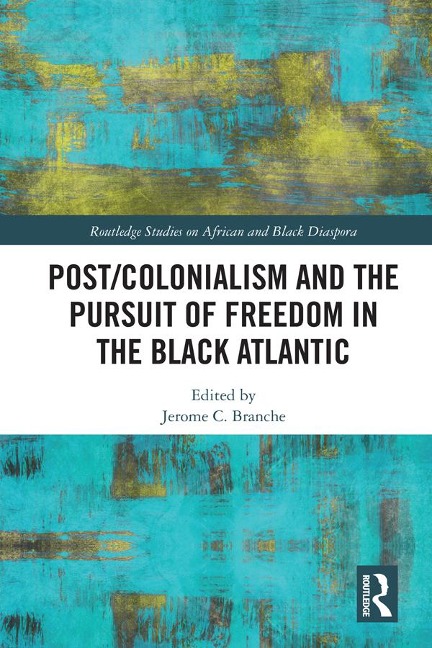
Post/Colonialism and the Pursuit of Freedom in the Black Atlantic is an interdisciplinary collection of essays of wide historical and geographic scope which engages the legacy of diaspora, colonialism and slavery. The contributors explore the confrontation between Africa's forced migrants and their unwelcoming new environments, in order to highlight the unique individual experiences of survival and assimilation that characterized Atlantic slavery. As they focus on the African or Afro-diasporan populations under study, the chapters gauge the degree to which formal independence, coming out of a variety of practices of opposition and resistance, lasting centuries in some cases, has translated into freedom, security, and a "good life." By foregrounding Hispanophone, Lusophone, and Francophone African and Afro-descendant concerns, over and against an often Anglo-centric focus in the field, the book brings a more representative approach to the area of diaspora or Black Atlantic studies, offering a more complete appreciation of Black Atlantic cultural production across history and across linguistic barriers.
Jerome Branche is Professor of Latin American Literature and Cultural Studies at the University of Pittsburgh, USA.
Introduction Part I: Iberian Colonialism: Some Principles, People, Praxis. 1. Black Atlantic Identities and the Spanish Inquisition 2. Picturing the Afro-Hispanic Struggle for Freedom in Early Modern Spain 3. Health, Raciality and Modernity in Colonial Equatorial Guinea 4. From Lusotropicalism to Lusofonia: Brazil-Angola Cultural Exchanges under the Sign of Coloniality Part II: Postcolonial Conundrums: Dystopia, Relocation, the 'Postcolony' 5. Origins and Representations of the Dictatorial State in Postcolonial Africa 6. Restless Flying from Tunisia to Haiti: A Question of Locating the Tunisian Revolution in Relation to Haiti and the Postcolonial Black Atlantic 7. No Telephone to Heaven: Post-Colonial Writing, the Pursuit of Freedom and Colonialism's Genocidal Impulse 8. The Lines of Anti-imperialism: The Circulation of Militant Cinema During the Long 1960s 9. (Re)mapping Black Paris: African Space in the Imperial Centre 10. Animal Presences: Post-Revolutionary Scenarios in Angola and Cuba 11. A Post-Colonial, National, and Post-National Discourse in Angola Poetry in the Work of Manuel Rui Part III: Identitarian Reflections 12. Citizenship and Freedom in the Black Atlantic after 1945 - Context and Challenge 13. African Diasporic Autochthonomies: A Syncretic Methodology for Liberatory Indigeneities
Dieses eBook wird im PDF-Format geliefert und ist mit einem Adobe Kopierschutz (DRM) versehen. Sie können dieses eBook mit allen Geräten lesen, die das PDF-Format und den Adobe Kopierschutz (DRM) unterstützen.
Zum Beispiel mit den folgenden Geräten:
• tolino Reader
Laden Sie das eBook direkt über den Reader-Shop auf dem tolino herunter oder übertragen Sie das eBook auf Ihren tolino mit einer kostenlosen Software wie beispielsweise Adobe Digital Editions.
• Sony Reader & andere eBook Reader
Laden Sie das eBook direkt über den Reader-Shop herunter oder übertragen Sie das eBook mit der kostenlosen Software Sony READER FOR PC/Mac oder Adobe Digital Editions auf ein Standard-Lesegeräte mit epub- und Adobe DRM-Unterstützung.
• Tablets & Smartphones
Möchten Sie dieses eBook auf Ihrem Smartphone oder Tablet lesen, finden Sie hier unsere kostenlose Lese-App für iPhone/iPad und Android Smartphone/Tablets.
• PC & Mac
Lesen Sie das eBook direkt nach dem Herunterladen mit einer kostenlosen Lesesoftware, beispielsweise Adobe Digital Editions, Sony READER FOR PC/Mac oder direkt über Ihre eBook-Bibliothek in Ihrem Konto unter „Meine eBooks“ - „online lesen“.
Schalten Sie das eBook mit Ihrer persönlichen Adobe ID auf bis zu sechs Geräten gleichzeitig frei.
Bitte beachten Sie, dass die Kindle-Geräte das Format nicht unterstützen und dieses eBook somit nicht auf Kindle-Geräten lesbar ist.