
Stöbern
genialokal zum Startbildschirm hinzufügen
Installieren Sie die genialokal App auf Ihrem Startbildschirm für einen schnellen Zugriff und eine komfortable Nutzung.
Installieren Sie die genialokal App auf Ihrem Startbildschirm für einen schnellen Zugriff und eine komfortable Nutzung.
Tippen Sie einfach auf Teilen:
 Und dann auf "Zum Home-Bildschirm [+]".

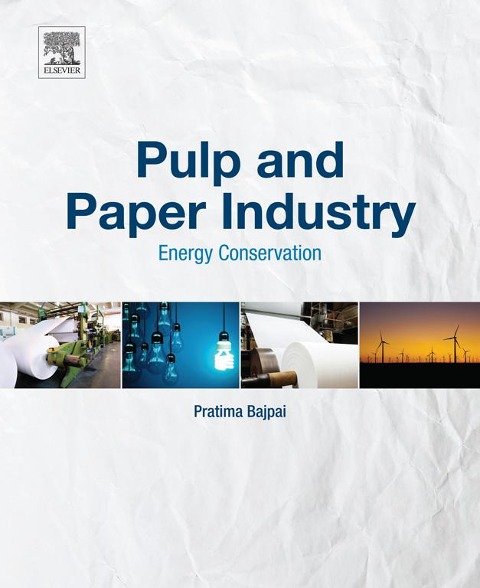
Pulp and Paper Industry: Energy Conservation presents a number of energy-efficient technologies and practices that are cost-effective and available for implementation today. Emerging energy-efficient technologies and future prospects in this field are also dealt with. Qualitative and quantitative results/data on energy savings for various steps of pulp and paper making process are presented. There is no specific book on this topic. This will be a comprehensive reference in the field.
- Thorough and in-depth coverage of energy-efficient technologies and practices in paper and pulp industry
- Presents cost-effective and available for implementation today technologies
- Discusses Biotechnological processes, especially enzymatic processes in the pulp and paper industry to reduce the energy consumption and improve the product quality
- Presents qualitative and quantitative results/data on energy savings for various steps of pulp and paper making process
Pratima Bajpai is currently working as a consultant in the field of paper and pulp. Her research career spans about 40 years, having worked at the National Sugar Institute, the University of Saskatchewan, the University of Western Ontario, and the Thapar Research and Industrial Development Centre in India. She also worked as a visiting professor at the University of Waterloo, Canada, and as a visiting researcher at the Kyushu University, Fukuoka, Japan. Dr. Bajpai's main areas of expertise are industrial biotechnology, pulp and paper, and environmental biotechnology.
1. General Background2. Global Pulp and Paper Production and Consumption3. Pulp and Paper Production Processes and Energy Overview4. Raw Material Preparation5. Chemical Pulping6. Bleaching7. Chemical Recovery8. Mechanical Pulping9. Recovered Fiber Processing10. Stock Preparation and Papermaking11. Emerging Technologies12. Future Perspectives13. Abbreviations