
Stöbern
genialokal zum Startbildschirm hinzufügen
Installieren Sie die genialokal App auf Ihrem Startbildschirm für einen schnellen Zugriff und eine komfortable Nutzung.
Installieren Sie die genialokal App auf Ihrem Startbildschirm für einen schnellen Zugriff und eine komfortable Nutzung.
Tippen Sie einfach auf Teilen:
 Und dann auf "Zum Home-Bildschirm [+]".
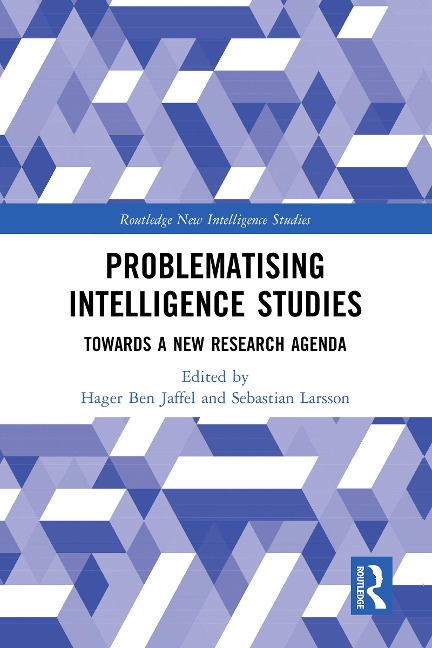
This book offers a new research agenda for intelligence studies in contemporary times. In contrast to Intelligence Studies (IS), whose aim has largely been to improve the performance of national security services and assist in policy making, this book takes the investigation of the new professionals and everyday practices of intelligence as the immediate point of departure. Starting from the observation that intelligence today is increasingly about counter-terrorism, crime control, surveillance, and other security-related issues, this book adopts a transdisciplinary approach for studying the shifting logics of intelligence, how it has come to involve an expanding number of empirical sites, such as the police, local community, prison and the Internet, as well as a corresponding multiplicity of new actors in these domains. Shifting the focus away from traditional spies and Anglo-American intelligence services, this book addresses the transformations of contemporary intelligence through empirically detailed and theoretically innovative analyses, making a key contribution to existing scholarship. This book will be of much interest to students of intelligence studies, critical security studies, foreign policy, and International Relations.
Hager Ben Jaffel is a Research Associate at the National Center for Scientific Research (CNRS), Paris, France. Sebastian Larsson is an Associate Senior Lecturer in War Studies at the Swedish Defence University, Sweden.
PART 1: Reconstructing the Object of Intelligence 1. Introduction: What's the Problem with Intelligence Studies? Outlining a New Research Agenda on Contemporary Intelligence 2. Towards a Reflexive Study of Intelligence Accountability 3. Tracing Pre-Emptive Intelligence-Led Policing (ILP): Immigration, Classification Struggles, and the Expansion of Intelligence Logics in British Policing PART 2: The Practical Transformations of Contemporary Intelligence 4. Citizen-Led Intelligence Gathering under UK's Prevent Duty 5. Prison Intelligence in France: An Empirical Investigation of the Emergence of Counter-Radicalisation Professionals 6. Manufacturing Intelligence: Police and Intelligence Services in Germany 7. Transversal Practices of Everyday Intelligence Work in New Zealand: Transnationalism, Commercialism, Diplomacy 8. The Techno-Legal Boundaries of Intelligence: NSA and FRA's Collaborations in Transatlantic Mass Surveillance PART 3: Conceptual Reconsiderations of Intelligence 9. Regulating the Internet in Times of Mass Surveillance: A Universal Global Space with Universal Human Rights? 10. After Cambridge Analytica: Rethinking Surveillance in the Age of (Com)Modification 11. Violence Performed in Secret by State Agents: For an Alternative Problematisation of Intelligence Studies PART 4: Conclusion 12. Conclusion: Towards New Intelligence Studies
Dieses eBook wird im PDF-Format geliefert und ist mit einem Adobe Kopierschutz (DRM) versehen. Sie können dieses eBook mit allen Geräten lesen, die das PDF-Format und den Adobe Kopierschutz (DRM) unterstützen.
Zum Beispiel mit den folgenden Geräten:
• tolino Reader
Laden Sie das eBook direkt über den Reader-Shop auf dem tolino herunter oder übertragen Sie das eBook auf Ihren tolino mit einer kostenlosen Software wie beispielsweise Adobe Digital Editions.
• Sony Reader & andere eBook Reader
Laden Sie das eBook direkt über den Reader-Shop herunter oder übertragen Sie das eBook mit der kostenlosen Software Sony READER FOR PC/Mac oder Adobe Digital Editions auf ein Standard-Lesegeräte mit epub- und Adobe DRM-Unterstützung.
• Tablets & Smartphones
Möchten Sie dieses eBook auf Ihrem Smartphone oder Tablet lesen, finden Sie hier unsere kostenlose Lese-App für iPhone/iPad und Android Smartphone/Tablets.
• PC & Mac
Lesen Sie das eBook direkt nach dem Herunterladen mit einer kostenlosen Lesesoftware, beispielsweise Adobe Digital Editions, Sony READER FOR PC/Mac oder direkt über Ihre eBook-Bibliothek in Ihrem Konto unter „Meine eBooks“ - „online lesen“.
Schalten Sie das eBook mit Ihrer persönlichen Adobe ID auf bis zu sechs Geräten gleichzeitig frei.
Bitte beachten Sie, dass die Kindle-Geräte das Format nicht unterstützen und dieses eBook somit nicht auf Kindle-Geräten lesbar ist.