
Stöbern
genialokal zum Startbildschirm hinzufügen
Installieren Sie die genialokal App auf Ihrem Startbildschirm für einen schnellen Zugriff und eine komfortable Nutzung.
Installieren Sie die genialokal App auf Ihrem Startbildschirm für einen schnellen Zugriff und eine komfortable Nutzung.
Tippen Sie einfach auf Teilen:
 Und dann auf "Zum Home-Bildschirm [+]".
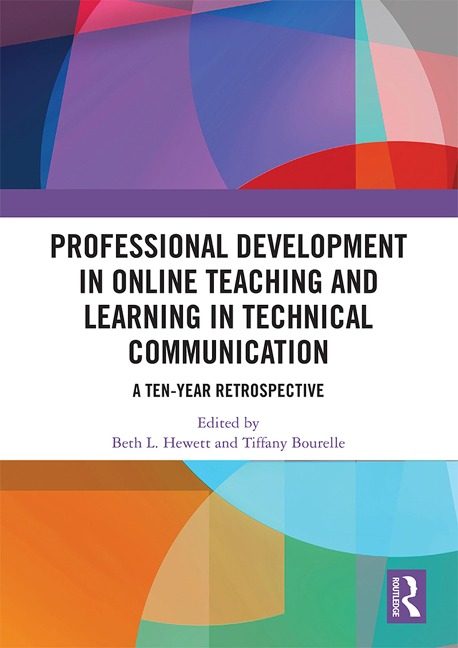
Technical communication instructors need professional development opportunities that will aid them in creating their online courses; in developing curricula; and in teaching in what may be a new environment. Although instructors can turn to instructional design teams for assistance in using Learning Management System and its functions, they specifically need their own first-hand, immersive learning within their pedagogical training. In other words, teachers need to learn in an online context like the environment that their students will use; such direct training helps instructors to facilitate student learning in a technologically distributed classroom. Beyond learning technological skills to facilitate a course, these teachers need to learn to use the technology effectively to keep students on track and to teach them skills and material. This collection-which includes three contributions from 2007 and 10 from 2017-focuses on the types of professional development instructors need to be successful in the online technical communication classroom. Formed as a 10-year retrospective of the field and its advances in online education professional development, the book offers instructors theoretical and practical suggestions for creating and teaching successful online courses and managing entire online technical communication programs. This book was originally published as a special issue of Technical Communication Quarterly (TCQ).
Beth L. Hewett is an expert in online literacy instruction; the immediate past President of the Global Society for Online Literacy Educators; and the owner of Defend & Publish, Forest Hill, USA, an adult writing-coaching business. She is the author of numerous books, articles, and book chapters regarding writing in a digital era. Tiffany Bourelle is an Associate Professor at the University of New Mexico, Albuquerque, USA, where she teaches first-year writing and technical communication. Her work has been published in Computers and Composition and TCQ, and she is the Co-Editor of Women's Professional Lives in Rhetoric and Composition: Choice, Chance, and Serendipity (with Elizabeth A. Flynn, 2018).
Preface 1. Editors' Note 2007 - Online Teaching and Learning: Preparation, Development, and Organizational Communication 2. Online Education in an Age of Globalization: Foundational Perspectives and Practices for Technical Communication Instructors and Trainers 3. Exploring Electronic Landscapes: Technical Communication, Online Learning, and Instructor Preparedness 4. Immersion in a Digital Pool: Training Prospective Online Instructors in Online Environments 5. Editors' Note 2017 - Online Teaching and Learning in Technical Communication: Continuing the Conversation 6. Of Friction Points and Infrastructures: Rethinking the Dynamics of Offering Online Education in Technical Communication in Global Contexts 7. Immersion, Reflection, Failure: Teaching Graduate Students to Teach Writing Online 8. Contingent Faculty, Online Writing Instruction, and Professional Development in Technical and Professional Communication 9. Developing Culturally and Linguistically Diverse Online Technical Communication Programs: Emerging Frameworks at University of Texas at El Paso 10. Revising the Online Classroom: Usability Testing for Training Online Technical Communication Instructors 11. Technical Communication Coaching: A Strategy for Instilling Reader Usability Assurance in Online Course Material Development 12. Balancing Institutional Demands with Effective Practice: A Lesson in Curricular and Professional Development 13. Training Technical and Professional Communication Educators for Online Internship Courses 14. Training Online Technical Communication Educators to Teach with Social Media: Best Practices and Professional Recommendations
Dieses eBook wird im PDF-Format geliefert und ist mit einem Adobe Kopierschutz (DRM) versehen. Sie können dieses eBook mit allen Geräten lesen, die das PDF-Format und den Adobe Kopierschutz (DRM) unterstützen.
Zum Beispiel mit den folgenden Geräten:
• tolino Reader
Laden Sie das eBook direkt über den Reader-Shop auf dem tolino herunter oder übertragen Sie das eBook auf Ihren tolino mit einer kostenlosen Software wie beispielsweise Adobe Digital Editions.
• Sony Reader & andere eBook Reader
Laden Sie das eBook direkt über den Reader-Shop herunter oder übertragen Sie das eBook mit der kostenlosen Software Sony READER FOR PC/Mac oder Adobe Digital Editions auf ein Standard-Lesegeräte mit epub- und Adobe DRM-Unterstützung.
• Tablets & Smartphones
Möchten Sie dieses eBook auf Ihrem Smartphone oder Tablet lesen, finden Sie hier unsere kostenlose Lese-App für iPhone/iPad und Android Smartphone/Tablets.
• PC & Mac
Lesen Sie das eBook direkt nach dem Herunterladen mit einer kostenlosen Lesesoftware, beispielsweise Adobe Digital Editions, Sony READER FOR PC/Mac oder direkt über Ihre eBook-Bibliothek in Ihrem Konto unter „Meine eBooks“ - „online lesen“.
Schalten Sie das eBook mit Ihrer persönlichen Adobe ID auf bis zu sechs Geräten gleichzeitig frei.
Bitte beachten Sie, dass die Kindle-Geräte das Format nicht unterstützen und dieses eBook somit nicht auf Kindle-Geräten lesbar ist.