
Stöbern
genialokal zum Startbildschirm hinzufügen
Installieren Sie die genialokal App auf Ihrem Startbildschirm für einen schnellen Zugriff und eine komfortable Nutzung.
Installieren Sie die genialokal App auf Ihrem Startbildschirm für einen schnellen Zugriff und eine komfortable Nutzung.
Tippen Sie einfach auf Teilen:
 Und dann auf "Zum Home-Bildschirm [+]".
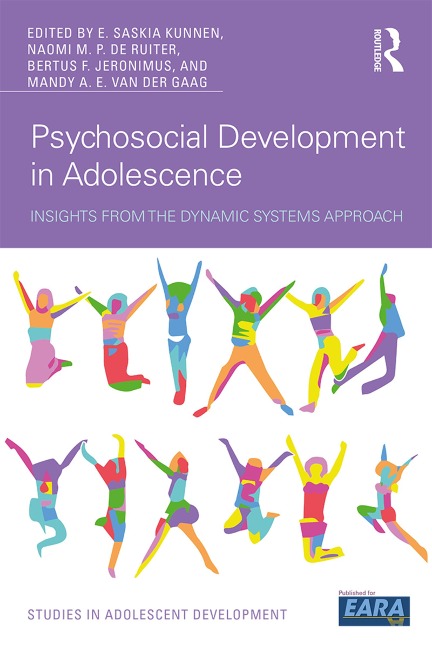
Over recent years, it has become clear that group-based approaches cannot directly be used to understand individual adolescent development. For that reason, interest in dynamic systems theory, or DST, has increased rapidly. Psychosocial Development in Adolescence: Insights from the Dynamic Systems Approach covers state-of-the-art insights into adolescent development that have resulted from adopting a dynamic systems approach. The first chapter of the book provides a basic introduction into dynamic systems principles and explains their consequences for the study of psychosocial development in adolescence. Subsequently, different experts discuss why and how we should apply a dynamic systems approach to the study of the adolescent transition period and psychological interventions. Various examples of the application of a dynamic systems approach are showcased, ranging from basic to more advanced techniques, as well as the insights they have generated. These applications cover a variety of fundamental topics in adolescent development, ranging from the development of identity, morality, sexuality, and peer networks, to more applied topics such as psychological interventions, educational dropout, and talent development. This book will be invaluable to both beginner and expert-level students and researchers interested in a dynamic systems approach and in the insights that it has yielded for adolescent development.
E. Saskia Kunnen is an Associate Professor of Developmental Psychology at the University of Groningen. Naomi M.P. de Ruiter is an Assistant Professor of Social Sciences at the University College Groningen within the University of Groningen. Bertus F. Jeronimus is an Assistant Professor of Developmental Psychology at the University of Groningen. Mandy A.E. van der Gaag is a Postdoctoral Researcher of Developmental Psychology at the University of Groningen.
Contents Chapter 1. Introduction to a dynamic systems approach to psychosocial development in adolsenceNaomi M.P. de Ruiter, Mandy A.E. van der Gaag, Bertus F. Jeronimus, and E. Saskia Kunnen Chapter 2. Systems in transition: the adolescent phase transition Tom Hollenstein and Tiffany Tsui Chapter 3. Matching methods to theory: using dynamic systems models to understand nested systems of adolescent development Nancy Darling and Ian Burns Chapter 4. A nonlinear dynamic systems approach to psychological interventions Günter Schiepek, Helmut Schöller, Roswitha Carl, Wolfgang Aichhorn, and Anna Lichtwarck-Aschoff Chapter 5. Conflict dynamics and the transformation of the parent-adolescent relationship Jessica P. Lougheed Chapter 6. The nature of adolescents' real-time self-esteem from a dynamic systems perspective: the socially embedded self-esteem model Naomi M.P. de Ruiter Chapter 7. Dynamic system perspectives on anxiety and depression Bertus F. Jeronimus Chapter 8. Trajectories preceding student dropout: an intra-individual process approach Mandy A.E. van der Gaag, E. Saskia Kunnen, and Paul L.C. van Geert Chapter 9. Identity development from a dynamic dystems perspective E. Saskia Kunnen Chapter 10. Youth's sexual relationships and development: improving our understanding through a dynamic systems approach Daphne van de Bongardt Chapter 11. Dynamic developmental complexity of moral motivation for adolescents and young adultsUlas Kaplan Chapter 12. Social development and group processes: a social network application to bullying and network interventionsGijs Huitsing, Jan K. Dijkstra, and René Veenstra Chapter 13. Visualizing individual dynamics: the case of a talented adolescent Joske K. van der Sluis, Steffie van der Steen, Gert Stulp, and Ruud J.R. den Hartigh Chapter 14. conclusion and Discussion: what we can gain from a dynamic systems approach to psychosocial development in adolescenceMandy A.E. van der Gaag, Naomi M.P. de Ruiter, Bertus F. Jeronimus, and E. Saskia Kunnen
Dieses eBook wird im PDF-Format geliefert und ist mit einem Adobe Kopierschutz (DRM) versehen. Sie können dieses eBook mit allen Geräten lesen, die das PDF-Format und den Adobe Kopierschutz (DRM) unterstützen.
Zum Beispiel mit den folgenden Geräten:
• tolino Reader
Laden Sie das eBook direkt über den Reader-Shop auf dem tolino herunter oder übertragen Sie das eBook auf Ihren tolino mit einer kostenlosen Software wie beispielsweise Adobe Digital Editions.
• Sony Reader & andere eBook Reader
Laden Sie das eBook direkt über den Reader-Shop herunter oder übertragen Sie das eBook mit der kostenlosen Software Sony READER FOR PC/Mac oder Adobe Digital Editions auf ein Standard-Lesegeräte mit epub- und Adobe DRM-Unterstützung.
• Tablets & Smartphones
Möchten Sie dieses eBook auf Ihrem Smartphone oder Tablet lesen, finden Sie hier unsere kostenlose Lese-App für iPhone/iPad und Android Smartphone/Tablets.
• PC & Mac
Lesen Sie das eBook direkt nach dem Herunterladen mit einer kostenlosen Lesesoftware, beispielsweise Adobe Digital Editions, Sony READER FOR PC/Mac oder direkt über Ihre eBook-Bibliothek in Ihrem Konto unter „Meine eBooks“ - „online lesen“.
Schalten Sie das eBook mit Ihrer persönlichen Adobe ID auf bis zu sechs Geräten gleichzeitig frei.
Bitte beachten Sie, dass die Kindle-Geräte das Format nicht unterstützen und dieses eBook somit nicht auf Kindle-Geräten lesbar ist.