Und dann auf "Zum Home-Bildschirm [+]".

Stöbern
genialokal zum Startbildschirm hinzufügen
Installieren Sie die genialokal App auf Ihrem Startbildschirm für einen schnellen Zugriff und eine komfortable Nutzung.
Installieren Sie die genialokal App auf Ihrem Startbildschirm für einen schnellen Zugriff und eine komfortable Nutzung.
Ihr gewünschter Artikel ist in 0 Buchhandlungen vorrätig - wählen Sie hier eine Buchhandlung in Ihrer Nähe aus:

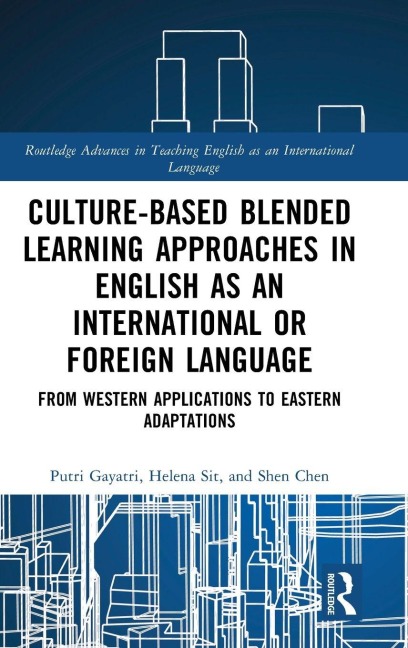
This book provides rich information about the historical development and progress of blended learning with a focus on the field of English as an International (EIL) or English as a Foreign Language (EFL) area. A valuable resource to researchers, educators, and higher degree students interested in second and foreign language education.
Putri Gayatri is a lecturer at Universitas Brawijaya, Indonesia. Her research interest focuses on blended learning, computer-assisted language learning (CALL), and technology integration in English as a Foreign Language (EFL) instruction. Currently, she serves as the Head of the English Language Service Unit at the Faculty of Agriculture, Universitas Brawijaya. Helena Sit is a teacher educator and PhD supervisor at the University of Newcastle, Australia, specialising in Teaching English to Speakers of Other Languages (TESOL) and teacher education. Recognised nationally and internationally, she has received the College Excellence Award for Research Supervision. She serves as an executive for the Applied Linguistics Association of Australia and as program co-chair for the Hong Kong Association for Education and Technology. Shen Chen is an honorary professor in the School of Education at the University of Newcastle, Australia. In addition, he has been a research fellow and a visiting professor in Cambridge University, UK; Warwick University, UK; University of California, Berkeley, USA; University of British Columbia, Canada; and the University of Hong Kong, Nanjing University, and Beijing Language and Culture University, China.
Table of Contents More about the Authors Series Foreword 1. Introduction: Blended Learning For EFL/EIL - Universal or Unique? 2. The Development of Blended Learning 3. Possibility and Feasibility of Blended Learning For EFL/EIL Teaching in Non-Western Countries 4. The Technology-Based Model 5. The Participants-Based Model 6. The Context-Based Model 7. Cultural Circles and Local Consideration 8.Conclusion: Towards a Culture-based Paradigm Index