Und dann auf "Zum Home-Bildschirm [+]".

Stöbern
genialokal zum Startbildschirm hinzufügen
Installieren Sie die genialokal App auf Ihrem Startbildschirm für einen schnellen Zugriff und eine komfortable Nutzung.
Installieren Sie die genialokal App auf Ihrem Startbildschirm für einen schnellen Zugriff und eine komfortable Nutzung.
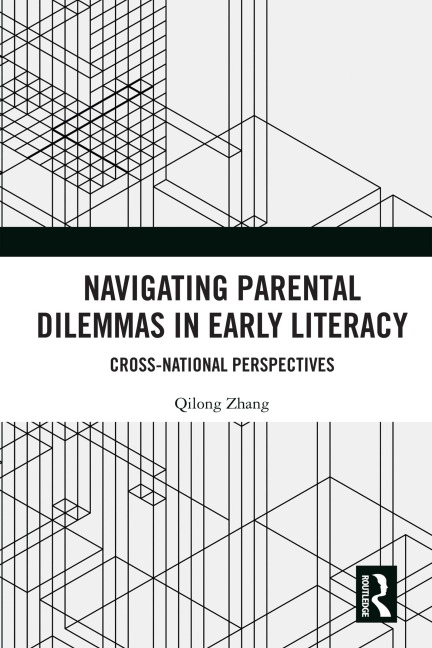
Combining contextual and theoretical perspectives, this book examines how parents navigate early literacy dilemmas through illustrative cases from three culturally and linguistically distinct contexts-English-speaking New Zealand, bilingual Arabic-English UAE, and Mandarin-speaking China-representing challenges faced by families globally. While early literacy offers abundant opportunities, it also presents challenges for families striving to support their young children's learning. Drawing on the author's extensive experience as an early childhood educator and researcher in these regions, the book presents real-life examples of how parents make decisions regarding screen time, reading instruction and language exposure. At the heart of the book lies a practical, four-step problem-solving framework called 'pragmatising', which connects expert advice with everyday practice. This framework helps families and educators to identify key ideas, interpret them in context, balance differing viewpoints and adapt strategies to meet children's needs. Eight common dilemmas, such as screen versus print, child-led versus adult-led talk, and when to introduce a second language, are used to illustrate the framework. Grounded in cross-national research, this timely and accessible book will serve educators, researchers, students of early education and literacy, and a global audience of parents and policymakers committed to supporting young children's learning and development.
Qilong Zhang is an Associate Professor of Early Childhood at United Arab Emirates University. Since 1990, he has worked as a teacher educator and researcher in China, New Zealand, and the UAE. His publications include a strong focus on early literacy and parental involvement.
Part I: Conceptual and Theoretical Foundations 1. Understanding Parental Dilemmas in Early Literacy: A Universal Challenge 2. Theoretical Lenses on Early Literacy Part II: Descriptive Practice in Early Literacy 3. Parenting for Early Literacy in an English-Dominant Context 4. Parenting for Early Literacy in an Arabic-English Bilingual Society 5. Parenting for Early Literacy in a Chinese Monolingual Setting Part III: Cross-Contextual Analysis and Implications 6. Shared and Divergent Parental Dilemmas in Early Literacy Across Three Contexts 7. A Contextual Model of Parental Dilemmas in Early Literacy 8. From Description to Prescription - Addressing Parental Dilemmas Through Pragmatising Part IV: Conclusion and Future Directions 9. Looking Back and Looking Ahead
Dieses eBook wird im PDF-Format geliefert und ist mit einem Adobe Kopierschutz (DRM) versehen. Sie können dieses eBook mit allen Geräten lesen, die das PDF-Format und den Adobe Kopierschutz (DRM) unterstützen.
Zum Beispiel mit den folgenden Geräten:
• tolino Reader
Laden Sie das eBook direkt über den Reader-Shop auf dem tolino herunter oder übertragen Sie das eBook auf Ihren tolino mit einer kostenlosen Software wie beispielsweise Adobe Digital Editions.
• Sony Reader & andere eBook Reader
Laden Sie das eBook direkt über den Reader-Shop herunter oder übertragen Sie das eBook mit der kostenlosen Software Sony READER FOR PC/Mac oder Adobe Digital Editions auf ein Standard-Lesegeräte mit epub- und Adobe DRM-Unterstützung.
• Tablets & Smartphones
Möchten Sie dieses eBook auf Ihrem Smartphone oder Tablet lesen, finden Sie hier unsere kostenlose Lese-App für iPhone/iPad und Android Smartphone/Tablets.
• PC & Mac
Lesen Sie das eBook direkt nach dem Herunterladen mit einer kostenlosen Lesesoftware, beispielsweise Adobe Digital Editions, Sony READER FOR PC/Mac oder direkt über Ihre eBook-Bibliothek in Ihrem Konto unter „Meine eBooks“ - „online lesen“.
Schalten Sie das eBook mit Ihrer persönlichen Adobe ID auf bis zu sechs Geräten gleichzeitig frei.
Bitte beachten Sie, dass die Kindle-Geräte das Format nicht unterstützen und dieses eBook somit nicht auf Kindle-Geräten lesbar ist.