Und dann auf "Zum Home-Bildschirm [+]".

Stöbern
genialokal zum Startbildschirm hinzufügen
Installieren Sie die genialokal App auf Ihrem Startbildschirm für einen schnellen Zugriff und eine komfortable Nutzung.
Installieren Sie die genialokal App auf Ihrem Startbildschirm für einen schnellen Zugriff und eine komfortable Nutzung.
Ihr gewünschter Artikel ist in 0 Buchhandlungen vorrätig - wählen Sie hier eine Buchhandlung in Ihrer Nähe aus:

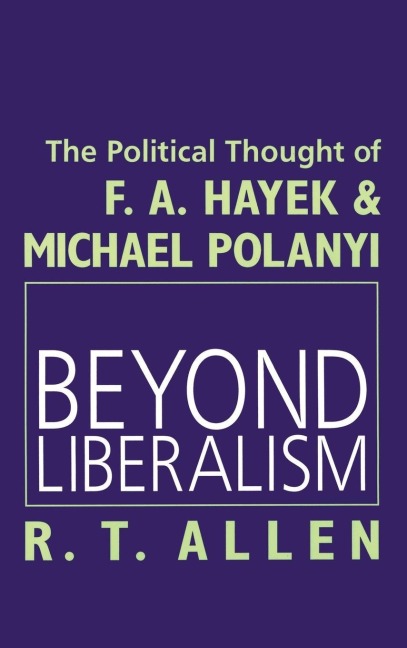
Allen takes up Michael Polanyi's argument that "negative" liberty -- doing as one pleases so long as one does not impinge upon the equal liberty of others -- must and has led to destructive nihilism and a fierce reaction to collectivism. He shows how Polanyi's political philosophy evolved into a more "positive" concept of liberty, converging upon the archetypal conservatism of Edmund Burke. Allen examines Polanyi's and F.A. Hayek's thinking with respect to the nature, value, and foundations of liberty. For Allen, only Christianity, and certainly no modern philosophy, has a conception of the unique individual and his irreplaceable value and of a political order that transcends itself into the moral order. Beyond Liberalism challenges deeply ingrained notions of liberty and its meaning in modern society.
R. T. Allen
Introduction; I: The Nature of Liberty; 1: Berlin and Positive and Negative Liberty; 2: Aspects and Notions of Liberty; 3: Hayek and Liberty under Law; 4: The Tacit Dimensions of Liberty; II: The Value of Liberty; 5: Von Mises's Sceptical Utilitarianism; 6: The Open Society and Its Lack of Value; 7: The Value of the Great Society; 8: Justice and the Rights of the Individual; 9: Dedication or Servitude; III: The Foundations and Presuppositions of Liberty; 10: The Limits of Contract and Openness; 11: Two Models of a Free Society; 12: The Obligations of a Free Society; 13: The Emotional Bonds of Society; 14: Ultimate Questions