
Stöbern
genialokal zum Startbildschirm hinzufügen
Installieren Sie die genialokal App auf Ihrem Startbildschirm für einen schnellen Zugriff und eine komfortable Nutzung.
Installieren Sie die genialokal App auf Ihrem Startbildschirm für einen schnellen Zugriff und eine komfortable Nutzung.
Tippen Sie einfach auf Teilen:
 Und dann auf "Zum Home-Bildschirm [+]".
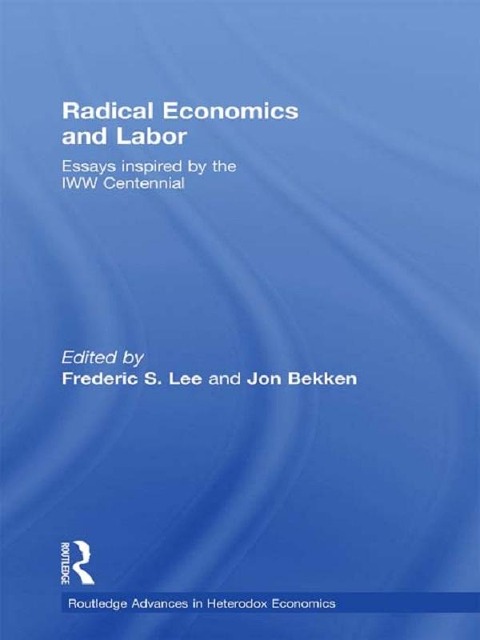
To celebrate the centenary of the most radical union in North America - The Industrial Workers of the World - this collection examines radical economics and the labor movement in the 20th Century. The union advocates direct action to raise wages and increase job control, and it envisions the eventual abolition of capitalism and the wage system through the general strike. The contributors to this volume speak both to economists and to those in the labor movement, and point to fruitful ways in which these radical heterodox traditions have engaged and continue to engage each other and with the labor movement. In view of the current crisis of organized labor and the beleaguered state of the working class-phenomena which are global in scope-the book is both timely and important. Representing a significant contribution to the non-mainstream literature on labor economics, the book reactivates a marginalized analytical tradition which can shed a great deal of light on the origins and evolution of the difficulties confronting workers throughout the world. This volume will be of most interest to students and scholars of heterodox economics, those involved with or researching The Industrial Workers of the World, as well as anyone interested in the more radical side of unions, anarchism and labor organizations in an economic context.
Frederic S. Lee is Professor of Economics at University of Missouri-Kansas City, USA and Jon Bekken is an Associate Professor of Communications at Albright College, USA and former General Secretary-Treasurer of the Industrial Workers of the World.
Introduction: Radical Economics and the Labor Movement Frederic S. Lee and Jon Bekken 1. Senex's Letters on Associated Labour and the Pioneer, 1834: A Syndicalist Political Economy in the Making, Noel Thompson 2. Peter Kropotkin's Anarchist Economics for a New Society, Jon Bekken 3. Some Notes on Anarchist Economic Thought Mathew Forstater 4. The Economics of the Industrial Workers of the World: Job Control and Revolution Frederic S. Lee 5. Economic Science and the Left: Thoughts on Sraffa's Equations and the Efficacy of Organized Labor, Tony Aspromourgos 6. John Kenneth Galbraith's New Industrial State 40 Years Later: A Radical Perspective, Spencer Pack 7. A Radical Critique and Alternative to U.S. Industrial Relations Theory and Practice, Richard McIntyre and Michael Hillard 8. Labor during Transition: A Radical Institutional Approach by John Marangos 9. Offshore Production and Global Labor Arbitrage: A New Era of Capitalism? Claude Pottier 10. Financialization, Employability and their Impacts on the Bank Workers' Union Movement in Brazil (1994-2004), Maria Alejandra Caporale Madi, José Ricardo Barbosa Gonçalves and José Dari Krein
Dieses eBook wird im PDF-Format geliefert und ist mit einem Adobe Kopierschutz (DRM) versehen. Sie können dieses eBook mit allen Geräten lesen, die das PDF-Format und den Adobe Kopierschutz (DRM) unterstützen.
Zum Beispiel mit den folgenden Geräten:
• tolino Reader
Laden Sie das eBook direkt über den Reader-Shop auf dem tolino herunter oder übertragen Sie das eBook auf Ihren tolino mit einer kostenlosen Software wie beispielsweise Adobe Digital Editions.
• Sony Reader & andere eBook Reader
Laden Sie das eBook direkt über den Reader-Shop herunter oder übertragen Sie das eBook mit der kostenlosen Software Sony READER FOR PC/Mac oder Adobe Digital Editions auf ein Standard-Lesegeräte mit epub- und Adobe DRM-Unterstützung.
• Tablets & Smartphones
Möchten Sie dieses eBook auf Ihrem Smartphone oder Tablet lesen, finden Sie hier unsere kostenlose Lese-App für iPhone/iPad und Android Smartphone/Tablets.
• PC & Mac
Lesen Sie das eBook direkt nach dem Herunterladen mit einer kostenlosen Lesesoftware, beispielsweise Adobe Digital Editions, Sony READER FOR PC/Mac oder direkt über Ihre eBook-Bibliothek in Ihrem Konto unter „Meine eBooks“ - „online lesen“.
Schalten Sie das eBook mit Ihrer persönlichen Adobe ID auf bis zu sechs Geräten gleichzeitig frei.
Bitte beachten Sie, dass die Kindle-Geräte das Format nicht unterstützen und dieses eBook somit nicht auf Kindle-Geräten lesbar ist.