Und dann auf "Zum Home-Bildschirm [+]".

Stöbern
genialokal zum Startbildschirm hinzufügen
Installieren Sie die genialokal App auf Ihrem Startbildschirm für einen schnellen Zugriff und eine komfortable Nutzung.
Installieren Sie die genialokal App auf Ihrem Startbildschirm für einen schnellen Zugriff und eine komfortable Nutzung.
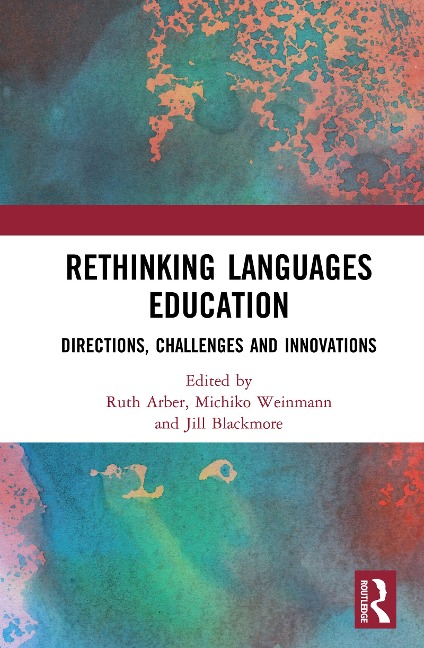
Rethinking Languages Education assembles innovative research from experts in the fields of sociocultural theory, applied linguistics and education. The contributors interrogate innovative and recent thinking and broach controversies about the theoretical and practical considerations that underpin the implementation of effective Languages pedagogy in twenty-first-century classrooms. Crucially, Rethinking Languages Education explores established understandings about language, culture and education to provide a more comprehensive and flexible understanding of Languages education that responds to local classrooms impacted by global and transnational change, and the politics of language, culture and identity. Rethinking Languages Education focuses on questions about ways that we can develop farsighted and successful Languages education for diverse students in globalised contexts. The response to these questions is multi-layered, and takes into account the complex interactions between policy, curriculum and practice, as well as their contention and implementation. In doing so, this book addresses and integrates innovative perspectives of contemporary theory and pedagogy for Languages, TESOL and EAL/D education. It includes diverse discussions around practice, and addresses issues of the dominance of prestige Languages programs for 'minority' and 'heritage' languages, as well as discussing controversies about the current provision of English and Languages programs around the world.
Ruth Arber is Senior Lecturer at Deakin University, Melbourne, Australia, Co-Director of the Centre for Teaching and Learning Languages (CTaLL) and Director of the Masters of Education (TESOL). Michiko Weinmann is Senior Lecturer in Languages Education and Co-Director of the Centre for Teaching and Learning Languages (CTaLL) at Deakin University, Melbourne. Jill Blackmore is an Alfred Deakin (University) Professor and the Founding Director of the Centre for Research in Educational Futures and Innovation, Deakin University.
Introduction: Rethinking Languages Education: Dismantling Instrumentalist Agendas (Ruth Arber, Michiko Weinmann and Jill Blackmore) Part 1: Directions 1 'Curses in TESOL': Postcolonial Desires for Colonial English (Angel MY Lin and Suhanthie Motha) 2 Multilingual Researchers' Innovative Post-monolingual Critical Thinking: Rethinking Languages Through Problem-posing Education (Michael Singh) 3 Towards Innovative English Language Teaching: Multilingualism and the Re-conceptualisation of the Chinese/Western Binary (Yingmei Luo) 4 Translanguaging across Time, Space and Generations: Ndjébbana Djérwarra Share 42 Stories in 20 Minutes (Glenn Auld, Lena Djabibba and Joanne O'Mara) 5 Interrogating the 'Normal': (Noticing) Discourses of Legitimacy, Identity and Difference in Languages Education (Michiko Weinmann, Ruth Arber and Roderick Neilsen) Part 2: Challenges 6 'Can We Talk about This?' Power, Ideology and Sensitive Topics in an Iranian EAL Setting (Hossein Shokouhi and Elham Mohammadi) 7 The Complexity of Vietnamese English-language Learners' Motivation (Nhung Nguyen) 8 Heterogeneity in Foreign-language Learning in Germany: Developments and Challenges (Liesel Hermes) 9 Geopolitics and Trilingual Media of Instruction in Post-conflict Sri Lanka (Indika Liyanage) Part 3: Innovations 10 Defining Bilingualism, Multilingualism and Plurilingualism in Education: Innovations in Teaching for Diversity in Mainstream Classrooms (Jennifer Alford and Margaret Kettle) 11 New Opportunities for Languages Learning through 21st-century Knowledge-building Communities (Shirley O'Neill) 12 Demystifying 'Grammar': Towards a More Language-aware Teaching Workforce (Roderick Neilsen) 13 Teaching Languages from an Intercultural Perspective: Rethinking the Nature of Learning (Anthony Liddicoat)
Dieses eBook wird im PDF-Format geliefert und ist mit einem Adobe Kopierschutz (DRM) versehen. Sie können dieses eBook mit allen Geräten lesen, die das PDF-Format und den Adobe Kopierschutz (DRM) unterstützen.
Zum Beispiel mit den folgenden Geräten:
• tolino Reader
Laden Sie das eBook direkt über den Reader-Shop auf dem tolino herunter oder übertragen Sie das eBook auf Ihren tolino mit einer kostenlosen Software wie beispielsweise Adobe Digital Editions.
• Sony Reader & andere eBook Reader
Laden Sie das eBook direkt über den Reader-Shop herunter oder übertragen Sie das eBook mit der kostenlosen Software Sony READER FOR PC/Mac oder Adobe Digital Editions auf ein Standard-Lesegeräte mit epub- und Adobe DRM-Unterstützung.
• Tablets & Smartphones
Möchten Sie dieses eBook auf Ihrem Smartphone oder Tablet lesen, finden Sie hier unsere kostenlose Lese-App für iPhone/iPad und Android Smartphone/Tablets.
• PC & Mac
Lesen Sie das eBook direkt nach dem Herunterladen mit einer kostenlosen Lesesoftware, beispielsweise Adobe Digital Editions, Sony READER FOR PC/Mac oder direkt über Ihre eBook-Bibliothek in Ihrem Konto unter „Meine eBooks“ - „online lesen“.
Schalten Sie das eBook mit Ihrer persönlichen Adobe ID auf bis zu sechs Geräten gleichzeitig frei.
Bitte beachten Sie, dass die Kindle-Geräte das Format nicht unterstützen und dieses eBook somit nicht auf Kindle-Geräten lesbar ist.