
Stöbern
genialokal zum Startbildschirm hinzufügen
Installieren Sie die genialokal App auf Ihrem Startbildschirm für einen schnellen Zugriff und eine komfortable Nutzung.
Installieren Sie die genialokal App auf Ihrem Startbildschirm für einen schnellen Zugriff und eine komfortable Nutzung.
Tippen Sie einfach auf Teilen:
 Und dann auf "Zum Home-Bildschirm [+]".
Ihr gewünschter Artikel ist in 0 Buchhandlungen vorrätig - wählen Sie hier eine Buchhandlung in Ihrer Nähe aus:

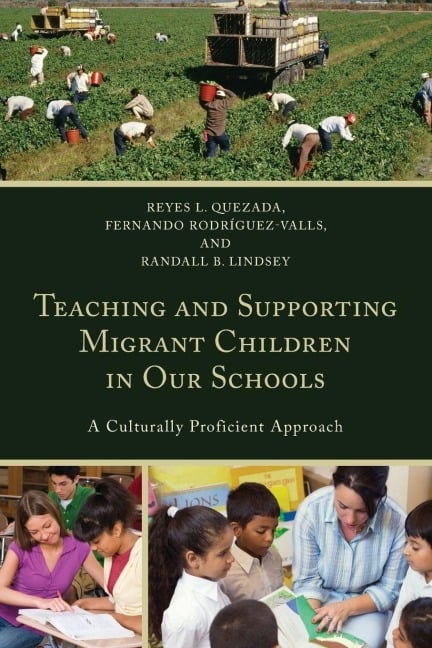
General approaches to multiculturalism run the risk of overlooking an increasingly diverse student population that deserves special consideration and attention: students from immigrant backgrounds whose families toil the fields in order to provide better educational opportunities for their children. This book’s purpose is to guide educators to think deeply about their roles and responsibilities in the education of children of farmworker families in our nation’s schools. Readers will view their classrooms, schools, districts, and the migrant programs they lead in a broad and inclusive manner through the lens of cultural proficiency.
Reyes L. Quezada is a professor in the Department of Learning and Teaching in the School of Leadership and Education Sciences where his research focus is in bilingual education, equity, cultural proficiency, parent involvement, international education, inclusion and diversity. Born in San Juan de Los Lagos, Jalisco, Mexico, he immigrated to the U.S at the age of seven. His father was a migrant farmworker who participated in the U.S. Bracero program (U.S. Guest Worker).
Foreword: Roger Rossenthal Acknowledgments PART I: Tools to Support Use of this book Chapter 1: The Context in Educating Children of Migrant Farmworkers Chapter 2: The Tools of Cultural Proficiency for Educator Use Chapter 3: Learning Communities + Culturally Proficient Leadership = Students from Migrant Families Being Well Served Chapter 4: Educators' Rubric for Inclusion and Support of Migrant Education Students, Families and Communities - Moving Beyond Rhetoric PART II: Essential Elements Chapter 5: Assessing Cultural Knowledge-From Self-Centered Learning to Socially Just Student- and Community-Asset LearningChapter 6: Valuing Diversity is Reflected in the Beliefs and Values You and Your School's Hold and How You Share those Beliefs and Values with Your Community Chapter 7: Managing the Dynamics of Difference to Make a Difference Chapter 8: Adapting to the Diversity as a Team in the Schools and Communities We Serve Chapter 9: Institutionalizing Cultural Knowledge-for You, Your School, and the Migrant Communities You Serve PART III: Next Steps Chapter 10: Professional Communities Learning Together to Improve Migrant Student's Academic and Social Outcomes Appendix: Resources in Support of Migrant Education References About the Authors Index