Und dann auf "Zum Home-Bildschirm [+]".

Stöbern
genialokal zum Startbildschirm hinzufügen
Installieren Sie die genialokal App auf Ihrem Startbildschirm für einen schnellen Zugriff und eine komfortable Nutzung.
Installieren Sie die genialokal App auf Ihrem Startbildschirm für einen schnellen Zugriff und eine komfortable Nutzung.
Ihr gewünschter Artikel ist in 0 Buchhandlungen vorrätig - wählen Sie hier eine Buchhandlung in Ihrer Nähe aus:

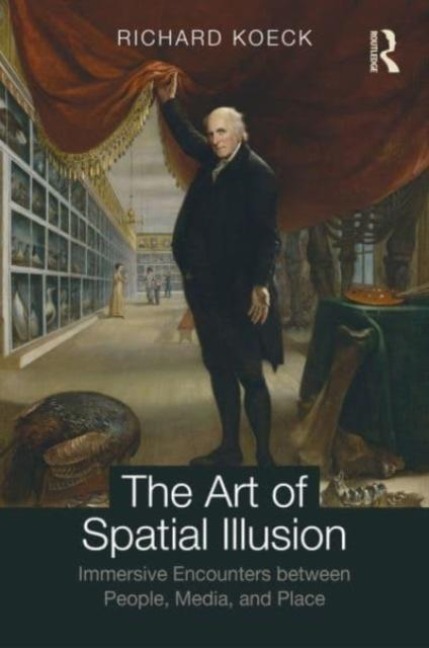
This book provides an insightful exploration of the evolving relationship between humans, media, and spatial environments. The author offers a compelling reading and re-evaluation of architectural history and media theory, drawing connections between historical practices, technological innovations, and contemporary immersive experiences.
Richard Koeck is Professor and Chair in Architecture and the Visual Arts in the School of Architecture at the University of Liverpool. He is also Director of CAVA | Centre for Architecture and the Visual Arts and founding director of the film/media company CineTecture in the UK. He is author of Cine-Scapes (2013) and co-/editor of several books on film and architecture. His cross-disciplinary R&D innovation and UKRI expertise is situated at the intersection of space, media, and culture with a particular interest in digital/immersive spaces. He led and collaborated on large projects in the architecture, creative arts, and entertainment sectors in the UK, China, and Singapore.
PART 1: The Surface | Screen Image Illusions 1. 16/17th c. Theaters of the World: Curiosity Cabinets and Whispering Chambers 2. 18th c. Panoramic Space: Barker and the Re-Representation of Power 3. 19th c. Panoramic Precision: The Colosseum of Hornor and Parris PART 2: The Stage | Moving Image Immersions 4. Arrival in the Age of Moving Spectacles 5. Paris 1900: Spatial Illusions and Immersive Experiences 6. Early Cinema: Producing Moving Image Simulations PART 3: The Interface | Architecture and Place Experiences 7. Pre-Modern: Spaces of Purpose, Image and Performace 8. Modern: Immersed in Abstract Spaces, Signs and Systems 9. Post-Modern: Sign, Screens and Pixels Conclusion: The Hybrid | Beyond the Screen 10. Hybridized Realities: The Rise of Screen Corporeality 11. Concluding Remarks