Und dann auf "Zum Home-Bildschirm [+]".

Stöbern
genialokal zum Startbildschirm hinzufügen
Installieren Sie die genialokal App auf Ihrem Startbildschirm für einen schnellen Zugriff und eine komfortable Nutzung.
Installieren Sie die genialokal App auf Ihrem Startbildschirm für einen schnellen Zugriff und eine komfortable Nutzung.
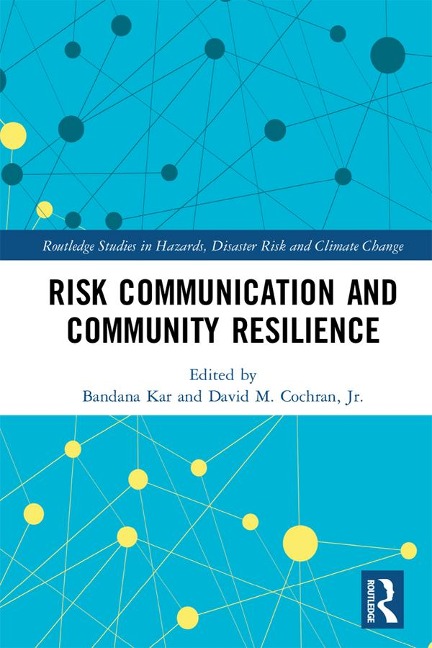
Risk communication is crucial to building community resilience and reducing risk from extreme events. True community resilience involves accurate and timely dissemination of risk information to stakeholders. This book examines the policy and science of risk communication in the digital era. Themes include public awareness of risk and public participation in risk communication and resilience building. The first half of the book focuses on conceptual frameworks, components, and the role of citizens in risk communication. The second half examines the role of risk communication in resilience building and provides an overview of some of its challenges in the era of social media. This book looks at the effectiveness of risk communication in socially and culturally diverse communities in the developed and developing world. The interdisciplinary approach bridges academic research and applied policy action. Contributions from Latin America and Asia provide insight into global risk communication at a time when digital technologies have rapidly transformed conventional communication approaches. This book will be of critical interest to policy makers, academicians, and researchers, and will be a valuable reference source for university courses that focus on emergency management, risk communication, and resilience.
Bandana Kar is a Research Scientist in the National Security Emerging Technologies Division at Oak Ridge National Laboratory, Oak Ridge, Tennessee, USA. David M. Cochran, Jr. is a Professor of Geography in the School of Biological, Environmental and Earth Sciences at the University of Southern Mississippi in Hattiesburg, Mississippi, USA.
Part 1 Risk Communication in the Digital Era 1. Text-To-Action: Understanding the Interaction between Accessibility of Wireless Emergency Alerts and Behavioral Response 2. Bounded Rationality and Federal Disaster Recovery Information: Understanding Why Access to Information Matters 3. Public Expectations of and Responses to WEA Message Content Part 2 Citizen Participation in Risk Communication and Resilience 4. River of Difference: Using Participatory Risk Mapping to Assess Perceived Risks in Laredo Texas, U.S.A. and Nuevo Laredo, Tamaulipas, Mexico 5. Local Emergency Planning Committees (LEPCs): 30 Years as Cross-Sector Forums for Community Risk Communication 6. Harnessing the Power of Social Media for Disaster Risk Reduction and the Mitigation Planning Process 7. Promoting Public Involvement in Disaster Risk Communication in Nigeria Part 3 Role of Risk Communication in Resilience 8. Earthquake Early Warning Systems: International Experience 9. The Role of Social Media in Enhancing Risk Communication and Promoting Community Resilience in the Midst of a Disaster 10. The Ports Resilience Index: A Participatory Approach to Building Resilience 11. Advancing Resilience Post-disaster: Improving Designer-User Communication in the Post-Lushan Earthquake Reconstruction and Recovery Part 4 Challenges and Future Direction of Risk Communication 12. A Case Study of Climate Change, Extreme Weather Events, and Risk Communication in a Coastal Community 13. Waves of Change: Coastal Hazards, Tourism Development, and Risk Communication along the Pacific Coast of Nicaragua 14. Risk and Crisis Communication in Schools: Understanding Current Challenges and Opportunities 15. The Use of Social Media in Crisis Communication
Dieses eBook wird im PDF-Format geliefert und ist mit einem Adobe Kopierschutz (DRM) versehen. Sie können dieses eBook mit allen Geräten lesen, die das PDF-Format und den Adobe Kopierschutz (DRM) unterstützen.
Zum Beispiel mit den folgenden Geräten:
• tolino Reader
Laden Sie das eBook direkt über den Reader-Shop auf dem tolino herunter oder übertragen Sie das eBook auf Ihren tolino mit einer kostenlosen Software wie beispielsweise Adobe Digital Editions.
• Sony Reader & andere eBook Reader
Laden Sie das eBook direkt über den Reader-Shop herunter oder übertragen Sie das eBook mit der kostenlosen Software Sony READER FOR PC/Mac oder Adobe Digital Editions auf ein Standard-Lesegeräte mit epub- und Adobe DRM-Unterstützung.
• Tablets & Smartphones
Möchten Sie dieses eBook auf Ihrem Smartphone oder Tablet lesen, finden Sie hier unsere kostenlose Lese-App für iPhone/iPad und Android Smartphone/Tablets.
• PC & Mac
Lesen Sie das eBook direkt nach dem Herunterladen mit einer kostenlosen Lesesoftware, beispielsweise Adobe Digital Editions, Sony READER FOR PC/Mac oder direkt über Ihre eBook-Bibliothek in Ihrem Konto unter „Meine eBooks“ - „online lesen“.
Schalten Sie das eBook mit Ihrer persönlichen Adobe ID auf bis zu sechs Geräten gleichzeitig frei.
Bitte beachten Sie, dass die Kindle-Geräte das Format nicht unterstützen und dieses eBook somit nicht auf Kindle-Geräten lesbar ist.