Und dann auf "Zum Home-Bildschirm [+]".

Stöbern
genialokal zum Startbildschirm hinzufügen
Installieren Sie die genialokal App auf Ihrem Startbildschirm für einen schnellen Zugriff und eine komfortable Nutzung.
Installieren Sie die genialokal App auf Ihrem Startbildschirm für einen schnellen Zugriff und eine komfortable Nutzung.
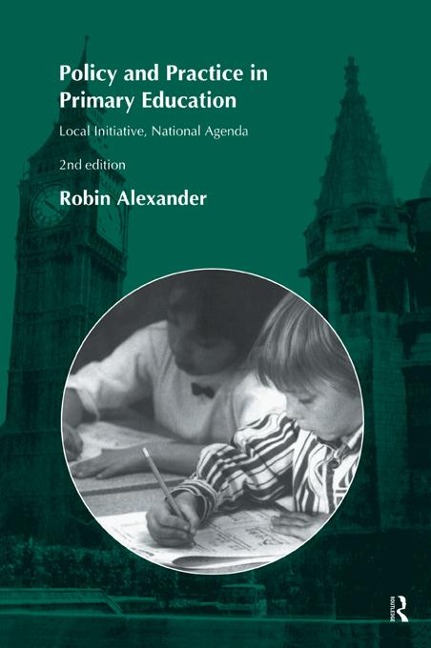
Detailed accounts of two influential initiatives of the 1990s, whose educational and political lessons remain highly relevant: systemic and pedagogic reform in one of Britain's largest cities, and the controversial 'three wise men' government enquiry into primary teaching to which it led. Alexander's controversial and widely-read report on primary education in Leeds has now been revised as a major study of policy initiatives in primary education and their impact on practice. The book examines an ambitious programme of local reform aimed at improving teaching and learning in the primary schools of one of Britain's largest cities. It addresses important questions about children's needs, the curriculum, classroom practice and school management. When first published, Robin Alexander's report was hailed as `seminal' and `the most important document since Plowden' but it was also quoted and misquoted in support of widely opposed political and media agendas. This new edition retains Part I from the first edition, detailing the impact of Leeds LEA's programme for educational reform. However, it also provides a totally new and greatly extended Part II, which gives an insider's account of the sequel to the Leeds report - the government's 1992 'three wise men' report. There is also a new introduction.
Robin Alexander is Professor of Primary Education and Director of the Centre for Research in Elementary and Primary Education at the University of Warwick.
Introduction Part I Classroom, school and LEA: the Leeds report 1 The Primary Needs Programme: overview 2 Defining and meeting children's needs 3 The curriculum 4 Teaching strategies 5 Links with parents and the community 6 Managing reform within the school 7 Supporting reform: the role of the LEA 8 Summary of main findings 9 The Primary Needs Programme: conclusions and recommendations Part II Classroom practice and national policy: the sequel 10 Winter initiative 11 What paper? Whose discussion? 12 Politics of good practice Appendix: the Leeds evaluation - themes, evidence and methods
Dieses eBook wird im PDF-Format geliefert und ist mit einem Adobe Kopierschutz (DRM) versehen. Sie können dieses eBook mit allen Geräten lesen, die das PDF-Format und den Adobe Kopierschutz (DRM) unterstützen.
Zum Beispiel mit den folgenden Geräten:
• tolino Reader
Laden Sie das eBook direkt über den Reader-Shop auf dem tolino herunter oder übertragen Sie das eBook auf Ihren tolino mit einer kostenlosen Software wie beispielsweise Adobe Digital Editions.
• Sony Reader & andere eBook Reader
Laden Sie das eBook direkt über den Reader-Shop herunter oder übertragen Sie das eBook mit der kostenlosen Software Sony READER FOR PC/Mac oder Adobe Digital Editions auf ein Standard-Lesegeräte mit epub- und Adobe DRM-Unterstützung.
• Tablets & Smartphones
Möchten Sie dieses eBook auf Ihrem Smartphone oder Tablet lesen, finden Sie hier unsere kostenlose Lese-App für iPhone/iPad und Android Smartphone/Tablets.
• PC & Mac
Lesen Sie das eBook direkt nach dem Herunterladen mit einer kostenlosen Lesesoftware, beispielsweise Adobe Digital Editions, Sony READER FOR PC/Mac oder direkt über Ihre eBook-Bibliothek in Ihrem Konto unter „Meine eBooks“ - „online lesen“.
Schalten Sie das eBook mit Ihrer persönlichen Adobe ID auf bis zu sechs Geräten gleichzeitig frei.
Bitte beachten Sie, dass die Kindle-Geräte das Format nicht unterstützen und dieses eBook somit nicht auf Kindle-Geräten lesbar ist.