Und dann auf "Zum Home-Bildschirm [+]".

Stöbern
genialokal zum Startbildschirm hinzufügen
Installieren Sie die genialokal App auf Ihrem Startbildschirm für einen schnellen Zugriff und eine komfortable Nutzung.
Installieren Sie die genialokal App auf Ihrem Startbildschirm für einen schnellen Zugriff und eine komfortable Nutzung.
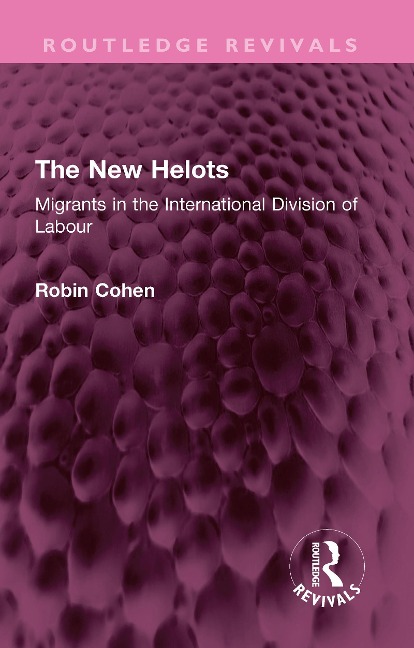
Originally published in 1987 and now reissued with a substantial introduction by Robin Cohen, this wide-ranging work of comparative and historical sociology argues that a major engine of capital's growth lies in its ability to find successive cohorts of quasi-free workers to deploy in the farms, mines and factories of an expanding international division of labour. These workers, like the helots of ancient Greece, are found at the periphery of 'regional political economies' or in the form of modern migrants, sucked into the vortex of metropolitan service or manufacturing industry. The regions of Southern Africa; the USA and the circum-Caribbean; European and its colonial and southern hinterlands, are systematically compared - yielding original and, in some cases, uncomfortable analogies between countries previously thought to be wholly different in terms of their political structures and guiding values. The New Helots has been written with both an undergraduate and professional readership in mind. Students of history, sociology and economics as well as those interested in patterns of migration and ethnic relations will find it of interest.
Robin Cohen is Emeritus Professor of Development Studies at the University of Oxford. For the first decade of his academic career, he worked on comparative labour issues. His books included Labour and Politics in Nigeria (1974) and the co-edited collections The development of an African working class (1975), International Labour and the Third World (1987), African Labor History (1978) and the current title, Peasants and Proletarians. He subsequently wrote on the themes of migration, globalization and diasporas. His best-known work is Global diasporas: An introduction (3rd edition, 2022).
1. Unfree Labourers and Modern Migrants 2. Theories of Migration: The US and its Labour Reservoirs 3. The Reproduction of Labour-Power: Southern Africa 4. The Functions of Migrant Labour: Europe 5. Policing the Frontiers: Regulating the Supplies of Migrant Labour 6. Habituation and Resistance: The Experience of Migrant Workers 7. The 'New' International Division of Labour: Plus ça change
Dieses eBook wird im PDF-Format geliefert und ist mit einem Adobe Kopierschutz (DRM) versehen. Sie können dieses eBook mit allen Geräten lesen, die das PDF-Format und den Adobe Kopierschutz (DRM) unterstützen.
Zum Beispiel mit den folgenden Geräten:
• tolino Reader
Laden Sie das eBook direkt über den Reader-Shop auf dem tolino herunter oder übertragen Sie das eBook auf Ihren tolino mit einer kostenlosen Software wie beispielsweise Adobe Digital Editions.
• Sony Reader & andere eBook Reader
Laden Sie das eBook direkt über den Reader-Shop herunter oder übertragen Sie das eBook mit der kostenlosen Software Sony READER FOR PC/Mac oder Adobe Digital Editions auf ein Standard-Lesegeräte mit epub- und Adobe DRM-Unterstützung.
• Tablets & Smartphones
Möchten Sie dieses eBook auf Ihrem Smartphone oder Tablet lesen, finden Sie hier unsere kostenlose Lese-App für iPhone/iPad und Android Smartphone/Tablets.
• PC & Mac
Lesen Sie das eBook direkt nach dem Herunterladen mit einer kostenlosen Lesesoftware, beispielsweise Adobe Digital Editions, Sony READER FOR PC/Mac oder direkt über Ihre eBook-Bibliothek in Ihrem Konto unter „Meine eBooks“ - „online lesen“.
Schalten Sie das eBook mit Ihrer persönlichen Adobe ID auf bis zu sechs Geräten gleichzeitig frei.
Bitte beachten Sie, dass die Kindle-Geräte das Format nicht unterstützen und dieses eBook somit nicht auf Kindle-Geräten lesbar ist.