Und dann auf "Zum Home-Bildschirm [+]".

Stöbern
genialokal zum Startbildschirm hinzufügen
Installieren Sie die genialokal App auf Ihrem Startbildschirm für einen schnellen Zugriff und eine komfortable Nutzung.
Installieren Sie die genialokal App auf Ihrem Startbildschirm für einen schnellen Zugriff und eine komfortable Nutzung.
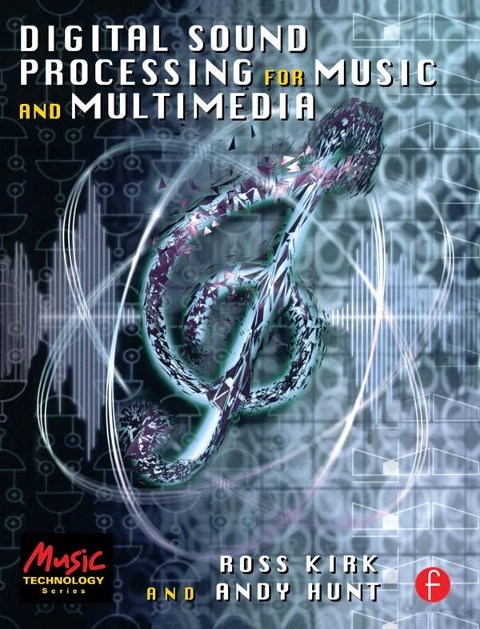
Provides an introduction to the nature, synthesis and transformation of sound which forms the basis of digital sound processing for music and multimedia. Background information in computer techniques is included so that you can write computer algorithms to realise new processes central to your own musical and sound processing ideas. Finally, material is inlcuded to explain the way in which people contribute to the development of new kinds of performance and composition systems. Key features of the book include: · Contents structured into free-standing parts for easy navigation · `Flow lines' to suggest alternative paths through the book, depending on the primary interest of the reader. · Practical examples are contained on a supporting website. Digital Sound Processing can be used by anyone, whether from an audio engineering, musical or music technology perspective. Digital sound processing in its various spheres - music technology, studio systems and multimedia - are witnessing the dawning of a new age. The opportunities for involvement in the expansion and development of sound transformation, musical performance and composition are unprecedented. The supporting website (www.york.ac.uk/inst/mustech/dspmm.htm) contains working examples of computer techniques, music synthesis and sound processing.
Kirk Ross, Hunt Andypson
Part 1 Context; Chapter 1 Sound generation and recording in the twentieth century; Part 2 Sounds and signals; Chapter 2 Sound and signals in music technology and digital audio; Chapter 3 Digital audio; Part 3 Music technology systems; Chapter 4 MIDI: connecting instruments together; Chapter 5 The structure of common music technology systems; Part 4 Computer fundamentals; Chapter 6 An introduction to digital logic; Chapter 7 Computers and programs; Chapter 8 Interfacing: the use of the computer as a component; Part 5 Programming for sound generation and processing; Chapter 9 Computer programming for musical applications; Chapter 10 Programming for audio and visual synthesis; Part 6 Interface design for the future; Chapter 11 Designing the musician-machine interface;
Dieses eBook wird im PDF-Format geliefert und ist mit einem Adobe Kopierschutz (DRM) versehen. Sie können dieses eBook mit allen Geräten lesen, die das PDF-Format und den Adobe Kopierschutz (DRM) unterstützen.
Zum Beispiel mit den folgenden Geräten:
• tolino Reader
Laden Sie das eBook direkt über den Reader-Shop auf dem tolino herunter oder übertragen Sie das eBook auf Ihren tolino mit einer kostenlosen Software wie beispielsweise Adobe Digital Editions.
• Sony Reader & andere eBook Reader
Laden Sie das eBook direkt über den Reader-Shop herunter oder übertragen Sie das eBook mit der kostenlosen Software Sony READER FOR PC/Mac oder Adobe Digital Editions auf ein Standard-Lesegeräte mit epub- und Adobe DRM-Unterstützung.
• Tablets & Smartphones
Möchten Sie dieses eBook auf Ihrem Smartphone oder Tablet lesen, finden Sie hier unsere kostenlose Lese-App für iPhone/iPad und Android Smartphone/Tablets.
• PC & Mac
Lesen Sie das eBook direkt nach dem Herunterladen mit einer kostenlosen Lesesoftware, beispielsweise Adobe Digital Editions, Sony READER FOR PC/Mac oder direkt über Ihre eBook-Bibliothek in Ihrem Konto unter „Meine eBooks“ - „online lesen“.
Schalten Sie das eBook mit Ihrer persönlichen Adobe ID auf bis zu sechs Geräten gleichzeitig frei.
Bitte beachten Sie, dass die Kindle-Geräte das Format nicht unterstützen und dieses eBook somit nicht auf Kindle-Geräten lesbar ist.