
Stöbern
genialokal zum Startbildschirm hinzufügen
Installieren Sie die genialokal App auf Ihrem Startbildschirm für einen schnellen Zugriff und eine komfortable Nutzung.
Installieren Sie die genialokal App auf Ihrem Startbildschirm für einen schnellen Zugriff und eine komfortable Nutzung.
Tippen Sie einfach auf Teilen:
 Und dann auf "Zum Home-Bildschirm [+]".
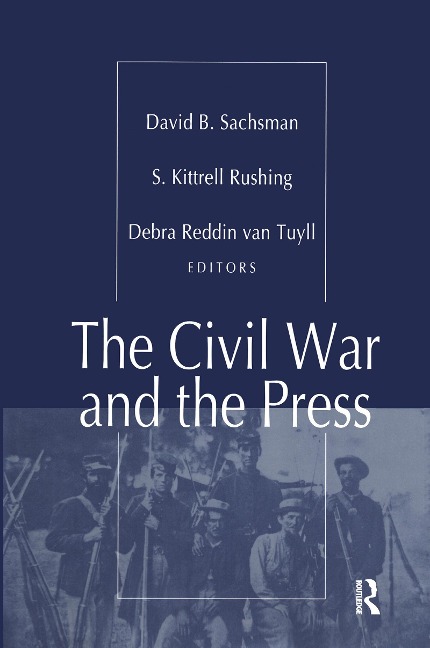
The power of the American press to influence and even set the political agenda is commonly associated with the rise of such press barons as Joseph Pulitzer and William Randolph Hearst at the turn of the century. The latter even took credit for instigating the Spanish-American War. Their power, however, had deeper roots in the journalistic culture of the nineteenth century, particularly in the social and political conflicts that climaxed with the Civil War. Until now historians have paid little attention to the role of the press in defining and disseminating the conflicting views of the North and the South in the decades leading up to the Civil War. In The Civil War and the Press historians, political scientists, and scholars of journalism measure the influence of the press, explore its diversity, and profile the prominent editors and publishers of the day. The book is divided into three sections covering the role of the press in the prewar years, throughout the conflict itself, and during the Reconstruction period. Part 1, "Setting the Agenda for Secession and War," considers the rise of the consumer society and the journalistic readership, the changing nature of editorial standards and practice, the issues of abolitionism, secession, and armed resistence as reflected in Northern and Southern newspapers, the reporting on John Brown's Harper's Ferry raid, and the influence of journalism on the 1860 election results. Part 2, "In Time of War," includes discussions of journalistic images and ideas of womanhood in the context of war, the political orientation of the Jewish press, the rise of illustrated periodicals, and issues of censorship and opposition journalism. The chapters in Part 3, "Reconstructing a Nation," detail the infiltration of the former Confederacy by hundreds of federally subsidized Republican newspapers, editorial reactions to the developing issue of voting rights for freed slaves, and the journalistic mythologization of Jesse James as a resister of Reconstruction laws and conquering Unionists. In tracing the confluence of journalism and politics from its source, this groundbreaking volume opens a wide variety of perspectives on a crucial period in American history while raising questions that remain pertainent to contemporary tensions between press power and government power. The Civil War and the Press will be essential reading for historians, media studies specialists, political scientists, and readers interested in the Civil War period.
S. Kitrell Rushing
Part I. Setting the Agenda for Secession and War, Part II. In Time of War, Part III. Reconstructing a Nation
Dieses eBook wird im PDF-Format geliefert und ist mit einem Adobe Kopierschutz (DRM) versehen. Sie können dieses eBook mit allen Geräten lesen, die das PDF-Format und den Adobe Kopierschutz (DRM) unterstützen.
Zum Beispiel mit den folgenden Geräten:
• tolino Reader
Laden Sie das eBook direkt über den Reader-Shop auf dem tolino herunter oder übertragen Sie das eBook auf Ihren tolino mit einer kostenlosen Software wie beispielsweise Adobe Digital Editions.
• Sony Reader & andere eBook Reader
Laden Sie das eBook direkt über den Reader-Shop herunter oder übertragen Sie das eBook mit der kostenlosen Software Sony READER FOR PC/Mac oder Adobe Digital Editions auf ein Standard-Lesegeräte mit epub- und Adobe DRM-Unterstützung.
• Tablets & Smartphones
Möchten Sie dieses eBook auf Ihrem Smartphone oder Tablet lesen, finden Sie hier unsere kostenlose Lese-App für iPhone/iPad und Android Smartphone/Tablets.
• PC & Mac
Lesen Sie das eBook direkt nach dem Herunterladen mit einer kostenlosen Lesesoftware, beispielsweise Adobe Digital Editions, Sony READER FOR PC/Mac oder direkt über Ihre eBook-Bibliothek in Ihrem Konto unter „Meine eBooks“ - „online lesen“.
Schalten Sie das eBook mit Ihrer persönlichen Adobe ID auf bis zu sechs Geräten gleichzeitig frei.
Bitte beachten Sie, dass die Kindle-Geräte das Format nicht unterstützen und dieses eBook somit nicht auf Kindle-Geräten lesbar ist.