Und dann auf "Zum Home-Bildschirm [+]".

Stöbern
genialokal zum Startbildschirm hinzufügen
Installieren Sie die genialokal App auf Ihrem Startbildschirm für einen schnellen Zugriff und eine komfortable Nutzung.
Installieren Sie die genialokal App auf Ihrem Startbildschirm für einen schnellen Zugriff und eine komfortable Nutzung.
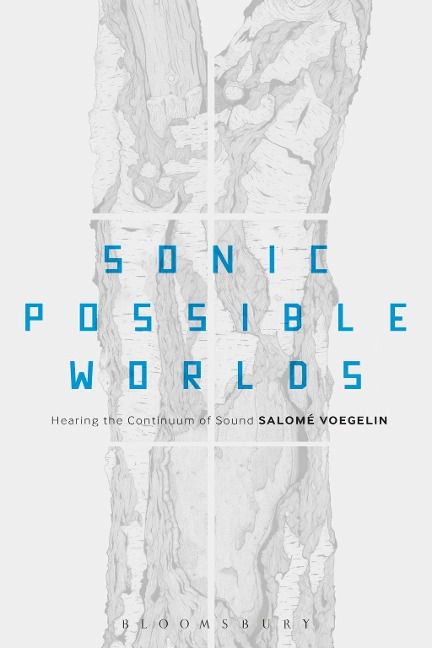
Inspired by its use in literary theory, film criticism and the discourse of game design, Salomé Voegelin adapts and develops "possible world theory" in relation to sound. David K Lewis' Possible World is juxtaposed with Maurice Merleau-Ponty's life-world, to produce a meeting of the semantic and the phenomenological at the place of listening.
The central tenet of Sonic Possible Worlds is that at present traditional musical compositions and contemporary sonic outputs are approached and investigated through separate and distinct critical languages and histories. As a consequence, no continuous and comparative study of the field is possible.
In Sonic Possible Worlds, Voegelin proposes a new analytical framework that can access and investigate works across genres and times, enabling a comparative engagement where composers such as Henry Purcell and Nadia Boulanger encounter sound art works by Shilpa Gupta and Christina Kubisch and where the soundscape compositions of Chris Watson and Francisco López resound in the visual worlds of Louise Bourgeois.
Salomé Voegelin is Professor of Sound at the London College of Communication, UAL, UK. An artist and writer, she is the author of Listening to Noise and Silence (Bloomsbury, 2010) and The Political Possibility of Sound: Fragments of Listening (Bloomsbury, 2018).
Acknowledgments
Introduction
Chapter 1: The Landscape as Sonic Possible World
Chapter 2: Into the World of the Work: The Possibility of Sound Art
Chapter 3: Sonic Materialism: the Sound of Stones
Chapter 4: Hearing the Continuum of Sound
Chapter 5: Listening to the Inaudible: the Sound of Unicorns
Notes
Bibliography
List of Works
Index
Dieses eBook wird im PDF-Format geliefert und ist mit einem Adobe Kopierschutz (DRM) versehen. Sie können dieses eBook mit allen Geräten lesen, die das PDF-Format und den Adobe Kopierschutz (DRM) unterstützen.
Zum Beispiel mit den folgenden Geräten:
• tolino Reader
Laden Sie das eBook direkt über den Reader-Shop auf dem tolino herunter oder übertragen Sie das eBook auf Ihren tolino mit einer kostenlosen Software wie beispielsweise Adobe Digital Editions.
• Sony Reader & andere eBook Reader
Laden Sie das eBook direkt über den Reader-Shop herunter oder übertragen Sie das eBook mit der kostenlosen Software Sony READER FOR PC/Mac oder Adobe Digital Editions auf ein Standard-Lesegeräte mit epub- und Adobe DRM-Unterstützung.
• Tablets & Smartphones
Möchten Sie dieses eBook auf Ihrem Smartphone oder Tablet lesen, finden Sie hier unsere kostenlose Lese-App für iPhone/iPad und Android Smartphone/Tablets.
• PC & Mac
Lesen Sie das eBook direkt nach dem Herunterladen mit einer kostenlosen Lesesoftware, beispielsweise Adobe Digital Editions, Sony READER FOR PC/Mac oder direkt über Ihre eBook-Bibliothek in Ihrem Konto unter „Meine eBooks“ - „online lesen“.
Schalten Sie das eBook mit Ihrer persönlichen Adobe ID auf bis zu sechs Geräten gleichzeitig frei.
Bitte beachten Sie, dass die Kindle-Geräte das Format nicht unterstützen und dieses eBook somit nicht auf Kindle-Geräten lesbar ist.