
Stöbern
genialokal zum Startbildschirm hinzufügen
Installieren Sie die genialokal App auf Ihrem Startbildschirm für einen schnellen Zugriff und eine komfortable Nutzung.
Installieren Sie die genialokal App auf Ihrem Startbildschirm für einen schnellen Zugriff und eine komfortable Nutzung.
Tippen Sie einfach auf Teilen:
 Und dann auf "Zum Home-Bildschirm [+]".



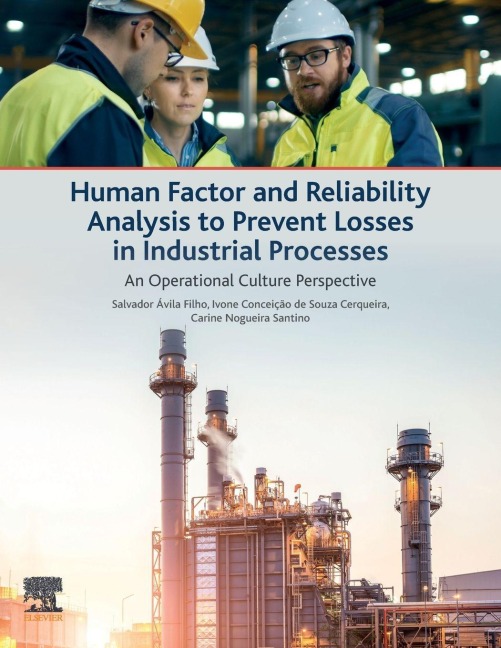
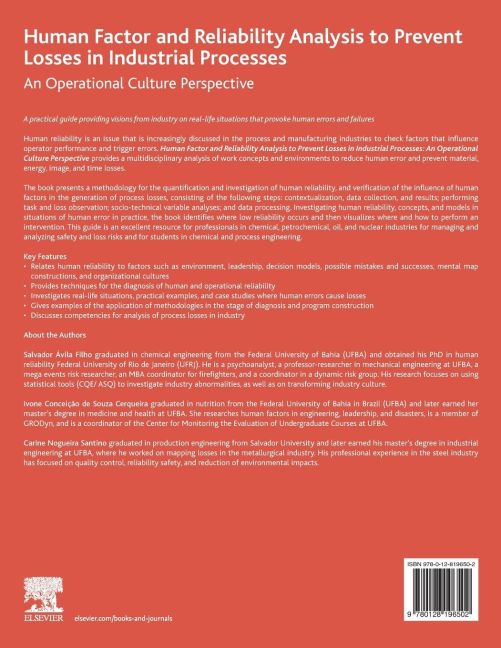
Human reliability is an issue that is increasingly discussed in the process and manufacturing industries to check factors that influence operator performance and trigger errors. Human Factor and Reliability Analysis to Prevent Losses in Industrial Processes: An Operational Culture Perspective provides a multidisciplinary analysis of work concepts and environments to reduce human error and prevent material, energy, image, and time losses. The book presents a methodology for the quantification and investigation of human reliability, and verification of the influence of human factors in the generation of process losses, consisting of the following steps: contextualization, data collection, and results; performing task and loss observation; socio-technical variable analyses; and data processing. Investigating human reliability, concepts, and models in situations of human error in practice, the book identifies where low reliability occurs and then visualizes where and how to perform an intervention. This guide is an excellent resource for professionals in chemical, petrochemical, oil, and nuclear industries for managing and analyzing safety and loss risks and for students in chemical and process engineering.
Salvador Ávila Filho - Chemical Engineer (UFBA) and Petrochemical Processing (Petrobrás) applied his knowledge to the Chemical Industry. Specialized in: statistical techniques (CQE / ASQ) to investigate abnormalities in the industry and as Organizational Consultant (UCSal) for transformation of Culture. Developed auditing techniques, effluent control and fugitive emissions to reduce environmental impacts in the industry. He developed a technique that analyzes the perception of the operators regarding Clean Routines (UFBA). Acting as Manager of industrial facilities created model for Clean Management. As professor he taught disciplines in the Graduation of Administration, Chemical Engineering and of Production in Universities. Meanwhile, human aspects are investigated in the courses and practices of Psychoanalysis allowing to enter by the fault in the behavior in the society and the work. It has partnerships in the private initiative in Reliability Centered Maintenance (MCC) and Human Reliability. Doctoral research (UFRJ) in the human and organizational cultures area provides concepts, techniques and methods to keep processes under control. Articles were presented in the areas of Human Factors, Risk, Process Safety, Energy and Water Efficiency and currently in the area of Culture and Behavior Change. Work in the Energy area was developed with a solution for productive arrangements. Contributed to reduce the load of N effluent of the fertilizer industry with: statistics, process studies, equipment technology, investigation of procedures, educational campaign (Friends of the Lagoon). Professor and Researcher of UFBA in the Department of Mechanical Engineering conducts research and Services in the areas of Risk Management (RISKDYN); Organizational Culture and Human Reliability (EVOLUTION C; SARS; RECHA); loss of process, process, energy and water (P3NET; ELOS R) and operational. Currently has cooperation with: RLAM (Refinery) in the area of Energy Efficiency, UOBA Active North in the area of Reliability and Risk, Secretariat of Public Security in the area of Risk in Mega-event and Behavior of the police force of the State of Bahia
1. Introduction 2. Cognitive Processing and Human Reliability 3. Worker Performing Task 4. Process Losses Assessment 5. Learned Lessons: Human Factor Assessment Task 6. Human Reliability: SPARH Cases 7. Human Reliability: Chemicals, Oil & Gas Cases 8. Conclusion and Products Appendices: Human Reliability and Losses A. Human Reliability in Amines and Polymers B. Technical Survey C. Task Analysis D. Social Survey and Human E. Loss Process and Program F. Forms and Tables G. Exercises