Und dann auf "Zum Home-Bildschirm [+]".

Stöbern
genialokal zum Startbildschirm hinzufügen
Installieren Sie die genialokal App auf Ihrem Startbildschirm für einen schnellen Zugriff und eine komfortable Nutzung.
Installieren Sie die genialokal App auf Ihrem Startbildschirm für einen schnellen Zugriff und eine komfortable Nutzung.
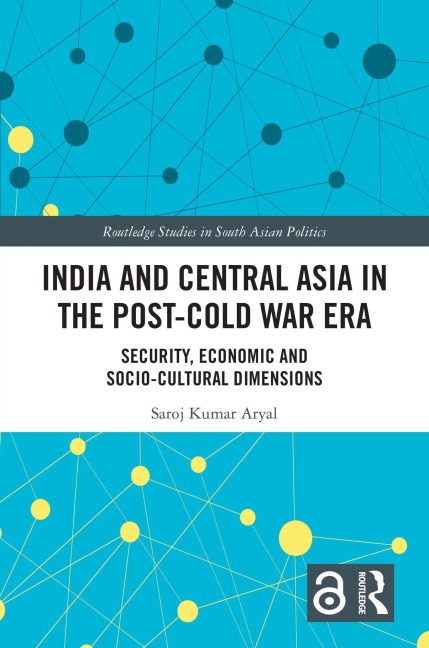
This book analyses the evolution of India's foreign policy towards Central Asia after the end of the Cold War. Focusing on the development of India's foreign policy towards Central Asia between 1991 and 2020, this book investigates the explanatory and intervening variables of the policy towards the region to identify its goals, assumptions, motivations and instruments. The preliminary assumption is that India's foreign policy towards Central Asia has evolved after the Cold War from a passive approach to an active participant in Central Asian security, economic and socio-cultural spheres. This is also seen due to the emergence of the five Central Asian countries as independent states, which have a tremendous strategic significance due to their geographical location, huge hydrocarbon reserve and potential economic opportunities. India expanded its policy to the 'Extended Neighbourhood,' adding East, Central and West Asia to the existing South Asian neighbourhood. Since then, India has been engaging with the region considering the growing geostrategic and geo-economic significance of the region and using the available foreign policy instruments. This book presents a comprehensive assessment of India's foreign policy behaviour evolution with proper analysis of the explanatory (external) and intervening (internal) variables that influence India's behaviours towards the region. It shows that India also aims to be a very influential power in Central Asia. This book will be an excellent resource for students and researchers of area and global studies, international relations, Asian Politics and South and Central Asia. The Open Access version of this book, available at http://www.taylorfrancis.com, has been made available under a Creative Commons [Attribution-Non Commercial-No Derivatives (CC-BY-NC-ND)] 4.0 license.
Saroj Kumar Aryal is a researcher at the Faculty of Political Science and International Studies, University of Warsaw, Poland. His book, Violence, Power and Politics in South Asia: From Kashmir to Kathmandu, co-authored with Gaurav Bhattarai, is forthcoming with Routledge.
Introduction; Chapter 1: Reconstruction of the Model of Analysis; Chapter 2: Evolution of India's Foreign Policy after the Cold War; Chapter 3: Security Dimension of India's Foreign Policy towards Central Asia Region; Chapter 4: Economic Dimension of India's Foreign Policy towards Central Asia Region; Chapter 5: Socio-Cultural Dimension of India's Foreign Policy towards Central Asia Region; Chapter 6: Dimensions of India's Foreign Policy towards Central Asia Region after the Cold War; Conclusion: Summary of the Research Results; Annex 1- List of Study Visits; Index
Dieses eBook wird im PDF-Format geliefert und ist mit einem Adobe Kopierschutz (DRM) versehen. Sie können dieses eBook mit allen Geräten lesen, die das PDF-Format und den Adobe Kopierschutz (DRM) unterstützen.
Zum Beispiel mit den folgenden Geräten:
• tolino Reader
Laden Sie das eBook direkt über den Reader-Shop auf dem tolino herunter oder übertragen Sie das eBook auf Ihren tolino mit einer kostenlosen Software wie beispielsweise Adobe Digital Editions.
• Sony Reader & andere eBook Reader
Laden Sie das eBook direkt über den Reader-Shop herunter oder übertragen Sie das eBook mit der kostenlosen Software Sony READER FOR PC/Mac oder Adobe Digital Editions auf ein Standard-Lesegeräte mit epub- und Adobe DRM-Unterstützung.
• Tablets & Smartphones
Möchten Sie dieses eBook auf Ihrem Smartphone oder Tablet lesen, finden Sie hier unsere kostenlose Lese-App für iPhone/iPad und Android Smartphone/Tablets.
• PC & Mac
Lesen Sie das eBook direkt nach dem Herunterladen mit einer kostenlosen Lesesoftware, beispielsweise Adobe Digital Editions, Sony READER FOR PC/Mac oder direkt über Ihre eBook-Bibliothek in Ihrem Konto unter „Meine eBooks“ - „online lesen“.
Schalten Sie das eBook mit Ihrer persönlichen Adobe ID auf bis zu sechs Geräten gleichzeitig frei.
Bitte beachten Sie, dass die Kindle-Geräte das Format nicht unterstützen und dieses eBook somit nicht auf Kindle-Geräten lesbar ist.