
Stöbern
genialokal zum Startbildschirm hinzufügen
Installieren Sie die genialokal App auf Ihrem Startbildschirm für einen schnellen Zugriff und eine komfortable Nutzung.
Installieren Sie die genialokal App auf Ihrem Startbildschirm für einen schnellen Zugriff und eine komfortable Nutzung.
Tippen Sie einfach auf Teilen:
 Und dann auf "Zum Home-Bildschirm [+]".
Ihr gewünschter Artikel ist in 0 Buchhandlungen vorrätig - wählen Sie hier eine Buchhandlung in Ihrer Nähe aus:

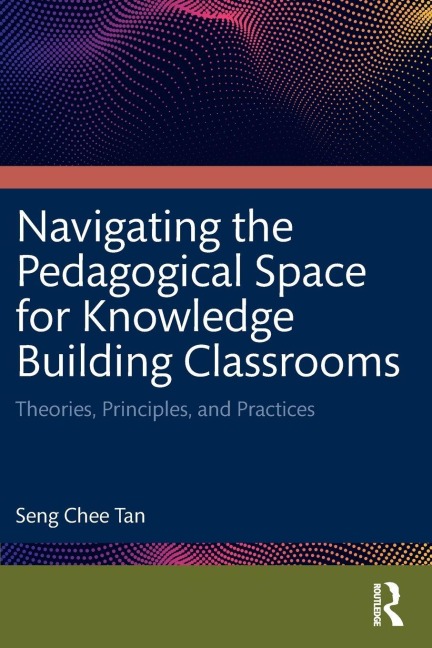
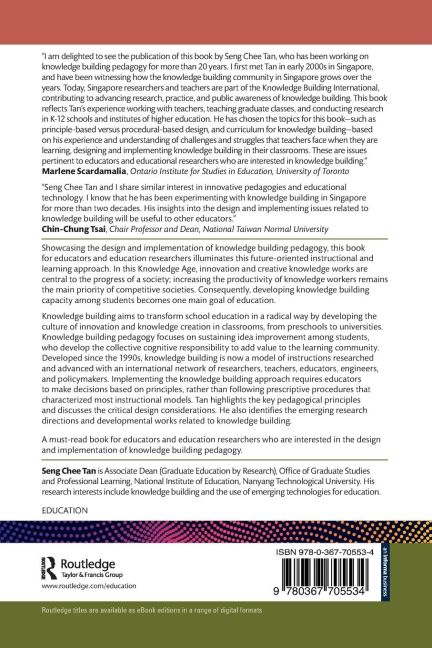
Showcasing the design and implementation of knowledge building pedagogy, this book for educators and education researchers illuminates this future-oriented instructional and learning approach. In this Knowledge Age, innovation and creative knowledge works are central to the progress of a society; increasing the productivity of knowledge workers remains the main priority of competitive societies. Consequently, developing knowledge building capacity among students becomes one main goal of education.
Knowledge building aims to transform school education in a radical way by developing the culture of innovation and knowledge creation in classrooms, from preschools to universities. Knowledge building pedagogy focuses on sustaining idea improvement among students, who develop the collective cognitive responsibility to add value to the learning community. Developed since the 1990s, knowledge building is now a model of instructions researched and advanced with an international network of researchers, teachers, educators, engineers, and policymakers. Implementing the knowledge building approach requires educators to make decisions based on principles, rather than following prescriptive procedures that characterized most instructional models. Tan highlights the key pedagogical principles and discusses the critical design considerations. He also identifies the emerging research directions and developmental works related to knowledge building.
A must-read book for educators and education researchers who are interested in the design and implementation of knowledge building pedagogy.
Seng Chee Tan is Associate Dean (Graduate Education by Research), Office of Graduate Studies and Professional Learning, National Institute of Education, Nanyang Technological University. His research interests include knowledge building and the use of emerging technologies for education.
Section A: Introduction to Knowledge Building 1. Why Knowledge Building? 2. Images of Knowledge Building Classrooms 3. Design Principles of Knowledge Building 4. Technologies for Knowledge Building 5. Designing Knowledge Building Classrooms Section B: Navigating Challenges of Designing and Implementing Knowledge Building 6. Knowledge Building and Learning 7. Principle-Based Versus Procedural-Based Lesson Design 8. Knowledge Building and School Curriculum 9. Developing Student Epistemic Agency 10. Collaboration for Knowledge Building 11. Teacher Learning, Professional Development, and Knowledge Building 12. Knowledge Building of Knowledge Building