
Stöbern
genialokal zum Startbildschirm hinzufügen
Installieren Sie die genialokal App auf Ihrem Startbildschirm für einen schnellen Zugriff und eine komfortable Nutzung.
Installieren Sie die genialokal App auf Ihrem Startbildschirm für einen schnellen Zugriff und eine komfortable Nutzung.
Tippen Sie einfach auf Teilen:
 Und dann auf "Zum Home-Bildschirm [+]".
Ihr gewünschter Artikel ist in 0 Buchhandlungen vorrätig - wählen Sie hier eine Buchhandlung in Ihrer Nähe aus:

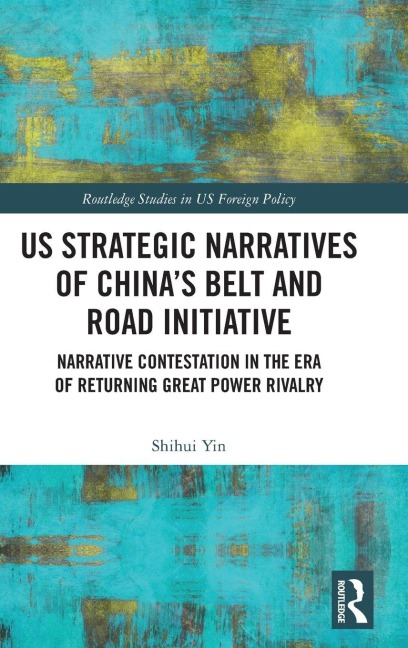
China's rapid (re)ascendance as a global power, fuelled by its Belt and Road Initiative (BRI), has arguably become the most significant challenge to the United States' dominance, reshaping international relations and sparking debates over the future of the global order. This book examines how the US has received and strategically constructed narratives around China's BRI to counter its influence. Offering a thorough analysis of US narratives and policies, it explores economic, security, technological, and political dimensions. By integrating critical constructivist and poststructuralist theories with thematic and narrative analysis, the author traces the evolution of these narratives, revealing how the US foreign policy elites selectively (re)constructs BRI narratives to delegitimise the initiative, justify countermeasures, undermine China's global influence, and sustain its waning supremacy in the global order. Drawing on a wide range of sources, including official documents, key speeches, and think tank publications, the author uncovers how US strategic narratives of the BRI are collaboratively shaped through a network of inter-narratives involving policy elites, allies, middle powers, and critics, rather than being solely driven by the US government. This volume will be of great interest to scholars and students of international relations, public diplomacy, US foreign policy, China studies, as well as practitioners and observers involved in BRI projects around the world.
Shihui Yin received her PhD from the University of Edinburgh. Her research focuses on US-China relations, strategic narratives, elite networks, and the politics of global order, with particular interests to the Belt and Road Initiative and great power competition.
Introduction 1 Approaches of studying US-China relations: theories and methods 2 Chinese claims of the BRI: a promise for cooperation or strategic ambition? 3 Constructing the rivalry: representing the BRI as an economic threat 4 Defending hegemony: constructing the BRI as a strategic and security challenge 5 Competing visions: political counter-narratives to the BRI Conclusion