Und dann auf "Zum Home-Bildschirm [+]".

Stöbern
genialokal zum Startbildschirm hinzufügen
Installieren Sie die genialokal App auf Ihrem Startbildschirm für einen schnellen Zugriff und eine komfortable Nutzung.
Installieren Sie die genialokal App auf Ihrem Startbildschirm für einen schnellen Zugriff und eine komfortable Nutzung.



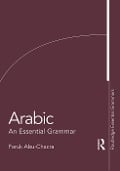
The history of Christian literature took a new turn in the 8th century when monks in the monasteries of Palestine began to write theology and saints' lives in Arabic; they also instituted a veritable programme for translating the Bible and other Christian texts from Greek (and Syriac) into the language of the Qur'an, the lingua franca of the Islamic caliphate. This is the subject of the present volume. Two key factors leading to this change, as Professor Griffith indicates, were that the confrontation with the developing theology of Islam created a direct need for apologetics to face this new religious challenge in its own language; and, second, simply that as the memory of Byzantine power waned, so too did the knowledge of Greek. Issues of particular interest in this apologetic literature are those of the freedom of the will, a key topic in the controversies between Melkites and Muslims, and of the legitimacy of icon veneration, a subject of great contemporary concern at the time of Iconoclasm in the Byzantine Empire. L'histoire de la littérature chrétienne a pris un nouveau tournant au 8 siécle lorsque les religieux des monastères de Palestine commencèrent à écrire la théologie et la vie des saints en arabe. De même, ils instituèrent un véritable programme de traduction de la Bible et autres textes chrétiens du grec (et du syriaque) en langue corannique, la lingua franca du califat islamique. Tel est l'objet du présent recueil. Deux facteurs determinants ayant conduit à ce changement, comme l'indique le professeur Griffith, étaient, en premier lieu, la confrontation avec une théologie islamique croissante, qui créait un besoin pressant pour les apologétiques de faire face à ce nouveau défi religieux dans la langue propre à celui-ci; en second lieu, au fur et à mesure que s'estompait la mémoire du pourvoir byzantin, il en allait de même pour la connaissance que l'on avait de la langue grecque. Ces textes traitent de q
Contents: Preface; The prophet Muhammad, his scripture and his message, according to the Christian apologies in Arabic and Syriac from the first Abbasid century; The Gospel in Arabic: an inquiry into its appearance in the first Abbasid century; The monks of Palestine and the growth of Christian literature in Arabic; Eutychius of Alexandria on the emperor Theophilus and Iconoclasm in Byzantium: a 10th-century moment in Christian apologetics in Arabic; Theodore Abu Qurrah's Arabic tract on the Christian practice of venerating images; Free will in Christian kalam: the doctrine of Theodore Abu Qurrah; Stephen of Ramlah and the Christian kerygma in Arabic in 9th- century Palestine; Greek into Arabic: life and letters in the monasteries of Palestine in the 9th century; the example of the Summa Theologiae Arabica; A 9th-century Summa Theologiae Arabica; The Arabic account of 'Abd al-Masih an-Nagrani al-Ghassani; Anthony David of Baghdad, scribe and monk of Mar Sabas: Arabic in the monasteries of Palestine; Additions; Index.
Dieses eBook wird im PDF-Format geliefert und ist mit einem Adobe Kopierschutz (DRM) versehen. Sie können dieses eBook mit allen Geräten lesen, die das PDF-Format und den Adobe Kopierschutz (DRM) unterstützen.
Zum Beispiel mit den folgenden Geräten:
• tolino Reader
Laden Sie das eBook direkt über den Reader-Shop auf dem tolino herunter oder übertragen Sie das eBook auf Ihren tolino mit einer kostenlosen Software wie beispielsweise Adobe Digital Editions.
• Sony Reader & andere eBook Reader
Laden Sie das eBook direkt über den Reader-Shop herunter oder übertragen Sie das eBook mit der kostenlosen Software Sony READER FOR PC/Mac oder Adobe Digital Editions auf ein Standard-Lesegeräte mit epub- und Adobe DRM-Unterstützung.
• Tablets & Smartphones
Möchten Sie dieses eBook auf Ihrem Smartphone oder Tablet lesen, finden Sie hier unsere kostenlose Lese-App für iPhone/iPad und Android Smartphone/Tablets.
• PC & Mac
Lesen Sie das eBook direkt nach dem Herunterladen mit einer kostenlosen Lesesoftware, beispielsweise Adobe Digital Editions, Sony READER FOR PC/Mac oder direkt über Ihre eBook-Bibliothek in Ihrem Konto unter „Meine eBooks“ - „online lesen“.
Schalten Sie das eBook mit Ihrer persönlichen Adobe ID auf bis zu sechs Geräten gleichzeitig frei.
Bitte beachten Sie, dass die Kindle-Geräte das Format nicht unterstützen und dieses eBook somit nicht auf Kindle-Geräten lesbar ist.