Und dann auf "Zum Home-Bildschirm [+]".

Stöbern
genialokal zum Startbildschirm hinzufügen
Installieren Sie die genialokal App auf Ihrem Startbildschirm für einen schnellen Zugriff und eine komfortable Nutzung.
Installieren Sie die genialokal App auf Ihrem Startbildschirm für einen schnellen Zugriff und eine komfortable Nutzung.
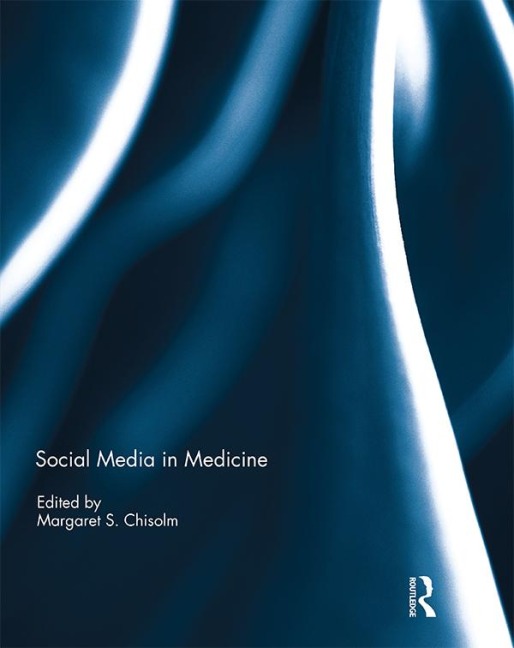
The use of social media around the world has exploded in recent years, with the number of monthly active users of Facebook and Twitter estimated to be one billion and one quarter billion, respectively. Physicians and medical trainees are among the users of social media, raising questions of how Facebook, Twitter, and other novel online tools may best be harnessed to further medical research, patient care, and educational pursuits. Because social media enables an immediate exchange of information and ideas around shared areas of interest, it has fostered communication and collaboration among a global network of researchers, clinicians, patients, and learners. Social Media in Medicine reviews a range of topics, from research ethics to medical education, and includes personal reflections by clinicians and learners that represent diverse opinions about the role of social media in medicine. The book is relevant to all healthcare stakeholders and will hopefully encourage ideas and questions to generate more research into the use of social media in medical research, patient care, and education. This book was originally published as a special issue of the International Review of Psychiatry.
Margaret S. Chisolm is Associate Professor of Psychiatry at Johns Hopkins University, Baltimore, Maryland, USA. She writes about substance use, humanistic practice, and medical education; and is a Miller-Coulson Academy of Clinical Excellence member, an Arnold P. Gold Foundation Humanism Scholar, and 2014 Johns Hopkins University Alumni Association Excellence in Teaching Award recipient.
Introduction - Social media in medicine: The volume that Twitter built Margaret S. Chisolm 1. Perspectives on social media in and as research: A synthetic review Natalie T. Lafferty and Annalisa Manca 2. Ethical issues when using social media for health outside professional relationships Matthew Decamp 3. Online professionalism: A synthetic review Katherine C. Chretien and Matthew G. Tuck 4. Online social support networks Neil Mehta and Ashish Atreja 5. Social media for lifelong learning Terry Kind and Yolanda Evans 6. Live tweeting in medicine: 'Tweeting the meeting' Alexander M. Djuricich and Janine E. Zee-Cheng 7. Social media and medical education: Exploring the potential of Twitter as a learning tool Alireza Jalali, Jonathan Sherbino, Jason Frank and Stephanie Sutherland 8. Social media, medicine and the modern journal club Joel M. Topf and Swapnil Hiremath 9. A personal reflection on social media in medicine: I stand, no wiser than before John Wiener 10. Personal reflections on exploring social media in medicine Brent Thoma 11. My three shrinks: Personal stories of social media exploration Steve Daviss, Annette Hanson and Dinah Miller
Dieses eBook wird im PDF-Format geliefert und ist mit einem Adobe Kopierschutz (DRM) versehen. Sie können dieses eBook mit allen Geräten lesen, die das PDF-Format und den Adobe Kopierschutz (DRM) unterstützen.
Zum Beispiel mit den folgenden Geräten:
• tolino Reader
Laden Sie das eBook direkt über den Reader-Shop auf dem tolino herunter oder übertragen Sie das eBook auf Ihren tolino mit einer kostenlosen Software wie beispielsweise Adobe Digital Editions.
• Sony Reader & andere eBook Reader
Laden Sie das eBook direkt über den Reader-Shop herunter oder übertragen Sie das eBook mit der kostenlosen Software Sony READER FOR PC/Mac oder Adobe Digital Editions auf ein Standard-Lesegeräte mit epub- und Adobe DRM-Unterstützung.
• Tablets & Smartphones
Möchten Sie dieses eBook auf Ihrem Smartphone oder Tablet lesen, finden Sie hier unsere kostenlose Lese-App für iPhone/iPad und Android Smartphone/Tablets.
• PC & Mac
Lesen Sie das eBook direkt nach dem Herunterladen mit einer kostenlosen Lesesoftware, beispielsweise Adobe Digital Editions, Sony READER FOR PC/Mac oder direkt über Ihre eBook-Bibliothek in Ihrem Konto unter „Meine eBooks“ - „online lesen“.
Schalten Sie das eBook mit Ihrer persönlichen Adobe ID auf bis zu sechs Geräten gleichzeitig frei.
Bitte beachten Sie, dass die Kindle-Geräte das Format nicht unterstützen und dieses eBook somit nicht auf Kindle-Geräten lesbar ist.