
Stöbern
genialokal zum Startbildschirm hinzufügen
Installieren Sie die genialokal App auf Ihrem Startbildschirm für einen schnellen Zugriff und eine komfortable Nutzung.
Installieren Sie die genialokal App auf Ihrem Startbildschirm für einen schnellen Zugriff und eine komfortable Nutzung.
Tippen Sie einfach auf Teilen:
 Und dann auf "Zum Home-Bildschirm [+]".
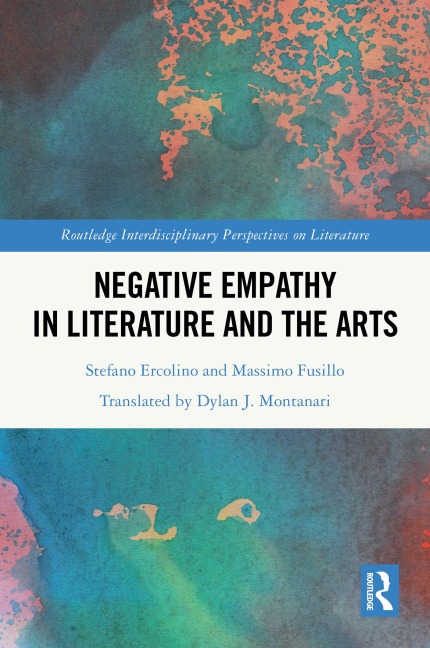
Negative Empathy in Literature and the Arts explores how readers and viewers engage cognitively and affectively with ethically troubling artworks across literature, the visual and performing arts, and screen media. Drawing on aesthetics, cultural history and theory, psychology, and neuroscience, Stefano Ercolino and Massimo Fusillo introduce the concept of "negative empathy" to describe the ambivalent and destabilizing emotional responses elicited by representations of negativity in art. Rather than dismissing empathy as naïve, the authors argue for a more nuanced understanding of its darker forms and their cognitive and ethical value. Through a comparative and intermedial approach, the book analyzes case studies from Littell's The Kindly Ones to Wilson's Deafman Glance; from Verdi's Macbeth and Nitsch's Theatre of Orgies and Mysteries to Caravaggio's Martyrdom of Saint Matthew, Mapplethorpe's "X" Portfolio, Kiefer's The Seven Heavenly Palaces, Haneke's The White Ribbon, and Gilligan's Breaking Bad-offering a compelling new theory of aesthetic engagement.
Stefano Ercolino teaches literary theory and comparative literature at Ca' Foscari University of Venice. He is the author of The Maximalist Novel: From Thomas Pynchon's "Gravity's Rainbow" to Roberto Bolaño's "2666" and The Novel-Essay, 1884-1947. He co-edited Experimental Criticism: Franco Moretti and Literature. Massimo Fusillo teaches comparative literature at the Scuola Normale Superiore in Pisa. He is the author of several books, including The Fetish: Literature, Cinema, Visual Art. He co-edited The Gesamtkunstwerk as Synergy of the Arts and Thinking Narratively: Between Novel-Essay and Narrative Essay.
List of Figures Why Negative Empathy? 1. History and Theory of an Idea 1.1 Resonance and Distance 1.2 Empathetic Suffering 1.3 Identification, Catharsis, Stimmung 2. Seductions of Rhetoric 2.1 Inner Torment, Psychological Complexity, Eloquence 2.2 Brothers in the Night: Jonathan Littell's The Kindly Ones 3. In the Rhythm of the Scene 3.1 Tragic Lacerations 3.1.1 Empathy and Estrangement 3.1.2 Medea's Theatricality 3.1.3 Repeating the Abnormal Act: Robert Wilson's Deafman Glance 3.2 The Force of the Voice 3.2.1 The Dramaturgy of the Antagonist in Melodrama 3.2.2 A Broken and Expressionist Song: Giuseppe Verdi's Macbeth 3.3 Beyond Representation 3.3.1 Shadowy Actions 3.3.2 The Ecstasy of Ritual Dismemberment: Hermann Nitsch's Theater of Orgies and Mysteries 4. Nostalgia and Anguish for Life 4.1 The Power of Images, the Power of Empathy 4.2 Stimmungseinfühlung 4.3 Abstraction against Empathy 4.4 Embodied Vision: Caravaggio's Martyrdom of St. Matthew 5. The Multiplied Gaze 5.1 On Medusa's Side 5.1.1 The Frozen Moment 5.1.2 Power Games 5.1.3 Aestheticizing the Extreme: Robert Mapplethorpe's "X" Portfolio 5.2 Labyrinths of Perception 5.2.1 Immersive Environments 5.2.2 Among the Ruins of History: Anselm Kiefer's Seven Heavenly Palaces 6. Audiovisual Simulations 6.1 In the Darkness of Their Eyes 6.1.1 Identifying with Bad People 6.1.2 Empathizing with a Community: Michael Haneke's The White Ribbon 6.2 Serial Pleasures 6.2.1 TV Antiheroes 6.2.2 Challenging Empathy: Vince Gilligan's Breaking Bad Bibliography Index
Dieses eBook wird im PDF-Format geliefert und ist mit einem Adobe Kopierschutz (DRM) versehen. Sie können dieses eBook mit allen Geräten lesen, die das PDF-Format und den Adobe Kopierschutz (DRM) unterstützen.
Zum Beispiel mit den folgenden Geräten:
• tolino Reader
Laden Sie das eBook direkt über den Reader-Shop auf dem tolino herunter oder übertragen Sie das eBook auf Ihren tolino mit einer kostenlosen Software wie beispielsweise Adobe Digital Editions.
• Sony Reader & andere eBook Reader
Laden Sie das eBook direkt über den Reader-Shop herunter oder übertragen Sie das eBook mit der kostenlosen Software Sony READER FOR PC/Mac oder Adobe Digital Editions auf ein Standard-Lesegeräte mit epub- und Adobe DRM-Unterstützung.
• Tablets & Smartphones
Möchten Sie dieses eBook auf Ihrem Smartphone oder Tablet lesen, finden Sie hier unsere kostenlose Lese-App für iPhone/iPad und Android Smartphone/Tablets.
• PC & Mac
Lesen Sie das eBook direkt nach dem Herunterladen mit einer kostenlosen Lesesoftware, beispielsweise Adobe Digital Editions, Sony READER FOR PC/Mac oder direkt über Ihre eBook-Bibliothek in Ihrem Konto unter „Meine eBooks“ - „online lesen“.
Schalten Sie das eBook mit Ihrer persönlichen Adobe ID auf bis zu sechs Geräten gleichzeitig frei.
Bitte beachten Sie, dass die Kindle-Geräte das Format nicht unterstützen und dieses eBook somit nicht auf Kindle-Geräten lesbar ist.