
Stöbern
genialokal zum Startbildschirm hinzufügen
Installieren Sie die genialokal App auf Ihrem Startbildschirm für einen schnellen Zugriff und eine komfortable Nutzung.
Installieren Sie die genialokal App auf Ihrem Startbildschirm für einen schnellen Zugriff und eine komfortable Nutzung.
Tippen Sie einfach auf Teilen:
 Und dann auf "Zum Home-Bildschirm [+]".
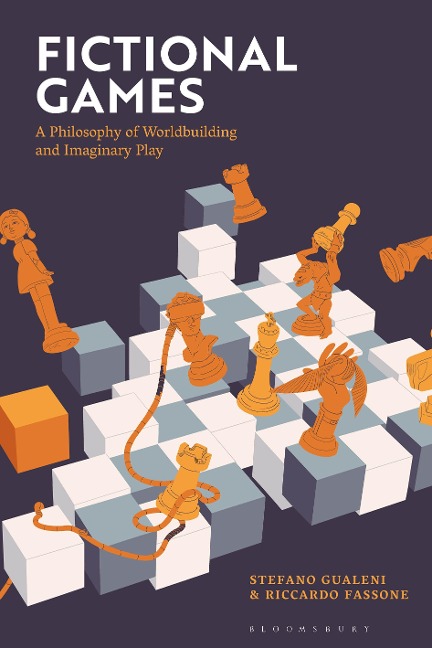
What roles do imaginary games have in story-telling? Why do fiction authors outline the rules of a game that the audience will never play? Combining perspectives from philosophy, literary theory and game studies, this book provides the first in-depth investigation into the significance of fictional games within fictional worlds.
Drawing from contemporary cinema and literature, from The Hunger Games to the science fiction of Iain M. Banks, Stefano Gualeni and Riccardo Fassone introduce five key functions that different types of imaginary games have in worldbuilding. First, fictional games can emphasize the dominant values and ideologies of the fictional society they belong to. Second, some imaginary games function in fictional worlds as critical, utopian tools, inspiring shifts in the thinking and political orientation of the fictional characters. Third, a few fictional games are conducive to the transcendence of a particular form of being, such as the overcoming of human corporeality. Fourth, imaginary games within works of fiction can deceptively blur the boundaries between the contingency of play and the irrevocable seriousness of "real life", either camouflaging life as a game or disguising a game as something with more permanent consequences. And fifth, they can function as meta-reflexive tools, suggesting critical and/or satirical perspectives on how actual games are designed, played, sold, manipulated, experienced, understood and utilized as part of our culture.
With illustrations in every chapter bringing the imaginary games to life, Gualeni and Fassone creatively inspire us to consider fictional games anew: not as moments of playful reprieve in a storyline, but as significant and multi-layered expressive devices.
Stefano Gualeni is Associate Professor at the Institute of Digital Games, University of Malta, Malta. His recent publications include: Virtual Worlds as Philosophical Tools (2015) and Virtual Existentialism (2020).
Riccardo Fassone is Associate Professor in the Department of Humanities at the University of Torino, Italy. His recent publications include: Every Game is an Island. Endings and Extremities in Video Games (Bloomsbury, 2017).
Foreword, Daniel Vella (University of Malta, Malta)
1. Introduction
2. On Fictional Games
3. Fictional Games and Ideology
4. Fictional Games as Utopian Devices
5. Fictional Games as Deceptions and Hallucinations
6. Fictional Games and Transcendence
7. Conclusion
Bibliography
Index
Dieses eBook wird im PDF-Format geliefert und ist mit einem Adobe Kopierschutz (DRM) versehen. Sie können dieses eBook mit allen Geräten lesen, die das PDF-Format und den Adobe Kopierschutz (DRM) unterstützen.
Zum Beispiel mit den folgenden Geräten:
• tolino Reader
Laden Sie das eBook direkt über den Reader-Shop auf dem tolino herunter oder übertragen Sie das eBook auf Ihren tolino mit einer kostenlosen Software wie beispielsweise Adobe Digital Editions.
• Sony Reader & andere eBook Reader
Laden Sie das eBook direkt über den Reader-Shop herunter oder übertragen Sie das eBook mit der kostenlosen Software Sony READER FOR PC/Mac oder Adobe Digital Editions auf ein Standard-Lesegeräte mit epub- und Adobe DRM-Unterstützung.
• Tablets & Smartphones
Möchten Sie dieses eBook auf Ihrem Smartphone oder Tablet lesen, finden Sie hier unsere kostenlose Lese-App für iPhone/iPad und Android Smartphone/Tablets.
• PC & Mac
Lesen Sie das eBook direkt nach dem Herunterladen mit einer kostenlosen Lesesoftware, beispielsweise Adobe Digital Editions, Sony READER FOR PC/Mac oder direkt über Ihre eBook-Bibliothek in Ihrem Konto unter „Meine eBooks“ - „online lesen“.
Schalten Sie das eBook mit Ihrer persönlichen Adobe ID auf bis zu sechs Geräten gleichzeitig frei.
Bitte beachten Sie, dass die Kindle-Geräte das Format nicht unterstützen und dieses eBook somit nicht auf Kindle-Geräten lesbar ist.