Und dann auf "Zum Home-Bildschirm [+]".

Stöbern
genialokal zum Startbildschirm hinzufügen
Installieren Sie die genialokal App auf Ihrem Startbildschirm für einen schnellen Zugriff und eine komfortable Nutzung.
Installieren Sie die genialokal App auf Ihrem Startbildschirm für einen schnellen Zugriff und eine komfortable Nutzung.

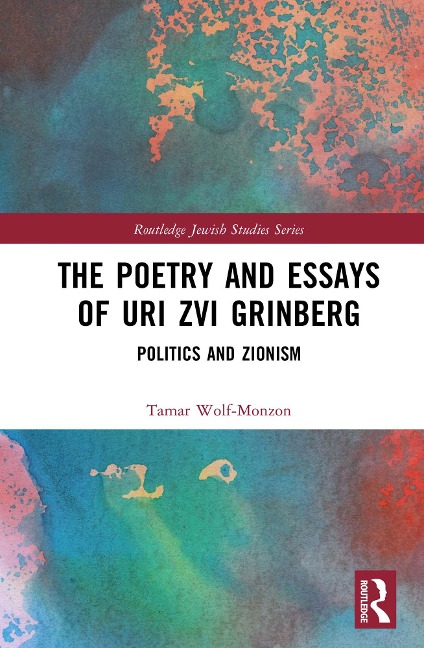
This book focuses on the complex network of relationships between the poet Uri Zvi Grinberg and the Labor Movement in Mandate Palestine from 1923 to 1937. Making use of letters found in the Uri Zvi Grinberg Archive at the National Library of Israel (NLI), the author reconstructs the characteristics of Grinberg's pioneer readership, attesting to their special relationship with his poetry. In the 1920s, it is argued, they considered Grinberg's poetry an authentic expression of their complex spiritual world and especially of the reality of their lives. On his side, Grinberg accepted the pioneering ethos as the ideological basis of his works, becoming an outstanding poet of the Labor Movement. The chapters of this book track the various phases of Grinberg's life and poetry, from his emigration to Palestine through to the 1930s, when he joined the Revisionist Movement and became increasingly ostracized from the Labor Movement. The story of Grinberg's relations with the pioneers was emotionally charged-a mixture of enchantment and rejection, spiritual closeness and repulsion. Ultimately, this book analyzes the intensity of this connection and its many contradictory layers. This book will interest researchers in a range of fields, including Hebrew poetry and reception theory, as well as anyone interested in Israeli studies and the history of the Labor Movement in Palestine.
Tamar Wolf-Monzon is an Israeli Full Professor of Hebrew Literature at Bar-Ilan University. She is the editor of the Hebrew periodical Criticism and Interpretation. Her research focuses on Hebrew poetry written in the early 20th century in its historical, social, cultural and linguistic contexts.
Introduction 1. "The time for the East has come" 2. "The proletarians in Israel called me to be their poet" 3. Toward the Mandate Government in Jerusalem 4. "Love for my despicable Jews" 5. "A tractate of dog-barks in punctuated letters" 6. UZG's process of leaving the Labor Movement 7. Rhetorical figures as a means for framing reality 8. Indictment and faith: UZG and Kibbutz Mishmar ha-Emek Conclusion