
Stöbern
genialokal zum Startbildschirm hinzufügen
Installieren Sie die genialokal App auf Ihrem Startbildschirm für einen schnellen Zugriff und eine komfortable Nutzung.
Installieren Sie die genialokal App auf Ihrem Startbildschirm für einen schnellen Zugriff und eine komfortable Nutzung.
Tippen Sie einfach auf Teilen:
 Und dann auf "Zum Home-Bildschirm [+]".
Ihr gewünschter Artikel ist in 0 Buchhandlungen vorrätig - wählen Sie hier eine Buchhandlung in Ihrer Nähe aus:

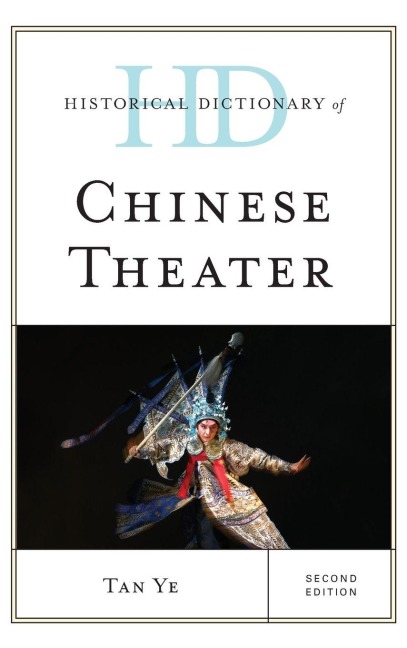
There is a sense of timelessness in the Chinese theater: ever since its maturation, its format has not changed in any significant way. Chinese Theater matured into its final format in the 13th century and flourished during the Yuan, Ming, and Qing Dynasties. It is a unique, exclusive, and self-sufficient system, whose evolution has received little influence from the West and whose influence on Western theaters has been minimal and often misinterpreted. It is essentially a performer's theater; the actors attract the audience with splendid performances perfected through many years of rigorous training.
This second edition of Historical Dictionary of Chinese Theater contains a chronology, an introduction, and an extensive bibliography. The dictionary section has over 1,500 cross-referenced entries on performers, directors, producers, designers, actors, theaters, dynasties, and emperors. This book is an excellent resource for students, researchers, and anyone wanting to know more about Chinese theater.
Tan Ye is professor of Comparative Theater in the Department of Languages, Literatures, and Cultures, the Director of the Confucius Institute, and Director of the Chinese Program at the University of South Carolina. He is the author of Common Dramatic Codes in Yuan and Elizabethan Theaters (1997), Theory and Practice of Screenwriting in China and America (co-edited with Li Jin, 2008), and Historical Dictionary of Chinese Theater (2009).
Editor's Foreword (Jon Woronoff) Acknowledgments Reader's Note Preface to the Second Edition Map of China Chronology Introduction THE DICTIONARY Glossary Bibliography General Beijing Opera Legend and Kun Opera Variety Opera About the Author