Und dann auf "Zum Home-Bildschirm [+]".

Stöbern
genialokal zum Startbildschirm hinzufügen
Installieren Sie die genialokal App auf Ihrem Startbildschirm für einen schnellen Zugriff und eine komfortable Nutzung.
Installieren Sie die genialokal App auf Ihrem Startbildschirm für einen schnellen Zugriff und eine komfortable Nutzung.
Ihr gewünschter Artikel ist in 0 Buchhandlungen vorrätig - wählen Sie hier eine Buchhandlung in Ihrer Nähe aus:

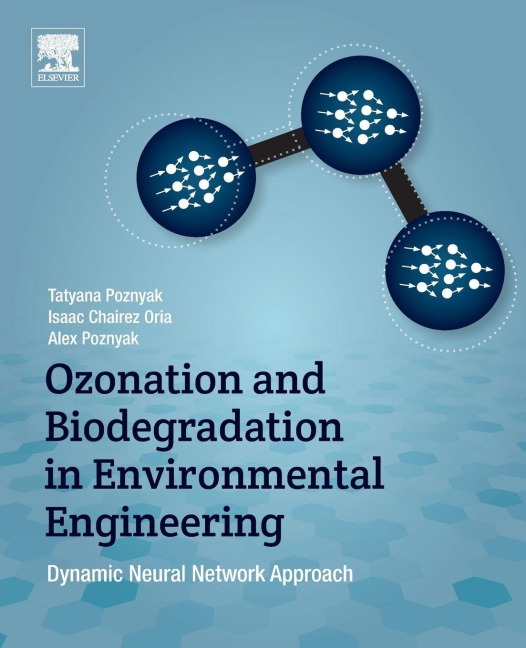
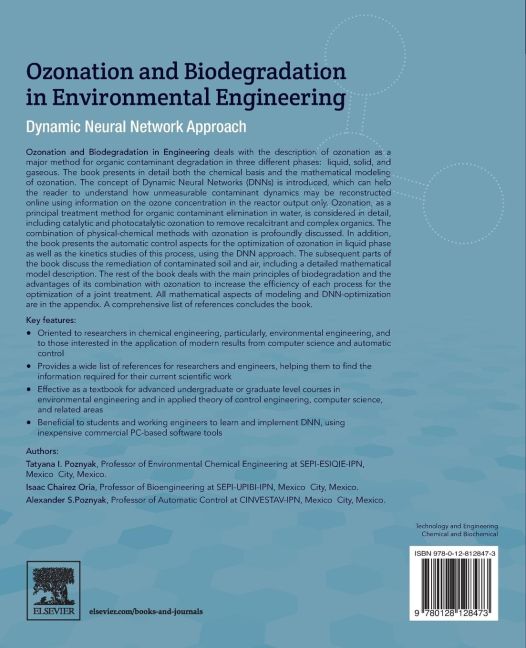
Ozonation and Biodegradation in Environmental Engineering: Dynamic Neural Network Approach gives a unified point-of-view on the application of DNN to estimate and control the application of ozonation and biodegradation in chemical and environmental engineering. This book deals with modelling and control design of chemical processes oriented to environmental and chemical engineering problems. Elimination in liquid, solid and gaseous phases are all covered, along with processes of laboratory scale that are evaluated with software sensors and controllers based on DNN technique, including the removal of contaminants in residual water, remediation of contaminated soil, purification of contaminated air, and more. The book also explores combined treatments using both ozonation and biodegradation to test the sensor and controller.
Tatyana Poznyak is with the Section of Graduate Studies and Research in the National Polytechnic Institute of Mexico-ESIQIE. She has been a regular member of the Mexican Academy of Sciences since 2004 and Member of National System of Researchers, SNI-II, since 1994. She is also a member of the "International Ozone Association" (IOA-PAG) - since 1998 and Active Member of the Chemical Society of Mexico - from 1997 to date. Her current researching interests are in Environmental Chemical Engineering and Ozone application in biochemistry and medicine. She directed 12 PhD's as well as 24 Master degree theses. She has published 76 articles in journals and 7 chapters in referred books. She has presented 160 papers in international conferences and 63 in national congresses. She is the author of 8 international patents.
I Chemical Processes in Environmental Engineering and Dynamic Neural Networks1. Ozonation as main method for organic contaminants degradation in three different phases: liquid, solid and gaseous2. Modelling of Ozonation Processes 3. Background on Dynamic Neural Networks 4. Motivation of Differential Neural Networks Application to Environment Problems5. Neural observer application for phenols conventional ozonation in water to its simulation and kinetic parameters identification at different pHs II Ozonation as a Principal Treatment Method for Organic Contaminants Elimination in Liquid Phase6. Automatic control of ozonation systems7. Catalytic ozonation for Recalcitrant Contaminants Removal 1018. Photocatalytic Ozonation for Complex Organics9. Physicochemical and Ozonation Mixed TreatmentMethods10. Continuous Ozonation Treatment III Remediation of Contaminated Soil 11. Conventional Ozonation and Mass Transfer Effects in Solid Phase IV Purification of Contaminated Air12. Ozonation of Gaseous Samples V Sequential Treatment by Biodegradation and Ozonation13. Biodegradation