Und dann auf "Zum Home-Bildschirm [+]".

Stöbern
genialokal zum Startbildschirm hinzufügen
Installieren Sie die genialokal App auf Ihrem Startbildschirm für einen schnellen Zugriff und eine komfortable Nutzung.
Installieren Sie die genialokal App auf Ihrem Startbildschirm für einen schnellen Zugriff und eine komfortable Nutzung.
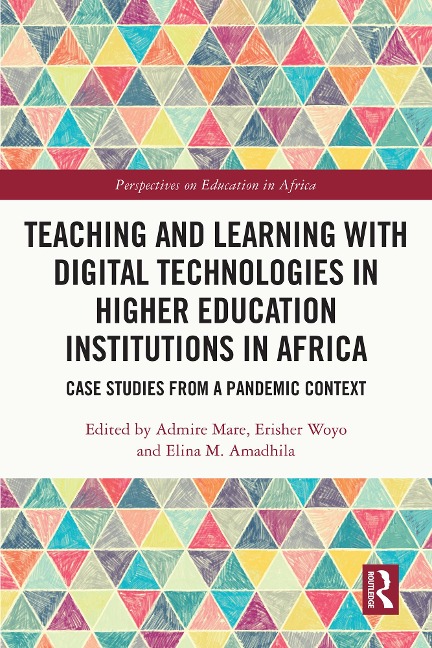
This book critically examines how the COVID-19 pandemic has stimulated digital innovation within higher education using case studies from Africa. Imagining a future for post-pandemic higher education, it analyses the challenges and opportunities of remote teaching and learning. The book explores the structural barriers around access to higher education and how these were reconfigured and amplified by technology-dependent teaching and learning. Case studies from countries across Africa provide unique insights into the challenges experienced by Higher Education Institutions (HEIs) during the COVID-19 pandemic, examining examples of emergent pedagogies such as online, mobile and social media-enhanced teaching, and blended learning. The chapters consider online assessment and teacher professional development, critically examining some of the benefits and structural challenges of digital technology integration in the context of pre-existing education disparities (such as students and teachers living in poverty-stricken and highly unequal societies). Offering invaluable insights into higher education in Africa, the book will be essential reading for researchers, scholars, and students in the fields of higher education study, digital education and educational technology, and African and comparative education. It will also be of interest to higher education managers and policymakers.
Admire Mare is Associate Professor in Department of Communication and Media, University of Johannesburg, South Africa. Erisher Woyo is a Lecturer in Faculty of Business and Law, Manchester Metropolitan University Business School, and Extraordinary Research Scientist at the Tourism Research in Economic Environs & Society, North-West University, South Africa. Elina M. Amadhila is Senior Lecturer in Faculty of Commerce, Management and Law, University of Namibia, Namibia.
1. Harnessing the technological dividends in African higher education institutions during and post-COVID-19 pandemic PART I: Emerging Platforms and Practices in Online Teaching and Learning 2. Digital technologies and remote teaching during COVID-19 pandemic in African higher education institutions 3. Social constructivism and participative learning beyond the traditional classroom during the COVID-19 pandemic: A Kenyan case study 4. E-learning implementation challenges in universities during COVID-19 pandemic: A lecturers' perspective PART II: Formative and Summative Assessments in the "New Normal" 5. Rethinking students' assessments in higher education during and post-COVID-19 6. Assessment in higher education in Ghana amid the COVID-19 pandemic: Charting the challenges and paradoxes 7. Effectiveness of online assessments in higher education during the COVID-19 pandemic: Nursing students' reflections in Namibia 8. COVID-19 and e-assessments in Ghanaian higher education institutions: The case of journalism education PART III: Learning Management Systems and Policies 9. Adoption of teaching and learning technologies during COVID-19 pandemic: Perspectives of educators at a Science and Technology University 10. Equitable e-Learning in Tanzania's higher education institutions beyond the COVID-19 pandemic 11. Integrating complementary learning tools in Moodle as a response to the COVID-19 pandemic: A survey of lecturers' and students' experiences and perceptions PART IV: 'Leave No One Behind': Human Capacity Building 12. COVID-19, Webinars and human capital development among academics in higher education institutions 13. Students' online learning competencies in higher education institutions in Namibia 14. Teacher development for online teaching in African universities: A proposed model PART V: Socio-economic, Political, and Technological Constraints 15. COVID-19 and the structural inequalities in South Africa's higher education: A case study of Cape Peninsula University of Technology's journalism programme 16. Online learning on the African continent during the COVID-19 pandemic: Challenges and opportunities 17. Revising the shocks and aftershocks of the COVID-19 pandemic on higher education in Africa: Implications for the Future
Dieses eBook wird im PDF-Format geliefert und ist mit einem Adobe Kopierschutz (DRM) versehen. Sie können dieses eBook mit allen Geräten lesen, die das PDF-Format und den Adobe Kopierschutz (DRM) unterstützen.
Zum Beispiel mit den folgenden Geräten:
• tolino Reader
Laden Sie das eBook direkt über den Reader-Shop auf dem tolino herunter oder übertragen Sie das eBook auf Ihren tolino mit einer kostenlosen Software wie beispielsweise Adobe Digital Editions.
• Sony Reader & andere eBook Reader
Laden Sie das eBook direkt über den Reader-Shop herunter oder übertragen Sie das eBook mit der kostenlosen Software Sony READER FOR PC/Mac oder Adobe Digital Editions auf ein Standard-Lesegeräte mit epub- und Adobe DRM-Unterstützung.
• Tablets & Smartphones
Möchten Sie dieses eBook auf Ihrem Smartphone oder Tablet lesen, finden Sie hier unsere kostenlose Lese-App für iPhone/iPad und Android Smartphone/Tablets.
• PC & Mac
Lesen Sie das eBook direkt nach dem Herunterladen mit einer kostenlosen Lesesoftware, beispielsweise Adobe Digital Editions, Sony READER FOR PC/Mac oder direkt über Ihre eBook-Bibliothek in Ihrem Konto unter „Meine eBooks“ - „online lesen“.
Schalten Sie das eBook mit Ihrer persönlichen Adobe ID auf bis zu sechs Geräten gleichzeitig frei.
Bitte beachten Sie, dass die Kindle-Geräte das Format nicht unterstützen und dieses eBook somit nicht auf Kindle-Geräten lesbar ist.