
Stöbern
genialokal zum Startbildschirm hinzufügen
Installieren Sie die genialokal App auf Ihrem Startbildschirm für einen schnellen Zugriff und eine komfortable Nutzung.
Installieren Sie die genialokal App auf Ihrem Startbildschirm für einen schnellen Zugriff und eine komfortable Nutzung.
Tippen Sie einfach auf Teilen:
 Und dann auf "Zum Home-Bildschirm [+]".
Ihr gewünschter Artikel ist in 0 Buchhandlungen vorrätig - wählen Sie hier eine Buchhandlung in Ihrer Nähe aus:

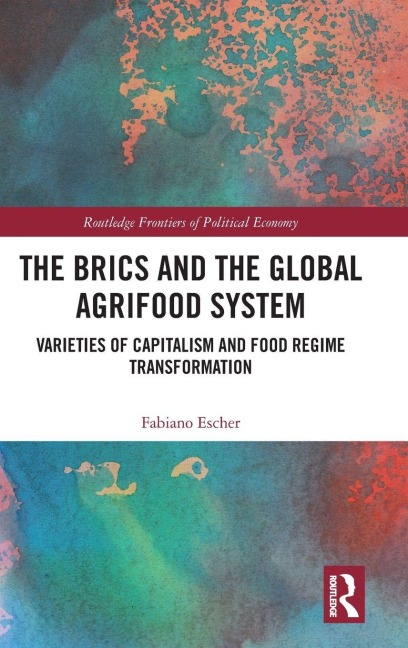
The BRICS grouping - Brazil, Russia, India, China, and South Africa - jointly founded the New Development Bank and the Contingent Reserve Arrangement as part of their efforts to constitute a trade, monetary, and geopolitical bloc. Yet the inability to deal collectively with external pressures, intra-group tensions, and ideological divergences has hampered efforts to establish a coherent and articulated strategy. Nevertheless, given their centrality to the production, circulation, and consumption of agricultural commodities and food products; their abundant reserves of labour and natural resources, and the scale of their domestic markets, the development trajectories of the BRICS countries remain crucial to understanding the future not only of the global agrifood system but also of capitalism itself. Engaging with recent debates in comparative capitalism and food regime approaches, this book provides a comparative institutional analysis of the BRICS 'varieties of capitalism' and their role in the international reordering of the contemporary 'food regime'. It is argued that the historically embedded legacy of the agrarian question in the institutional configurations and class relations of each country can help to explain the institutional diversity of capitalism. Conversely, to the extent that the dynamics of the agrifood system have a decisive influence on their overall development trajectories, the BRICS-driven shifts in the food regime have much to reveal about the new period of global capitalism that will follow the eventual demise of the neoliberal era. Opening an original and innovative agenda of empirical and theoretical research, the book will appeal to an international readership interested in agrarian political economy, economic sociology, rural and agrifood studies, and the future of the global economy.
Fabiano Escher is Professor in the Department of Development, Agriculture and Society, Federal Rural University of Rio de Janeiro, Rio de Janeiro, Brazil. His research focuses on the international and comparative political economy and economic sociology of the global agrifood system and rural development dynamics in Brazil, China, and the BRICS.
Introduction. Part I. Varieties and Commonalities of Capitalism and Food Regime Transformation. 1. Varieties of Capitalism: Institutional Diversity and Historical Periodisation. 2. Food Regimes: Agriculture and Food in the Evolution of Capitalism. 3. Capitalism and the Agrifood Question: A Comparative Institutional Perspective. Part II. The Agrifood Question in the BRICS Varieties of Capitalism. 4. China. 5. Russia. 6. Brazil. 7. India. 8. BRICS Development Trajectories in Comparative Institutional Perspective. Part III. The BRICS in the Transformation of the International Food Regime. 9. Double Movement, Organic Crisis, and Struggles for World Hegemony: The BRICS as a Mediating Force in the Current Interregnum. 10. Food Politics for a New Great Transformation: The BRICS Rural Development Paths and Sustainability in Urbanised Societies. Conclusion. Appendix A. Index.