Und dann auf "Zum Home-Bildschirm [+]".

Stöbern
genialokal zum Startbildschirm hinzufügen
Installieren Sie die genialokal App auf Ihrem Startbildschirm für einen schnellen Zugriff und eine komfortable Nutzung.
Installieren Sie die genialokal App auf Ihrem Startbildschirm für einen schnellen Zugriff und eine komfortable Nutzung.
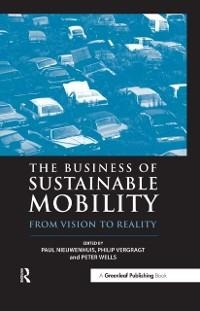
In many parts of the world, there is a crisis of mobility. This book shows that technology may well not be enough in itself and that for a genuinely sustainable transport future far more radical change - affecting many aspects of society - is needed. It is useful for academics, practitioners, and policy-makers.
Paul Nieuwenhuis, Phillip Vergragt, Peter Wells
oreword Theo de Bruijn, Somporn Kamolsiripichaiporn and Kurt Fischer, Greening of Industry Network 1. The business of sustainable mobility Paul Nieuwenhuis and Peter Wells, ESRC Centre for Business Relationships, Accountability, Sustainability and Society, Cardiff University, UK, and Philip J. Vergragt, Tellus Institute, Boston, USA 2. Transition management for sustainable personal mobility: the case of hydrogen fuel cells Philip J. Vergragt, Tellus Institute, USA 3. Future imperfect: the enduring struggle for electric vehicles Renato Orsato, INSEAD, Fontainebleau, France 4. Competing technologies and the struggle towards a new dominant design: the emergence of the hybrid vehicle at the expense of the fuel-cell vehicle? Marko Hekkert, Utrecht University, The Netherlands, and Robert van den Hoed, Delft University of Technology, The Netherlands 5. Institutional change in the automotive industry: or how fuel-cell technology is being institutionalised Robert van den Hoed, Delft University of Technology, The Netherlands, and Philip J. Vergragt, Tellus Institute, Boston, USA 6. System innovation in the automotive industry: achieving sustainability through micro-factory retailing Andrew Williams, BRASS Centre, Cardiff University, UK 7. Business models for relocalisation to deliver sustainability Peter Wells and Paul Nieuwenhuis, ESRC Centre for Business Relationships, Accountability, Sustainability and Society, Cardiff University, UK 8. Modularity for greening the automobile Gordon Dower, The Ridek Corporation, Washington, USA 9. Social learning through technological inventions in low-impact individual mobility: the cases of Sparrow and Gizmo Halina Szejnwald Brown and Catherine Carbone, Clark University, USA 10. The seven characteristics of successful sustainable system innovations Tom van der Horst, Organisation for Applied Scientific Research (TNO), The Netherlands, and Philip J. Vergragt, Tellus Institute, Boston, USA 11. Government behind the wheel and backseat driving: co-ordination and informational challenges of voluntary partnerships as programmes for stimulating sustainable technology Charles David White, University of California, Berkeley, USA12. Process- and product-oriented environmental policy within the car chain: examples from BMW and General MotorsCarla K. Smink, Eskild Holm Nielsen and Tine Herreborg Jørgensen, Aalborg University, Denmark13. The switch to CNG in two urban areas in India: how was this achieved?Mahesh Patankar and Anand Patwardhan, SJM School of Management, Mumbai, India14. Local needs in urban transportMerih Kunur, Royal College of Art, London15. Web-based environmental management systems for SMEs: enhancing the diffusion of environmental management in the transportation sectorAdeline Maijala, Lassi Linnanen and Tuula Pohjola, Proventia Solutions, Lappeenranta University of Technology, and Helsinki University of Technology, Finland16. The reinvention of the automobileChris Borroni-Bird, General Motors Corporation, USA17. Conclusions: where next and when can we buy one?Paul Nieuwenhuis and Peter Wells, ESRC Centre for Business Relationships, Accountability, Sustainability and Society, Cardiff University, UK, and Philip J. Vergragt, Tellus Institute, Boston, USAEpilogue: a day in a life in 2049Boelie Elzen, Centre for Science, Technology and Society, University of Twente, The Netherlands, and Wim Hafkamp, Erasmus University Rotterdam, The Netherlands
Dieses eBook wird im PDF-Format geliefert und ist mit einem Adobe Kopierschutz (DRM) versehen. Sie können dieses eBook mit allen Geräten lesen, die das PDF-Format und den Adobe Kopierschutz (DRM) unterstützen.
Zum Beispiel mit den folgenden Geräten:
• tolino Reader
Laden Sie das eBook direkt über den Reader-Shop auf dem tolino herunter oder übertragen Sie das eBook auf Ihren tolino mit einer kostenlosen Software wie beispielsweise Adobe Digital Editions.
• Sony Reader & andere eBook Reader
Laden Sie das eBook direkt über den Reader-Shop herunter oder übertragen Sie das eBook mit der kostenlosen Software Sony READER FOR PC/Mac oder Adobe Digital Editions auf ein Standard-Lesegeräte mit epub- und Adobe DRM-Unterstützung.
• Tablets & Smartphones
Möchten Sie dieses eBook auf Ihrem Smartphone oder Tablet lesen, finden Sie hier unsere kostenlose Lese-App für iPhone/iPad und Android Smartphone/Tablets.
• PC & Mac
Lesen Sie das eBook direkt nach dem Herunterladen mit einer kostenlosen Lesesoftware, beispielsweise Adobe Digital Editions, Sony READER FOR PC/Mac oder direkt über Ihre eBook-Bibliothek in Ihrem Konto unter „Meine eBooks“ - „online lesen“.
Schalten Sie das eBook mit Ihrer persönlichen Adobe ID auf bis zu sechs Geräten gleichzeitig frei.
Bitte beachten Sie, dass die Kindle-Geräte das Format nicht unterstützen und dieses eBook somit nicht auf Kindle-Geräten lesbar ist.