Und dann auf "Zum Home-Bildschirm [+]".

Stöbern
genialokal zum Startbildschirm hinzufügen
Installieren Sie die genialokal App auf Ihrem Startbildschirm für einen schnellen Zugriff und eine komfortable Nutzung.
Installieren Sie die genialokal App auf Ihrem Startbildschirm für einen schnellen Zugriff und eine komfortable Nutzung.
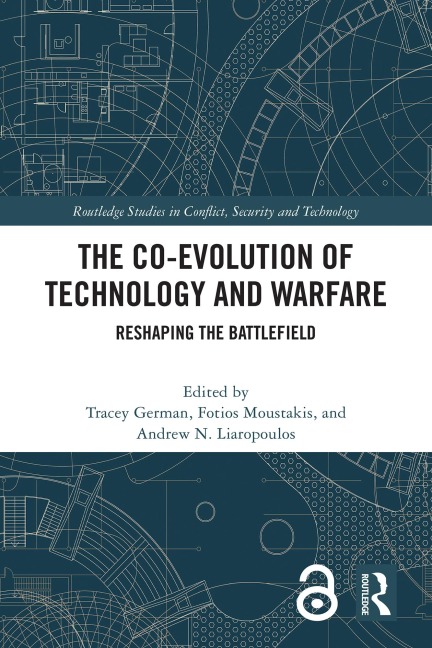
This book explores the relationship between technology and warfare, by examining how recent technological advancements have revolutionized the conduct of war. The work analyses contemporary conflicts, including the Syrian civil war, the Taliban takeover in Afghanistan, and the ongoing war in Ukraine, but also by exploring future war scenarios and assessing the military capabilities of major powers. In doing so, the book highlights the dynamic and evolving nature of modern warfare. It goes beyond a simple examination of technological advancements, addressing the complexities of modern warfare, scrutinizing the strategies employed by states to adopt and develop military technologies, while emphasizing the importance of technology in shaping military planning, training, research, and innovation. The book provides a collection of timely contributions by leading scholars and practitioners in the military and security field. Furthermore, the contributors identify potential challenges and risks associated with the widespread adoption of technologies in warfare and propose recommendations for policymakers to address issues that relate to military planning and training, research and development, and resilience building. This book will be of much interest to students of security studies, technology studies, defence studies and International Relations. The Open Access version of this book, available at http://www.taylorfrancis.com, has been made available under a Creative Commons Attribution-Non Commercial-No Derivatives (CC-BY-NC-ND) 4.0 license.
Tracey German is a professor of conflict and security in the Defence Studies Department at King's College London, UK. She is the author of Russia and the Changing Character of Conflict (2023). Fotios Moustakis is an associate professor in strategic studies at the University of Plymouth, UK, with over 20 years of experience teaching Royal Navy officers at Britannia Royal Naval College. Since 2015, he has directed the Centre for Sea Power and Strategy (CSS). Andrew N. Liaropoulos is an associate professor in international relations and strategic studies at the University of Piraeus, Greece. He has taught for years at the Hellenic National Defense College, the Joint Military Intelligence College, the National Security College, and the Air Staff Command College.
1. Introduction2. Artificial Intelligence and Cyber Warfare: The New Battleground 3. Fighting for Influence: The Promise of Artificial Intelligence 4. The Threat Posed by Commercial First Person View (FPV) Unmanned Aerial Vehicles (UAVs) Modified by Asymmetrical Warfare Actors 5. Space and the New Frontier of Warfare 6. The Role of Hypersonics in Modern Warfare 7. Globalization and Naval Strategy- The Eastward Migration of Sea Power and Its Impact on Maritime Strategy 8. Towards a Maritime Strategy for the Second Revolution in Military Affairs, 9. Preparing the Civilian Infrastructure for Potential Cyber and Hybrid Attacks 10. The Role of Military and their Training in High-Tech Warfare 11. Ukrainian Tactical Innovations during Russia's Full-Scale War Against Ukraine, from February 2022 to September 2024 12. Conclusions
Dieses eBook wird im PDF-Format geliefert und ist mit einem Adobe Kopierschutz (DRM) versehen. Sie können dieses eBook mit allen Geräten lesen, die das PDF-Format und den Adobe Kopierschutz (DRM) unterstützen.
Zum Beispiel mit den folgenden Geräten:
• tolino Reader
Laden Sie das eBook direkt über den Reader-Shop auf dem tolino herunter oder übertragen Sie das eBook auf Ihren tolino mit einer kostenlosen Software wie beispielsweise Adobe Digital Editions.
• Sony Reader & andere eBook Reader
Laden Sie das eBook direkt über den Reader-Shop herunter oder übertragen Sie das eBook mit der kostenlosen Software Sony READER FOR PC/Mac oder Adobe Digital Editions auf ein Standard-Lesegeräte mit epub- und Adobe DRM-Unterstützung.
• Tablets & Smartphones
Möchten Sie dieses eBook auf Ihrem Smartphone oder Tablet lesen, finden Sie hier unsere kostenlose Lese-App für iPhone/iPad und Android Smartphone/Tablets.
• PC & Mac
Lesen Sie das eBook direkt nach dem Herunterladen mit einer kostenlosen Lesesoftware, beispielsweise Adobe Digital Editions, Sony READER FOR PC/Mac oder direkt über Ihre eBook-Bibliothek in Ihrem Konto unter „Meine eBooks“ - „online lesen“.
Schalten Sie das eBook mit Ihrer persönlichen Adobe ID auf bis zu sechs Geräten gleichzeitig frei.
Bitte beachten Sie, dass die Kindle-Geräte das Format nicht unterstützen und dieses eBook somit nicht auf Kindle-Geräten lesbar ist.