Und dann auf "Zum Home-Bildschirm [+]".

Stöbern
genialokal zum Startbildschirm hinzufügen
Installieren Sie die genialokal App auf Ihrem Startbildschirm für einen schnellen Zugriff und eine komfortable Nutzung.
Installieren Sie die genialokal App auf Ihrem Startbildschirm für einen schnellen Zugriff und eine komfortable Nutzung.
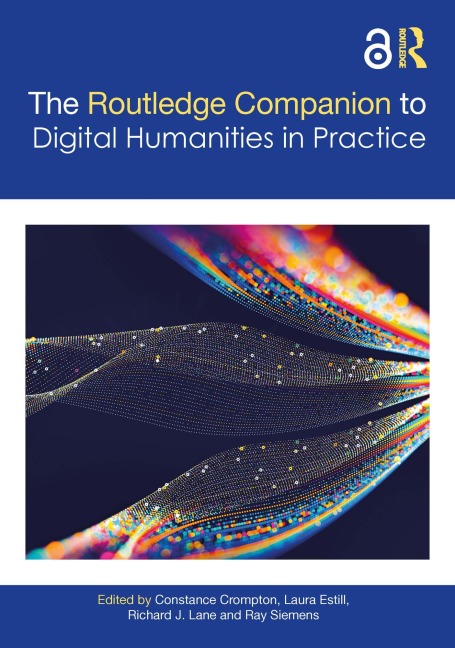
The Companion to Digital Humanities in Practice offers international perspectives on how we teach and research in and with digital humanities today. Building on the foundation of earlier publications that focused on practice in the field, this Companion provides a significant treatment of pertinent issues and contexts, extending breadth and depth, as well as reach, in terms of geographical diversity of topics and contributors. Divided into four sections, each with a high-level practice-oriented focus, the volume covers data; tools and techniques; communication, dissemination, and engagement; and pedagogical practices. Contributors to the volume include both established and emerging scholars. Foregrounding and critically reviewing the emergence and development of standards-based communities of practice, the Companion provides an overview of core competencies; conceptualized case studies; and links to further reading, training materials, and exercises. The Companion to Digital Humanities in Practice will appeal to academics, researchers, and postgraduate students working in DH, literary studies, history, and the humanities more broadly. It should also be of interest to professionals working in DH and galleries, libraries, archives, and museums. The Open Access version of this book, available at www.taylorfrancis.com, has been made available under a Creative Commons Attribution-Non Commercial-No Derivatives (CC-BY-NC-ND) 4.0 license.
Constance Crompton is a white, queer, able-bodied settler and Canada Research Chair in Digital Humanities. They are a member of several research project teams: Lesbian and Gay Liberation in Canada, Linked Infrastructure for Networked Cultural Scholarship, the Implementing New Knowledge Environments Partnership, and the Transgender Media Portal. She is the co-editor of two volumes, Doing Digital Humanities and Doing More Digital Humanities, with Ray Siemens and Richard J. Lane (Routledge 2016, 2020). They live and works on unceded Algonquin land. Laura Estill is Canada Research Chair in Digital Humanities and Professor of English at St. Francis Xavier University in Mi'kma'ki (Nova Scotia). Her works include Digital Humanities Workshops (2023), with Jennifer Guiliano, and a special issue of Interdisciplinary Digital Engagement in Arts & Humanities (IDEAH, 2023), with Constance Crompton and Ray Siemens. She directs the Canadian Certificate in Digital Humanities, ccdhhn.ca. Richard J. Lane is Professor of English and Director of the Canada Foundation for Innovation (CFI) funded MeTA Digital Humanities Lab at Vancouver Island University, Canada. His research interests include the intersection of literary theory, philosophy and the digital humanities, with recent projects on DH and AI, big data, machine reading, machine learning, and topic modelling. He collaborates on research with the VIU Canadian Letters and Images Project, with the support of CFI, VIU and the British Columbia Knowledge Development Fund. Ray Siemens FRSC is Distinguished Professor in the Faculty of Humanities at the University of Victoria, Canada, in English and Computer Science, and past Canada Research Chair in Humanities Computing; in 2019, he was also Leverhulme Visiting Professor at Loughborough University and, 2019-22, Global Innovation Chair in Digital Humanities in the Centre for 21st Century Humanities at University of Newcastle.
List of figures; List of Contributors; Acknowledgements; Introduction: 1. Digital Humanities in Practice, Across Data, Tools and Techniques, Communication and Engagement, and Pedagogy; Section 1: Data - 2. From a "bag of names" to a "name index": Using Wikipedia and Wikidata to create an enriched list of person names; 3. Databasing As Research: new paradigms for the long tail...; 4. Unicorns, Janitors, Ninjas, Wizards, and Rock Stars; 5. Editing mundane texts across the digital divide: The case of Arabic periodicals from the late nineteenth-century Eastern Mediterranean; 6. Sharing Data for Handwritten Text Recognition (HTR); 7. Digital Public Health Advocacy in Nigeria: A Multimodal Study of WhatsApp-mediated COVID-19 Posts; 8. Why Digital Humanists Should Emphasize Situated Data over Capta; Section 2: Tools and Techniques - 9. Digitizing the container: books as objects in the digital medium; 10. Modeling cultural heritage materials for discovery and analysis; 11. IIIF for Digital Humanities; 12. What is Humanities Mapping?; 13. Mapping and 3D Modelling: Expanding 19th-century New York City Bookstore Geographies; 14. Enacting Our Values: Practical Applications of Ethics in the Transgender Media Lab; 15. Against Violent Quantification: Lessons from the Bellevue Almshouse Project; 16. Thinking-Through the Ethics of Artificial Intelligence; Section 3: Communication and Engagement - 17. Community and Digitality in/of Indian DH: Exploring Legacies, Presents and Futures; 18. Valuing and Evaluating Digital Scholarship as a Social Justice Practice; 19. Effect, Affect, Engagement: Digital Storytelling as Personal Process; 20. The influence of communication on digital humanities training; 21. Some Things Can't be Measured: Rethinking Context, Metrics and Disciplinarity in the Digital Humanities; 22. Public Works: Ecological Inspiration for Equitable Knowledge Production; Section 4: Pedagogy - 23. Intersectional Ethics of Care and Co-Creation in Digital Humanities Pedagogy; 24. Student-led Digital Projects in Cultural Heritage Sector Collaborations; 25. Digital Pedagogy as Topoi: Assignments that Encourage 'Play' within the History of Race, Space and State Power in Apartheid South Africa; 26. Creative Writing and Digital Humanities: Between Literature and Technology; 27. Assembling Body, Mind, and Spirit in Digital Humanities Teaching Praxis; 28. Two ways to engage students in a digital project, an experience in Mexico; 29. The Risks and Rewards of Implementing Digital Humanities Methodologies in Modern Language Graduate Research; Index.
Dieses eBook wird im PDF-Format geliefert und ist mit einem Adobe Kopierschutz (DRM) versehen. Sie können dieses eBook mit allen Geräten lesen, die das PDF-Format und den Adobe Kopierschutz (DRM) unterstützen.
Zum Beispiel mit den folgenden Geräten:
• tolino Reader
Laden Sie das eBook direkt über den Reader-Shop auf dem tolino herunter oder übertragen Sie das eBook auf Ihren tolino mit einer kostenlosen Software wie beispielsweise Adobe Digital Editions.
• Sony Reader & andere eBook Reader
Laden Sie das eBook direkt über den Reader-Shop herunter oder übertragen Sie das eBook mit der kostenlosen Software Sony READER FOR PC/Mac oder Adobe Digital Editions auf ein Standard-Lesegeräte mit epub- und Adobe DRM-Unterstützung.
• Tablets & Smartphones
Möchten Sie dieses eBook auf Ihrem Smartphone oder Tablet lesen, finden Sie hier unsere kostenlose Lese-App für iPhone/iPad und Android Smartphone/Tablets.
• PC & Mac
Lesen Sie das eBook direkt nach dem Herunterladen mit einer kostenlosen Lesesoftware, beispielsweise Adobe Digital Editions, Sony READER FOR PC/Mac oder direkt über Ihre eBook-Bibliothek in Ihrem Konto unter „Meine eBooks“ - „online lesen“.
Schalten Sie das eBook mit Ihrer persönlichen Adobe ID auf bis zu sechs Geräten gleichzeitig frei.
Bitte beachten Sie, dass die Kindle-Geräte das Format nicht unterstützen und dieses eBook somit nicht auf Kindle-Geräten lesbar ist.