Und dann auf "Zum Home-Bildschirm [+]".

Stöbern
genialokal zum Startbildschirm hinzufügen
Installieren Sie die genialokal App auf Ihrem Startbildschirm für einen schnellen Zugriff und eine komfortable Nutzung.
Installieren Sie die genialokal App auf Ihrem Startbildschirm für einen schnellen Zugriff und eine komfortable Nutzung.

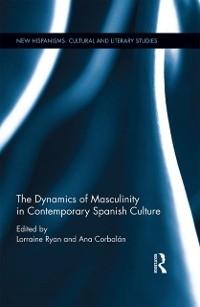

This collection of essays explores cultural phenomena that are shaping masculine identities in contemporary Spain, asking and striving to answer these compelling questions: what does it mean to be a man in present-day Spain? How has masculinity evolved since Franco's dictatorship? What are the dynamics of masculinity in contemporary Spanish culture? How has hegemonic masculinity been contested in cultural productions? This volume is comprised of sixteen essays that address these very questions by examining literary, cultural and film representations of the configurations of masculinities in contemporary Spain. Divided into three thematic units, starting with the undermining of the monolithic Francoist archetype of masculinity, continuing with the reformulation of hegemonic masculinity and finishing with regional emergent masculinities, all of the volume-s essays focus on the redefinition of Spanish masculinities. Principal themes of the volume include alternative families, queer masculinities, performative masculinities, memory and resistance to hegemonic discourses of manliness, violence and emotions, public versus private masculinities, regional masculinities, and marginal masculinities. This exploration not only produces new insights into masculinity, but also yields nuanced insights into the recuperation of memory in contemporary Spain, the reconfiguration of the family, the status of women in Spanish society, and regional identities.
Ana Corbalán is Associate Professor of Spanish at the University of Alabama. She holds her Ph.D. from The University of North Carolina at Chapel Hill. Her books include El cuerpo transgresor en la narrativa española contemporánea (Libertarias, 2009) and Memorias fragmentadas: Mirada transatlántica a la resistencia femenina contra las dictaduras, which is forthcoming with Iberoamericana/Vervuert in 2015. Lorraine Ryan is a Birmingham Fellow in the University of Birmingham, UK. She has published on the sociology of memory and representation of memory, gender and spatiality in contemporary Spanish culture in journals such as Hispania, Bulletin of Spanish Studies, and Memory Studies.
CONTENTS Acknowledgments List of Figures Lists of contributors Introduction: The Reconfiguration of Masculinity Section I: The Forge and Cultural Subversion of Francoist Masculinity Chapter One: Old Traditions and Revolutionary Tendencies by José Colmeiro Chapter Two: The Poetics of Defeat in Alberto Méndez's Los girasoles ciegos by Ellen Mayock Chapter Three: Masculinity and Historical Memory by Olga Bezhanova Chapter Four: Comic Masculinities by Lisa Renée DiGiovanni Chapter Five: Memory and Masculinity in Almudena Grandes's El corazón helado by Lorraine Ryan Section II: The Reconfiguration of Hegemonic Masculinity Chapter Six: Who's Your Daddy? by Jorge Pérez Chapter Seven: Dwarves, Bullfighters, and Other Disenchanted Masculinities in Pablo Berger's Blancanieves by Nina Molinaro Chapter Eight: The Recession in Contemporary Spanish Cinema by Alicia Castillo Villanueva Chapter Nine: ReinFORCEment of Masculinity through Violence by Victoria L. Ketz Chapter Ten: Transnational Telenovela and Modern Masculinities by Paul Julian Smith Section III: Regional Emergent Masculinities Chapter Eleven: Muslim Masculinities in the Spaces of Najat El Hachmi's El último patriarca by María DiFrancesco Chapter Twelve: Declining Hypermasculinity in Texts by Catalan-Moroccan Authors by Miquel Pomar Chapter Thirteen: Soundtrack of a Generation by Maria Van Liew Chapter Fourteen: Spanish Fathers, Basque Sons by H. Rosi Song Chapter Fifteen: Hegemonic Masculinities and Staged Authenticity in Ocho apellidos vascos by Alfredo Martínez Expósito Chapter Sixteen: Identifying the Male: Language, Humor, and Gender Performance in Companyia T de Teatre's Homes! by Nina Namaste Index