
Stöbern
genialokal zum Startbildschirm hinzufügen
Installieren Sie die genialokal App auf Ihrem Startbildschirm für einen schnellen Zugriff und eine komfortable Nutzung.
Installieren Sie die genialokal App auf Ihrem Startbildschirm für einen schnellen Zugriff und eine komfortable Nutzung.
Tippen Sie einfach auf Teilen:
 Und dann auf "Zum Home-Bildschirm [+]".
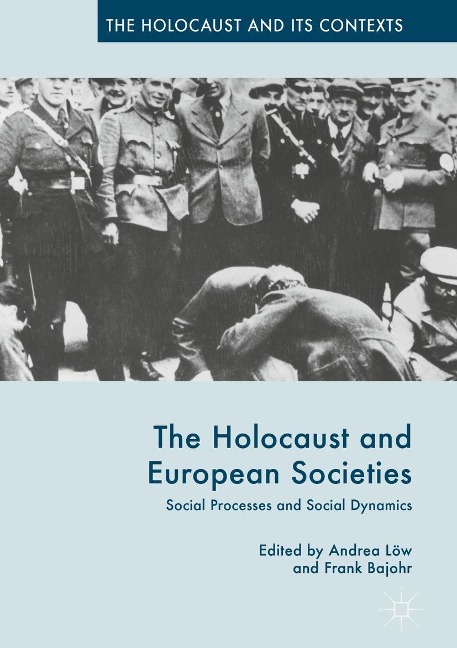
This book explores the Holocaust as a social process. Although the mass murder of European Jews was essentially the result of political-ideological decisions made by the Nazi state leadership, the events of the Holocaust were also part of a social dynamic. All European societies experienced developments that led to the social exclusion, persecution and murder of the continent's Jews. This volume therefore questions Raul Hilberg-s category of the 'bystander'. In societies where the political order expects citizens to endorse the exclusion of particular groups in the population, there cannot be any completely uninvolved bystanders. Instead, this book examines the multifarious forms of social action and behaviour connected with the Holocaust. It focuses on institutions and persons, helpers, co-perpetrators, facilitators and spectators, beneficiaries and profiteers, as well as Jewish victims and Jewish organisations trying to cope with the dynamics of exclusion and persecution.
Andrea Löw is Deputy Director of the Center for Holocaust Studies at the Institute of Contemporary History in Munich, Germany. Frank Bajohr is Director of the Center for Holocaust Studies at the Institute for Contemporary History in Munich, Germany and Professor at Ludwig Maximilians University.
1. Beyond the 'Bystander': Social Processes and Social Dynamics in European Societies as Context for the Holocaust; Frank Bajohr and Andrea Löw.- PART I: JEWS IN THE GERMAN REICH AFTER 1933.- 2. Fading Friendships and the 'Decent German': Reflecting, Explaining and Enduring Estrangement in Nazi Germany, 1933-1938; Anna Ullrich.- 3. Living in an Abnormal Normality: The Everyday Relations of Jews and Non-Jews in the German-Dutch Border Region, 1933-1938; Froukje Demant.- 4. Economic Trust in the 'Racial State': A Case Study from the German Countryside; Stefanie Fischer.- 5. 'Life in Illegality Cost an Extortionate Amount of Money': Ordinary Germans and German Jews Hiding from Deportation; Susanna Schrafstetter.- PART II: CASE STUDIES FROM EASTERN, SOUTH-EASTERN AND CENTRAL EUROPE.- 6. Collaborators, Bystanders or Rescuers?: The Role of Local Citizens in the Holocaust in Nazi-Occupied Belarus; Olga Baranova.- 7. Nationalizing the Holocaust: 'Foreign' Jews and the Making of Indifference in Macedonia under Bulgarian Occupation; Nadège Ragaru.- 8. Genocide in Times of Civil War: Popular Attitudes towards UstaSa Mass Violence, Croatia 1941-1945; Alexander Korb.- 9. The Pazifizierungsaktion as a Catalyst of Anti-Jewish Violence: A Study in the Social Dynamics of Fear; Tomasz Frydel.- 10. Slovak Society and the Jews: Attitudes and Patterns of Behaviour; Barbara Hutzelmann.- PART III: JEWISH LEADERSHIP AND JEWISH COUNCILS.- 11. Leadership in the Jewish Councils as a Social Process: The Example of Cracow; Andrea Löw and Agnieszka Zajaczkowska-Drozdz.- 12. The Role of the Jewish Council during the Occupation of the Netherlands; Katja Happe.- 13. Negotiating and Compromising: Jewish Leaders' Scope of Action in Tunis during Nazi Rule (November 1942-May 1943); Sophie Friedl.- PART IV: RELATIONS BETWEEN JEWS AND NON-JEWS AT A LOCAL/REGIONAL LEVEL.- 14. Neighbours in Boryslaw: JewishPerceptions of Collaboration and Rescue in Eastern Galicia; Natalia Aleksiun.- 15. Beyond the Bystander: Relations between Jews and Gentile Poles in the General Government; Agnieszka Wierzcholska.- 16. The Transformation of Jewish-Non-Jewish Social Relations in a Gendarmerie District of Hungary, 1938-1944; Izabella Sulyok.- PART V: THE AFTERMATH - POST-WAR RETURNEES.- 17. Returning Home after the Holocaust: Jewish-Gentile Encounters in the Soviet Borderland; Diana Dumitru.- 18. The 'Aryanization' of Jewish Property in Amsterdam and its Consequences after the Second World WaR; Hinke Piersma and Jeroen Kemperman.