Und dann auf "Zum Home-Bildschirm [+]".

Stöbern
genialokal zum Startbildschirm hinzufügen
Installieren Sie die genialokal App auf Ihrem Startbildschirm für einen schnellen Zugriff und eine komfortable Nutzung.
Installieren Sie die genialokal App auf Ihrem Startbildschirm für einen schnellen Zugriff und eine komfortable Nutzung.
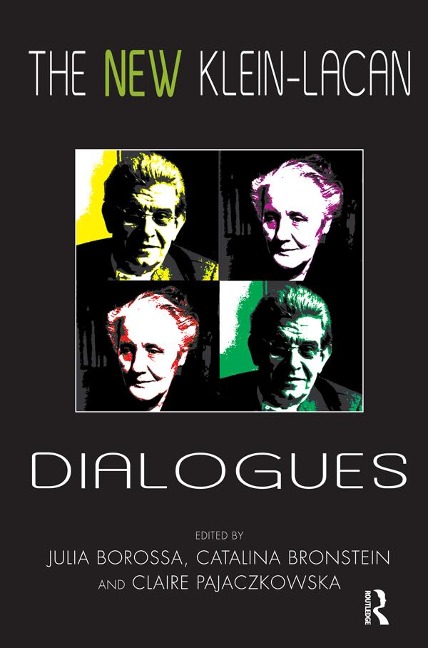
This book provides a timely exploration and comparison of key concepts in the theories of Melanie Klein and Jacques Lacan, two thinkers and clinicians whose influence over the development of psychoanalysis in the wake of Freud has been profound and far-reaching. Whilst the centrality of the unconscious is a strong conviction shared by both Klein and Lacan, there are also many differences between the two schools of thought and the clinical work that is produced in each. The purpose of this collection is to take seriously these similarities and differences. Deeply relevant to both theoretical reflection and clinical work, the New Klein-Lacan Dialogues should make interesting reading for psychoanalysts, psychotherapists, mental health professionals, scholars and all those who wish to know more about these two leading figures in the field of psychoanalysis.The collection centres around key concepts such as: 'symbolic function', the 'ego', the 'object', the 'body', 'trauma', 'autism', 'affect' and 'history and archives'.
Julia Borossa
Editors' Introduction: The new dialogues: Freud, Klein, Lacan , Part I , An introduction to Melanie Klein's ideas , An introduction to Lacan , Part II , Klein-Lacan: ego , The ego according to Klein: return to Freud and beyond , The ego and the other in Lacan's return to Freud , Part III , The object , The object: a Kleinian view , The object in Klein and Lacan , Part IV , Klein-Lacan: the body , Corporeality and unconscious phantasy: the role of the body in Kleinian theory , Lacan on the body , Part V , Klein-Lacan: trauma , Trauma in Kleinian psychoanalysis , Trauma , Part VI , Affects , Affects in Melanie Klein , Passion: a Lacanian reading of Freud's "affect" , Part VII , Autism , A Kleinian approach to the treatment of children with autism , Lacan and autism , Part VIII , The Symbolic , Symbolism, emotions, and mental growth , Symbolic functioning , Part IX , Why Klein-Lacan dialogue is difficult , History, archives; Freud, Lacan *
Dieses eBook wird im PDF-Format geliefert und ist mit einem Adobe Kopierschutz (DRM) versehen. Sie können dieses eBook mit allen Geräten lesen, die das PDF-Format und den Adobe Kopierschutz (DRM) unterstützen.
Zum Beispiel mit den folgenden Geräten:
• tolino Reader
Laden Sie das eBook direkt über den Reader-Shop auf dem tolino herunter oder übertragen Sie das eBook auf Ihren tolino mit einer kostenlosen Software wie beispielsweise Adobe Digital Editions.
• Sony Reader & andere eBook Reader
Laden Sie das eBook direkt über den Reader-Shop herunter oder übertragen Sie das eBook mit der kostenlosen Software Sony READER FOR PC/Mac oder Adobe Digital Editions auf ein Standard-Lesegeräte mit epub- und Adobe DRM-Unterstützung.
• Tablets & Smartphones
Möchten Sie dieses eBook auf Ihrem Smartphone oder Tablet lesen, finden Sie hier unsere kostenlose Lese-App für iPhone/iPad und Android Smartphone/Tablets.
• PC & Mac
Lesen Sie das eBook direkt nach dem Herunterladen mit einer kostenlosen Lesesoftware, beispielsweise Adobe Digital Editions, Sony READER FOR PC/Mac oder direkt über Ihre eBook-Bibliothek in Ihrem Konto unter „Meine eBooks“ - „online lesen“.
Schalten Sie das eBook mit Ihrer persönlichen Adobe ID auf bis zu sechs Geräten gleichzeitig frei.
Bitte beachten Sie, dass die Kindle-Geräte das Format nicht unterstützen und dieses eBook somit nicht auf Kindle-Geräten lesbar ist.