
Stöbern
genialokal zum Startbildschirm hinzufügen
Installieren Sie die genialokal App auf Ihrem Startbildschirm für einen schnellen Zugriff und eine komfortable Nutzung.
Installieren Sie die genialokal App auf Ihrem Startbildschirm für einen schnellen Zugriff und eine komfortable Nutzung.
Tippen Sie einfach auf Teilen:
 Und dann auf "Zum Home-Bildschirm [+]".

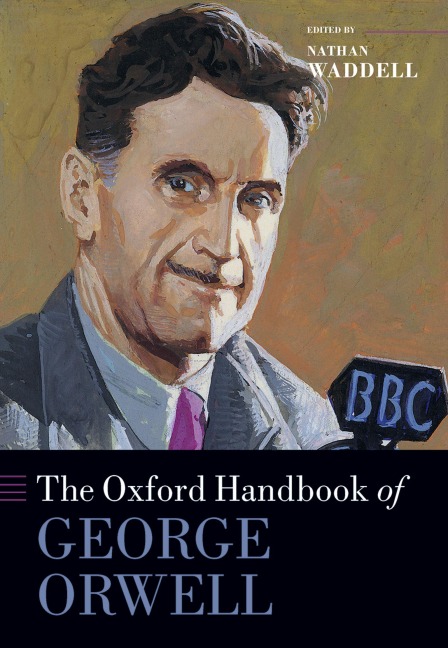
The Oxford Handbook of George Orwell offers a wide-ranging reconsideration of Orwell's life and work, focusing on the extensive connections between his novels, essays, diaries, columns, letters, and reviews. Accessible to general readers and to established scholars alike, forty-eight chapters written by an international team of Orwell specialists address familiar topics-such as Orwell's journalism, broadcasting, literary criticism, and politics-as well as less well-trodden areas of his output, such as his accounts of stupidity, kindness, and justice, and his connections with contemporaries like Jack Common, Katharine Burdekin, Wyndham Lewis, and Victor Serge. Sections on Orwell's professional activities, his main literary influences, his politics, his intellectual fixations, his literary contemporaries, and his legacies structure the book, which moves thematically and topically through the full scope of his output. The first section looks at how Orwell spent his time as a writer, reader, and broadcaster. Chapters on writers from Shakespeare to the modernists investigate the determinants of Orwell's literary practice. The book then turns to a set of political contexts in which Orwell's writing can be understood. The 'Fixations' section covers the familiar, such as Orwell's account of Englishness, and the unfamiliar, such as his account of the absurd. The fifth section relates Orwell to several politically minded contemporaries, tracing connections and differences between their writing. The final section of the Handbook reflects on how Orwell sounds through several literary and socio-political legacies, and includes innovative considerations of feminism, Afrofuturism, and queer speculative fiction.
Nathan Waddell is a Professor of Twentieth-Century Literature at the University of Birmingham. He is the author of Moonlighting: Beethoven and Literary Modernism(Oxford University Press, 2019) and edited Orwell's A Clergyman's Daughterfor the Oxford World's Classics series in 2021, along with The Cambridge Companion to Nineteen Eighty-Fourin 2020. He has published widely on Wyndham Lewis, John Buchan, and Ford Madox Ford, and sits on the editorial board of the journal George Orwell Studies.
- Preface - Contributors - Figures - Abbreviations - Introduction - Part I: Activities - 1: Helen Tyson: Orwell the Reader - 2: Luke Seaber: Orwell the Humorist - 3: Lisa Mullen: Orwell the Stylist - 4: Patricia Rae: Orwell the Innovator - 5: Peter Marks: Orwell the Essayist - 6: Jaron Murphy: Orwell the Journalist - 7: Natasha Periyan: Orwell the Literary Critic - 8: Emily Bloom: Orwell the Broadcaster - Part II: Influences - 9: Michael G. Brennan: Orwell and William Shakespeare - 10: Elizabeth Cook and Nathan Waddell: Orwell and John Milton - 11: Michael Hollington: Orwell and Charles Dickens - 12: Adam Rounce: Orwell and Jonathan Swift - 13: D. J. Taylor: Orwell and George Gissing - 14: Robert Hampson: Orwell, Joseph Conrad, and Rudyard Kipling - 15: Patrick Parrinder: Orwell, Leo Tolstoy, and H. G. Wells - 16: Sascha Morrell: Orwell and Modernism - Part III: Politics - 17: James Gifford: Orwell, Anarchism, and Revolution - 18: David Goodway: Orwell and Trotskyism - 19: Stephen Ingle: Orwell, Consumption, and Destitution - 20: Alex Woloch: Orwell and Socialism - 21: Ameya Tripathi: Orwell, Progress, and the Intellectuals - 22: Matthew Taunton: Orwell and the Politics of Culture - 23: Priya Satia: Orwell, Race, and Empire - 24: Kristian Williams: Orwell and Justice - Part IV: Fixations - 25: Peter Fifield: Orwell and the Body - 26: Beryl Pong: Orwell, War, and Violence - 27: Beci Carver: Orwell and Machines - 28: Noreen Masud: Orwell and the Absurd - 29: Jamie Wood: Orwell and Stupidity - 30: Sarah Gibbs: Orwell's Beasts - 31: Richard Lance Keeble: Orwell and Childhood - 32: Erin Carlston: Orwell's Jewish Problem - 33: Megan Faragher: Orwell and Kindness - 34: Rachael Stanley: Orwell and Sexuality - 35: Ben Clarke: Orwell, Englishness, and Class - Part V: Contemporaries - 36: Ian Haywood: Orwell and Jack Common - 37: Elizabeth English: Orwell and Katharine Burdekin - 38: Alan Munton: Orwell and Wyndham Lewis - 39: Jennifer Cowe: Orwell and Henry Miller - 40: Peter Brian Barry: Orwell and Bertrand Russell - 41: Anna Vaninskaya: Orwell and Victor Serge - 42: Benjamin Kohlmann: Orwell and the 'Auden Generation' - 43: Melissa Dinsman: Orwell, Una Marson, and Mulk Raj Anand - Part VI: Legacies - 44: Karina Jakubowicz: Orwell's Words - 45: Kristin Bluemel: Orwell and Feminism - 46: Rachele Dini: Orwell, Afrofuturism, and Queer Speculative Fiction - 47: Madeleine Davies: Orwell and Margaret Atwood - 48: Elizabeth Losh: Orwell and Social Media